


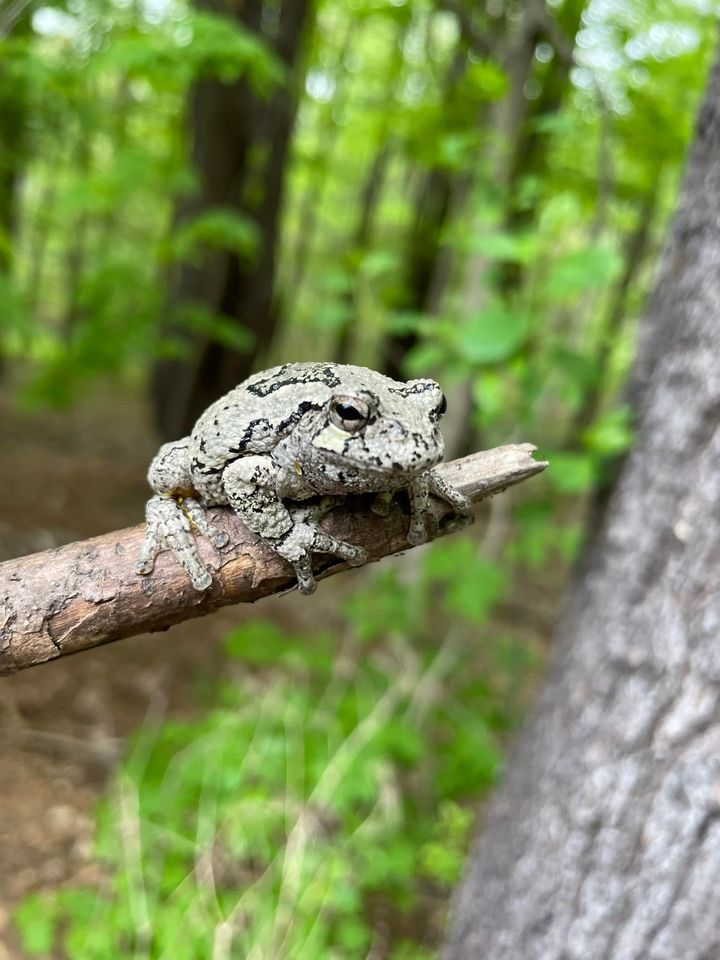
GRAY TREEFROG
Hyla versicolor
DESCRIPTION
Gray Treefrog (Hyla versicolor) is a small amphibian known for its variable coloration, which can range from gray to green, allowing it to blend seamlessly into its surroundings. This species exhibits a distinctive light spot beneath its eye and has a rough, warty skin texture. Gray Treefrogs are primarily nocturnal and are often found in trees or shrubs, where they call to attract mates during the breeding season.
FUN FACTS
- Gray Treefrogs can survive freezing temperatures by entering a state of suspended animation, allowing them to thaw and resume normal activity when temperatures rise
- | They are also known for their unique ability to change color based on their surroundings, which helps them avoid predators and adapt to different environments
QUICK INFO
Lifespan5-7 years in the wild
Average Weight2-5 g
Average Length3-5 cm
Diet TypeInsectivore
Social Structuresolitary, with males gathering during breeding season
Activity PatternNocturnal
Breeding SeasonSpring (April-June)
- Habitat
- Gray Treefrogs inhabit a variety of environments, including woodlands, wetlands, and suburban areas. They are often found near ponds or streams where they breed.
- Biomes
- Temperate Forest, Wetland
- Native Range
- The native range of Gray Treefrogs extends across the eastern United States and parts of Canada.
- Continent
- North America
- Countries
- United States, Canada
- Diet
- Gray Treefrogs primarily consume insects and other small invertebrates, making them effective pest controllers. Their diet consists mainly of crickets, beetles, and other small arthropods.
- Diet Type
- Insectivore
- Favorite Food
- crickets, beetles
- Social Structure
- solitary, with males gathering during breeding season
- Activity Pattern
- Nocturnal
- Group Size
- 1-10
- Territorial
- 1
 LC
LC
 VU
VU

2-5 g
Weight
3-5 cm
Length
- Coloration
- variable coloration from gray to green, often with dark spots
- Sexual Dimorphism
- males are typically smaller and have a darker throat than females
- Lifespan
- 5-7 years in the wild
- Offspring per Birth
- 100-200 eggs
- Sexual Maturity
- 1-2 years
- Breeding Season
- Spring (April-June)
LC
Least Concern
IUCN Red List Status
- Population Status
- The population of Gray Treefrogs is currently stable, with no significant declines reported.
- Wild Population Estimate
- unknown
- Population Trend
- Stable
- Endangered
- 0
- Threats
- Main threats to Gray Treefrogs include habitat loss due to urbanization and pollution. Climate change may also impact their breeding habitats and food availability.
- Predators
- snakes, birds, small mammals, and larger amphibians
- Defense Mechanisms
- Gray Treefrogs can change color to blend in with their environment, providing camouflage from predators.
- Found in Zoos
- Uncommon