


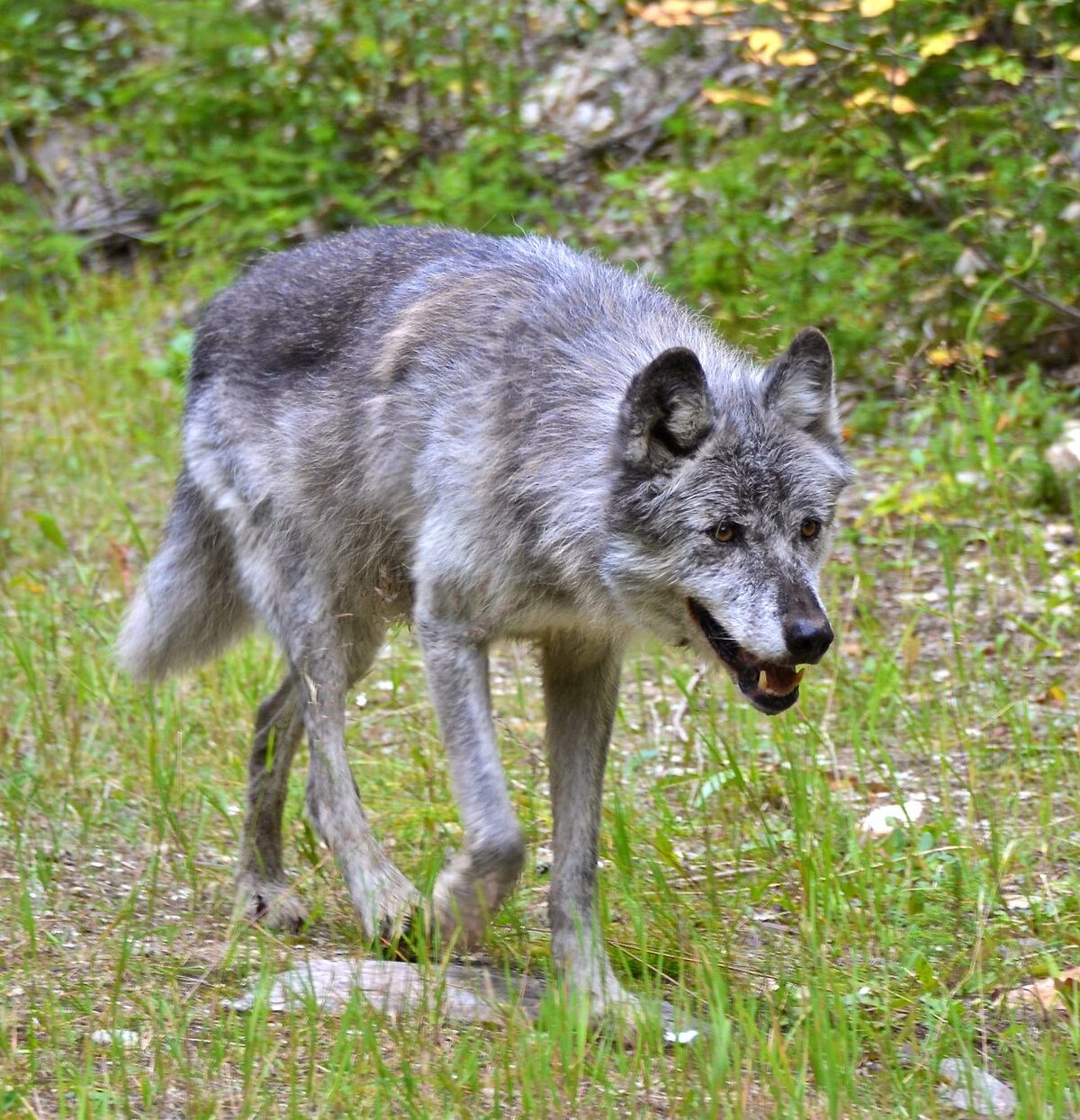
GRAY WOLF
DESCRIPTION
Also called Timber Wolf and Western Wolf, the Gray Wolf is a large canine known for its striking appearance and social behavior. They typically have a thick fur coat that can vary in color from gray to brown, black, and even white, which helps them blend into their natural habitats. Gray Wolves are highly social animals that live in packs, exhibiting complex social structures and cooperative hunting strategies.
FUN FACTS
- Gray Wolves have an incredible sense of smell, which is about 100 times more sensitive than that of humans, allowing them to detect prey from great distances
- They also have a unique vocalization system, including howls, growls, and barks, which they use to communicate with pack members and establish territory.|The social structure of a wolf pack is fascinating; it typically consists of an alpha male and female, their offspring, and sometimes other non-breeding adults
- This hierarchy helps maintain order and cooperation during hunts and raises the young, showcasing the complex social dynamics of these animals
QUICK INFO
Lifespan6-8 years in the wild, up to 13 years in captivity
Average Weight25-45 kg
Average Length1.2-2 m
Diet TypeCarnivore
Social StructureGray Wolves typically live in packs, which can consist of a breeding pair and their offspring. This social structure allows them to work together in hunting and raising young.
Activity PatternCrepuscular
Breeding SeasonWinter (January-March)
- Habitat
- Gray Wolves inhabit a variety of environments, including forests, tundras, grasslands, and deserts. They require large territories to support their hunting needs and often prefer areas with abundant prey.
- Biomes
- Temperate Forest, Tundra, Grassland, Boreal Forest
- Native Range
- Gray Wolves are native to North America, Europe, and Asia, with populations found in various regions across these continents.
- Continent
- North America, Europe, Asia
- Countries
- United States, Canada, Russia, Mongolia, Finland, Sweden
- Diet
- Gray Wolves primarily hunt large ungulates such as deer, elk, and moose, but they also consume smaller mammals and carrion when necessary. Their hunting strategy often involves teamwork and coordination within the pack.
- Diet Type
- Carnivore
- Favorite Food
- deer, elk, moose
- Social Structure
- Gray Wolves typically live in packs, which can consist of a breeding pair and their offspring. This social structure allows them to work together in hunting and raising young.
- Activity Pattern
- Crepuscular
- Group Size
- 5-15
- Territorial
- 1
 LC
LC
25-45 kg
Weight
1.2-2 m
Length
0.6-0.9 m at shoulder
Height (Shoulder)
- Coloration
- varies from gray to brown, black, and white
- Sexual Dimorphism
- males are generally larger than females
- Lifespan
- 6-8 years in the wild, up to 13 years in captivity
- Gestation Period
- 63 days
- Offspring per Birth
- 4-7
- Sexual Maturity
- 2-3 years
- Breeding Season
- Winter (January-March)
LC
Least Concern
IUCN Red List Status
- Population Status
- The Gray Wolf population is currently stable in some areas but declining in others due to habitat loss and hunting.
- Wild Population Estimate
- 200,000-300,000
- Population Trend
- Stable
- Endangered
- 0
- Threats
- Main threats to Gray Wolves include habitat destruction, hunting, and conflicts with livestock. These factors can lead to localized declines in their populations.
- Predators
- Humans are the primary threat to Gray Wolves, but they can also face competition from other large carnivores like bears and mountain lions.
- Defense Mechanisms
- Gray Wolves use their pack structure for defense, relying on numbers to fend off threats and protect their territory.
- Compatible Animals
- none
- Found in Zoos
- Common