


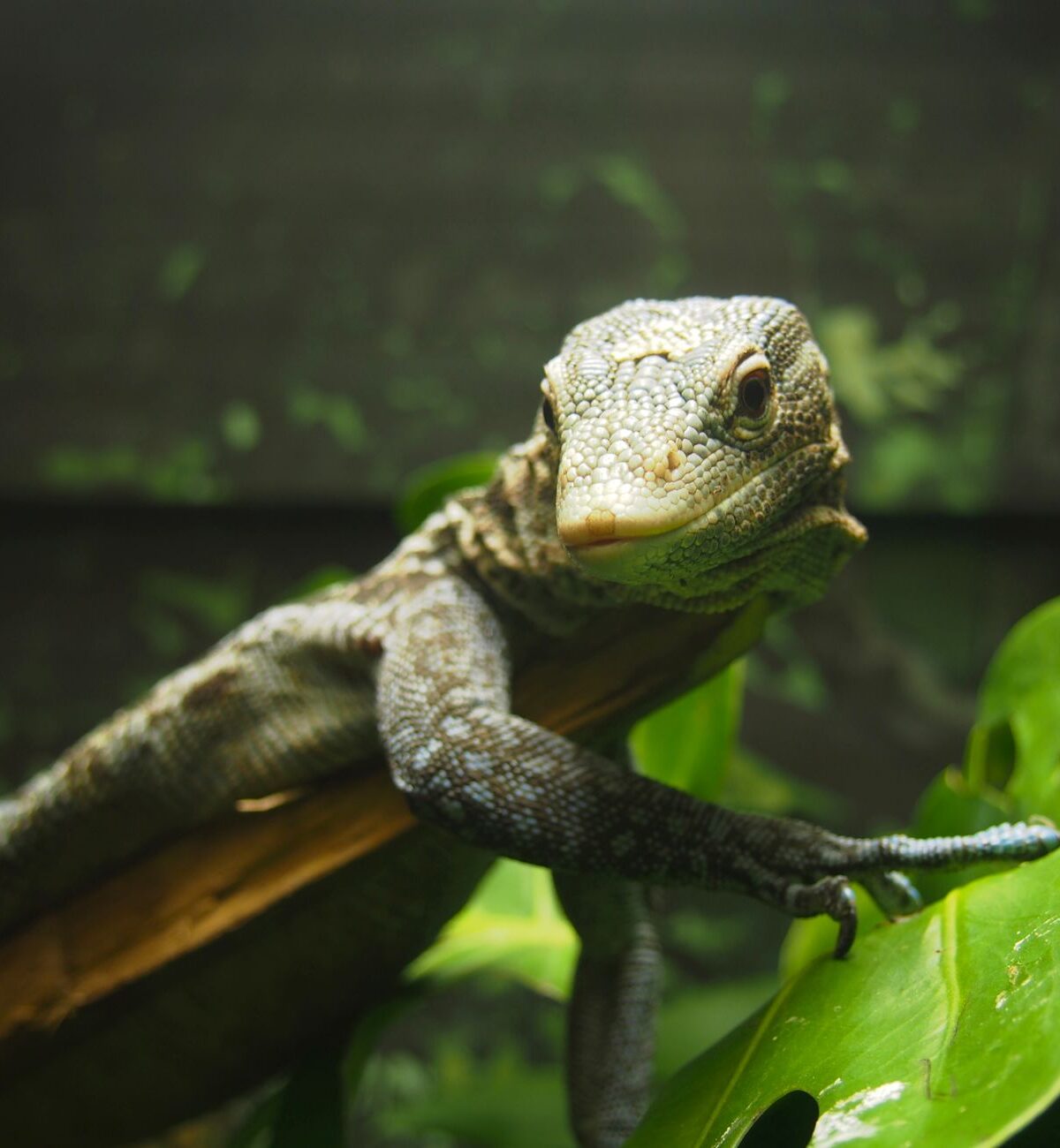
GRAY'S MONITOR
Varanus olivaceus
DESCRIPTION
Gray's Monitor (Varanus olivaceus) is also known as the Olivaceous Monitor, characterized by its slender body and long tail. This species exhibits a distinctive olive-green coloration with darker bands, which helps it blend into its natural habitat. Gray's Monitor is primarily arboreal, often found in trees, and is known for its agile climbing abilities and keen hunting skills.
FUN FACTS
- Gray's Monitor is known for its impressive climbing abilities, often seen scaling trees with ease
- This species has a keen sense of smell, which it uses to locate prey from a distance.|In captivity, Gray's Monitor can be trained to recognize its keeper and may even respond to commands, showcasing its intelligence and adaptability
QUICK INFO
Lifespan10-15 years in the wild, up to 20 in captivity
Average Weight2-4 kg
Average Length1.2-1.5 m
Diet TypeCarnivore
Social Structuresolitary, occasionally pairs during breeding
Activity PatternDiurnal
Breeding SeasonSpring (March-May)
- Habitat
- This species inhabits tropical and subtropical forests, often favoring areas with dense vegetation. It is commonly found in both lowland and montane forests.
- Biomes
- Tropical Rainforest, Subtropical Forest
- Native Range
- Gray's Monitor is native to the islands of Southeast Asia, particularly in Indonesia and surrounding regions.
- Continent
- Asia
- Countries
- Indonesia, Malaysia, Papua New Guinea
- Diet
- Gray's Monitor primarily feeds on small mammals, birds, and insects, showcasing its carnivorous diet. It is an opportunistic predator, often hunting in trees and on the ground.
- Diet Type
- Carnivore
- Favorite Food
- small mammals, birds, insects
- Social Structure
- solitary, occasionally pairs during breeding
- Activity Pattern
- Diurnal
- Group Size
- 1-2
- Territorial
- 1
 VU
VU
 LC
LC
2-4 kg
Weight
1.2-1.5 m
Length
- Coloration
- olive-green with darker bands
- Lifespan
- 10-15 years in the wild, up to 20 in captivity
- Offspring per Birth
- 5-15
- Sexual Maturity
- 2-3 years
- Breeding Season
- Spring (March-May)
LC
Least Concern
IUCN Red List Status
- Population Status
- The population status of Gray's Monitor is currently stable, but habitat loss poses a potential threat.
- Wild Population Estimate
- unknown
- Population Trend
- Stable
- Endangered
- 0
- Threats
- The main threats to Gray's Monitor include habitat destruction due to deforestation and human encroachment. Additionally, they may be hunted for their skins and as pets.
- Predators
- large birds of prey, snakes, and larger carnivorous mammals
- Defense Mechanisms
- Gray's Monitor relies on its agility and climbing skills to escape predators, often retreating to trees.
- Found in Zoos
- Uncommon