


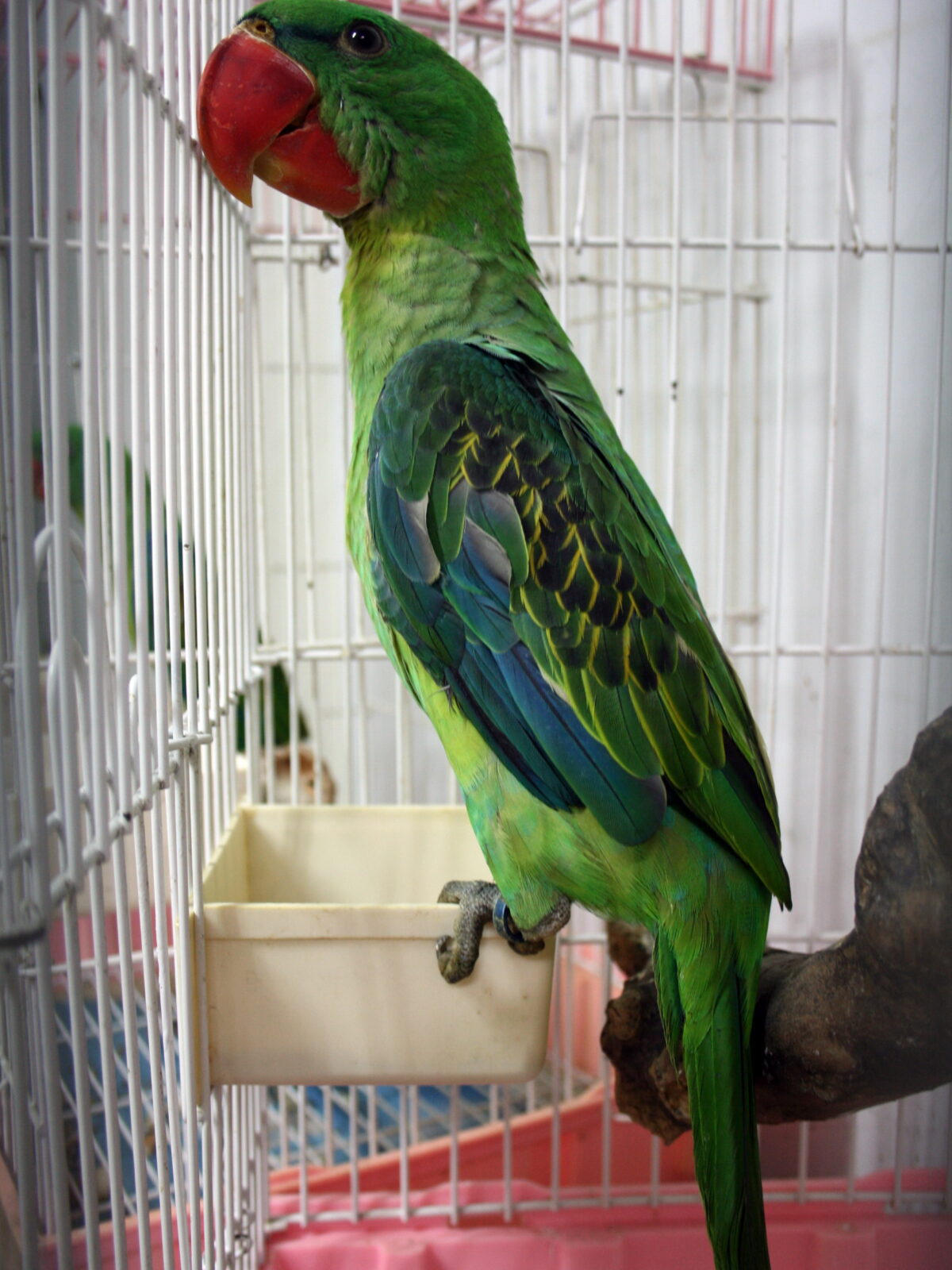
GREAT-BILLED PARROT
Tanygnathus megalorynchos
DESCRIPTION
Great-billed Parrot (Tanygnathus megalorynchos) is a striking bird known for its large, robust bill and vibrant green plumage. This parrot exhibits a strong social structure, often found in pairs or small groups, and is known for its playful and intelligent behavior. In the wild, they inhabit tropical forests and are often seen foraging in the canopy for fruits and seeds.
FUN FACTS
- Great-billed Parrots are known for their impressive vocal abilities, often mimicking sounds from their environment, including human speech
- They are also highly social creatures, forming strong bonds with their mates and engaging in playful behaviors that showcase their intelligence.|These parrots have a unique feeding behavior where they can often be seen hanging upside down to reach fruits and seeds, demonstrating their agility and adaptability in the wild
QUICK INFO
Lifespan20-30 years in captivity
Average Weight200-300 g
Average Length30-35 cm
Diet TypeHerbivore
Social Structurepair or group, often seen in small flocks or pairs during foraging.
Activity PatternDiurnal
Breeding SeasonSpring (March-May)
- Habitat
- These parrots thrive in tropical and subtropical forests, often favoring areas with abundant fruiting trees. They are also found in mangroves and other dense vegetation.
- Biomes
- Tropical Rainforest, Mangrove
- Native Range
- Great-billed Parrots are native to the islands of Southeast Asia, particularly in the Philippines and parts of Indonesia.
- Continent
- Asia
- Countries
- Philippines, Indonesia
- Diet
- Great-billed Parrots primarily feed on fruits, seeds, and nuts, showcasing their strong beaks adapted for cracking hard shells. They are known to forage in trees and are often seen hanging upside down to reach food.
- Diet Type
- Herbivore
- Favorite Food
- fruits, seeds, nuts
- Social Structure
- pair or group, often seen in small flocks or pairs during foraging.
- Activity Pattern
- Diurnal
- Group Size
- 2-10
- Territorial
- 0
 LC
LC
 VU
VU
 EN
EN
200-300 g
Weight
30-35 cm
Length
- Coloration
- vibrant green with a distinctive large bill and touches of yellow on the wings and tail.
- Sexual Dimorphism
- males and females are similar in appearance, making it difficult to distinguish between sexes.
- Lifespan
- 20-30 years in captivity
- Offspring per Birth
- 2-4
- Sexual Maturity
- 2-3 years
- Breeding Season
- Spring (March-May)
LC
Least Concern
IUCN Red List Status
- Population Status
- The population of Great-billed Parrots is currently stable, but habitat loss poses a potential threat.
- Wild Population Estimate
- 10,000-15,000
- Population Trend
- Stable
- Endangered
- 0
- Threats
- Main threats include habitat destruction due to deforestation and illegal trapping for the pet trade. Conservation efforts are needed to protect their natural habitats.
- Predators
- snakes, birds of prey, and larger mammals may pose threats to eggs and young parrots.
- Defense Mechanisms
- Great-billed Parrots use their strong beaks for defense and can also be quite vocal to warn off potential threats.
- Found in Zoos
- Uncommon