


GREAT BUSTARD
DESCRIPTION
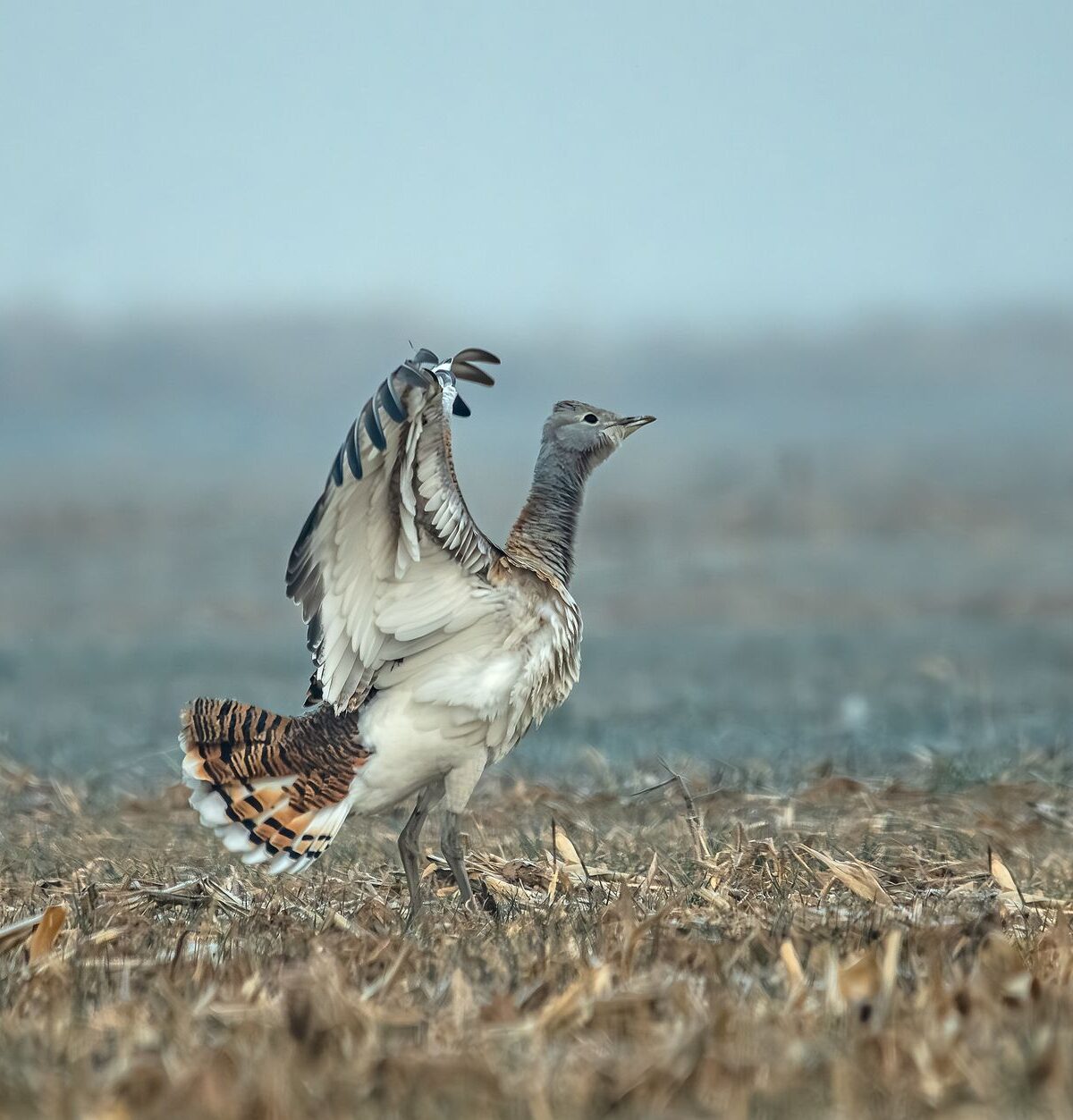
Great Bustard is a large, ground-dwelling bird known for its impressive size and striking appearance. Males can weigh up to 18 kg and have a wingspan of up to 2.5 meters, featuring a distinctive plumage with a mix of brown, white, and black. They are known for their elaborate courtship displays during the breeding season, where males puff up their chests and spread their wings to attract females.
FUN FACTS
- Great Bustards are the heaviest flying birds in Europe, and their courtship displays are among the most elaborate in the avian world, involving vocalizations and physical displays that can last for hours
- | They have been known to travel long distances in search of food and suitable nesting sites, sometimes covering over 100 kilometers in a single day
QUICK INFO
Lifespan10-15 years in the wild, up to 20 in captivity
Average Weight7-18 kg
Average Length0.9-1.1 m
Diet TypeOmnivore
Social Structuresolitary or small groups, with males often displaying territorial behavior during the breeding season
Activity PatternDiurnal
Breeding SeasonSpring (March-May)
- Habitat
- Great Bustards inhabit open grasslands, steppes, and agricultural fields. They prefer areas with low vegetation that provide both food and visibility to spot predators.
- Biomes
- Grassland, Temperate Forest
- Native Range
- Great Bustards are native to parts of Europe and Asia, with significant populations in countries like Spain, Portugal, and Russia.
- Continent
- Europe, Asia
- Countries
- Spain, Portugal, Russia, China, Kazakhstan
- Diet
- Great Bustards primarily feed on a diet of grasses, seeds, and invertebrates. They forage on the ground, using their strong legs to scratch the soil for food.
- Diet Type
- Omnivore
- Favorite Food
- grasses, seeds, invertebrates
- Social Structure
- solitary or small groups, with males often displaying territorial behavior during the breeding season
- Activity Pattern
- Diurnal
- Group Size
- 1-10
- Territorial
- 1

 LC
LC
 VU
VU
7-18 kg
Weight
0.9-1.1 m
Length
- Coloration
- males have a mix of brown, white, and black plumage, while females are more camouflaged with a brownish coloration
- Sexual Dimorphism
- males are significantly larger and more colorful than females
- Lifespan
- 10-15 years in the wild, up to 20 in captivity
- Offspring per Birth
- 1-2
- Sexual Maturity
- 2-3 years
- Breeding Season
- Spring (March-May)
VU
Vulnerable
IUCN Red List Status
- Population Status
- The population of Great Bustards has been declining due to habitat loss and hunting pressures.
- Wild Population Estimate
- 10,000-20,000
- Population Trend
- Decreasing
- Endangered
- 1
- Threats
- Main threats include habitat destruction due to agricultural expansion and hunting. Additionally, changes in land use and climate change are impacting their breeding grounds.
- Conservation Program
- Various conservation programs are in place across Europe to protect and restore Great Bustard populations, including habitat management and legal protection.
- Predators
- foxes, eagles, and other large birds of prey
- Defense Mechanisms
- Great Bustards rely on their size and camouflage to avoid predators, often freezing in place to blend into their surroundings.
- Found in Zoos
- Uncommon