


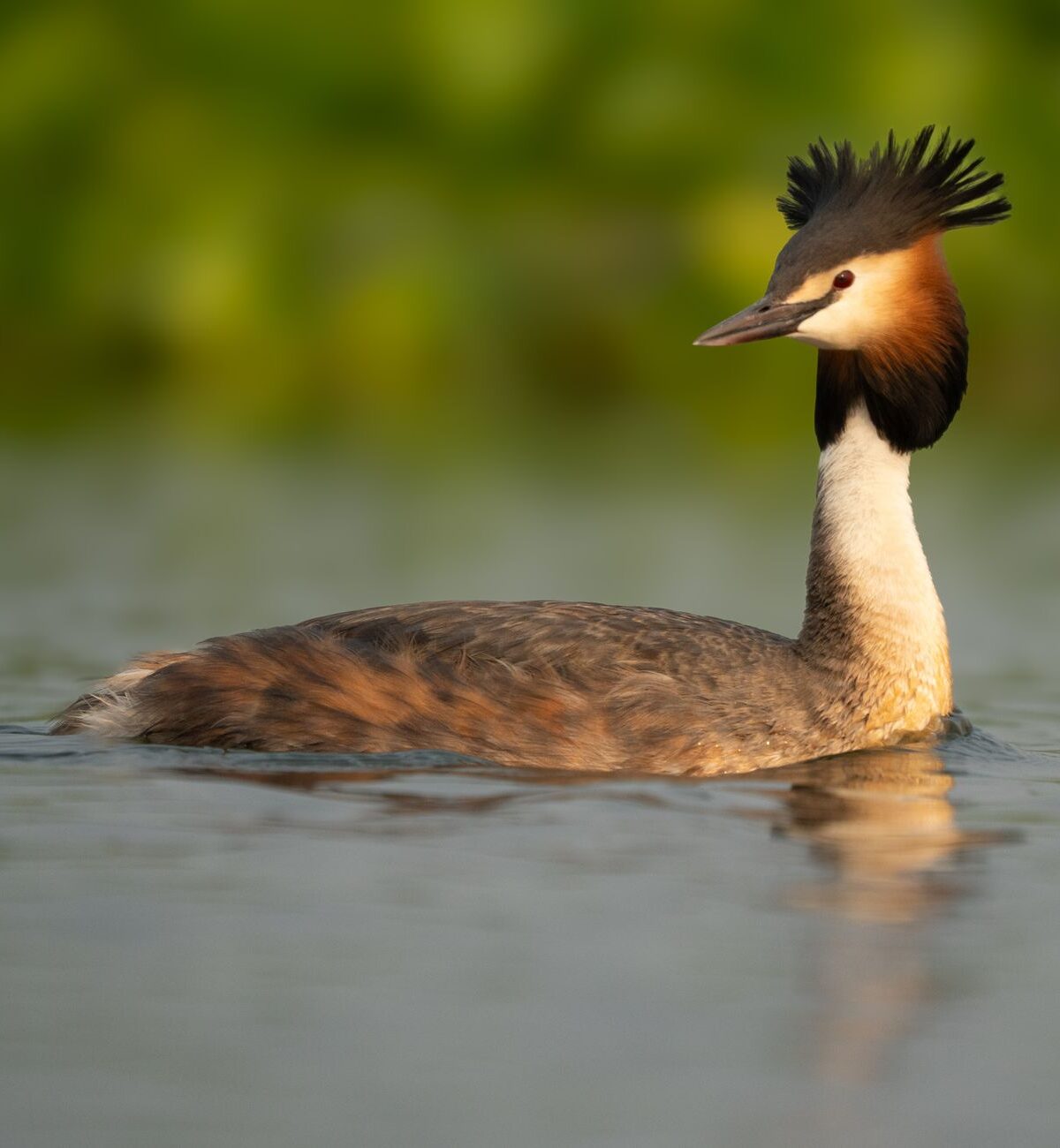
GREAT CRESTED GREBE
Podiceps cristatus
DESCRIPTION
Great Crested Grebe (Podiceps cristatus) is a striking water bird known for its elaborate courtship displays and distinctive plumage. During the breeding season, it showcases a striking black and white crest, while in winter, it adopts a more subdued coloration. This species is an excellent swimmer and diver, often seen gliding gracefully across lakes and ponds, where it hunts for fish and invertebrates.
FUN FACTS
- Great Crested Grebes are famous for their elaborate courtship displays, which can include synchronized swimming and the exchange of nesting materials
- These displays are not only a way to attract mates but also strengthen the bond between partners
- | The Great Crested Grebe is known for its unique nesting behavior, often building floating nests made of aquatic vegetation
- These nests can be quite large and are typically anchored to submerged plants, providing a safe environment for their young
QUICK INFO
Lifespan10-15 years in the wild
Average Weight1-2 kg
Average Length60-75 cm
Diet TypePiscivore
Social Structurepair, often seen in monogamous pairs during the breeding season
Activity PatternDiurnal
Breeding SeasonSpring (April-June)
- Habitat
- Great Crested Grebes inhabit freshwater lakes, ponds, and marshes, often favoring areas with abundant vegetation for nesting. They require open water for foraging and prefer calm, sheltered environments.
- Biomes
- Freshwater, Wetlands
- Native Range
- This species is found across Europe and parts of Asia, migrating to warmer regions during winter.
- Continent
- Europe, Asia
- Countries
- United Kingdom, Germany, France, Russia, China
- Diet
- Great Crested Grebes primarily feed on fish, but they also consume aquatic invertebrates. Their hunting technique involves diving underwater to catch prey.
- Diet Type
- Piscivore
- Favorite Food
- small fish
- Social Structure
- pair, often seen in monogamous pairs during the breeding season
- Activity Pattern
- Diurnal
- Group Size
- 1-2
- Territorial
- 1

 VU
VU
1-2 kg
Weight
60-75 cm
Length
- Coloration
- black and white with a distinctive ruff of feathers during breeding season
- Sexual Dimorphism
- males and females are similar in size but differ in plumage during breeding season
- Lifespan
- 10-15 years in the wild
- Offspring per Birth
- 2-4
- Sexual Maturity
- 2-3 years
- Breeding Season
- Spring (April-June)
LC
Least Concern
IUCN Red List Status
- Population Status
- The population of Great Crested Grebes is currently stable in many regions, although some local declines have been noted.
- Wild Population Estimate
- 500,000-1,000,000
- Population Trend
- Stable
- Endangered
- 0
- Threats
- Main threats include habitat loss due to wetland drainage and pollution, as well as disturbances from boating and fishing activities. Climate change also poses a risk to their breeding habitats.
- Predators
- Foxes, birds of prey, and large fish can pose threats to Great Crested Grebes, especially to their eggs and young.
- Defense Mechanisms
- They often rely on their excellent swimming and diving abilities to evade predators.
- Found in Zoos
- Uncommon