


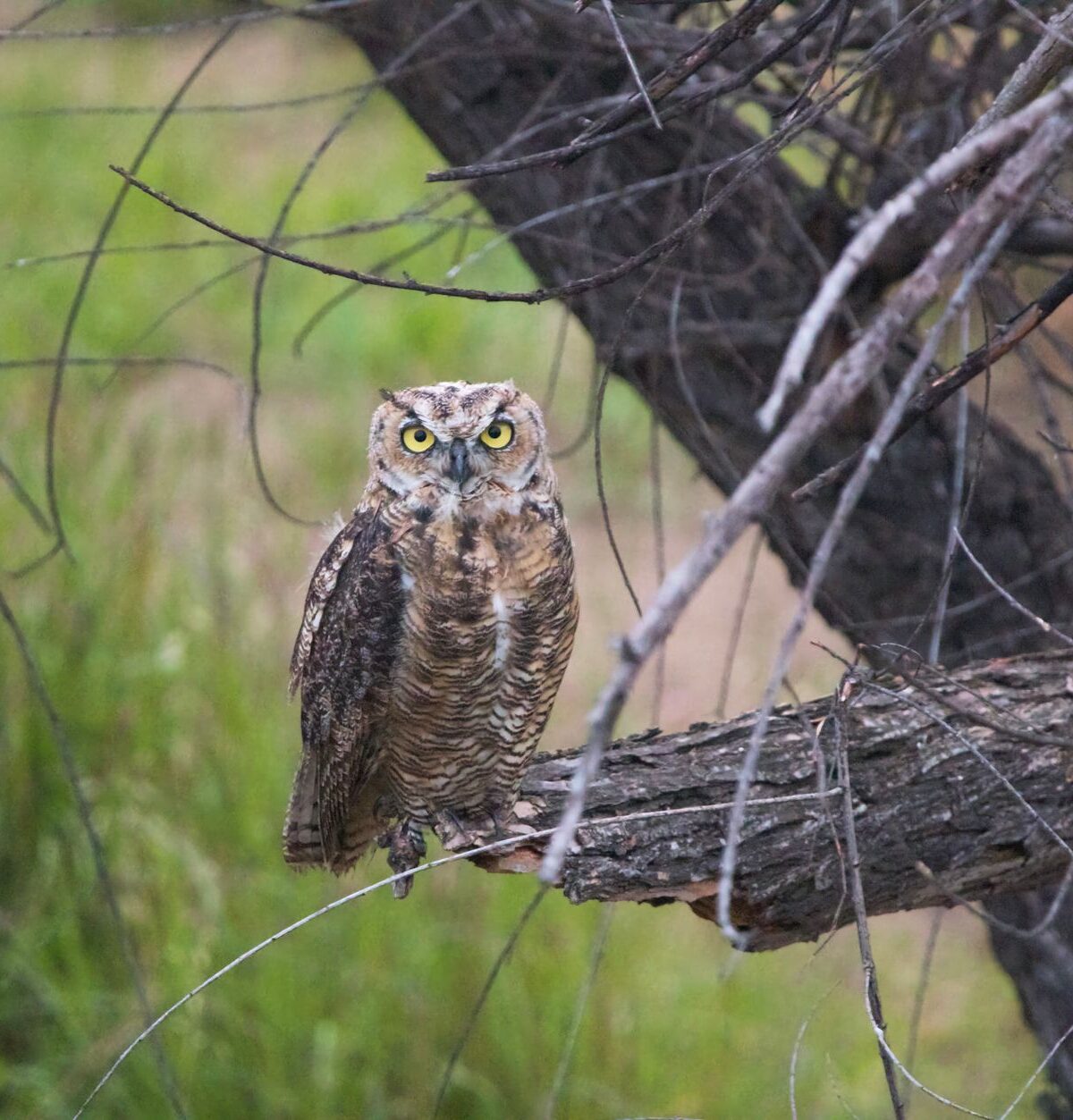
GREAT HORNED OWL
Bubo virginianus
DESCRIPTION
Great horned owl (Bubo virginianus) is a large and powerful bird of prey known for its distinctive tufts resembling horns. It has a robust body, a broad head, and striking yellow eyes that provide excellent night vision. This species is highly adaptable, inhabiting a variety of environments from forests to urban areas, and is known for its deep, resonant hoots that can be heard over long distances.
FUN FACTS
- Great horned owls are known for their impressive adaptability, allowing them to thrive in a variety of environments, including urban areas
- They are also one of the most widespread owl species in the Americas, showcasing their resilience and hunting prowess
- | The Great horned owl's call is iconic, often described as a deep, booming hoot that can carry for miles
- This vocalization plays a crucial role in establishing territory and attracting mates, making it a key aspect of their behavior
QUICK INFO
Lifespan15-20 years in the wild, up to 28 years in captivi
Average Weight1.4-2.5 kg
Average Length45-63 cm
Diet TypeCarnivore
Social StructureSolitary, except during breeding season when pairs are formed.
Activity PatternNocturnal
Breeding SeasonWinter (January-March)
- Habitat
- Great horned owls are found in diverse habitats, including forests, grasslands, and urban areas. They prefer areas with tall trees for nesting and open spaces for hunting.
- Biomes
- Temperate Forest, Grassland, Urban
- Native Range
- Great horned owls are native to the Americas, ranging from the Arctic regions of Canada to the southern parts of South America.
- Continent
- North America, South America
- Countries
- Canada, United States, Mexico, Brazil, Argentina
- Diet
- Great horned owls primarily feed on small to medium-sized mammals and birds, but they are opportunistic hunters and will consume a wide range of prey. They are known to take down animals larger than themselves, including rabbits and even young deer.
- Diet Type
- Carnivore
- Favorite Food
- Rabbits, rodents, birds
- Social Structure
- Solitary, except during breeding season when pairs are formed.
- Activity Pattern
- Nocturnal
- Group Size
- 1-2
- Territorial
- 1
1.4-2.5 kg
Weight
45-63 cm
Length
- Coloration
- The plumage is mottled brown, gray, and white, providing excellent camouflage against tree bark.
- Sexual Dimorphism
- Females are generally larger than males.
- Lifespan
- 15-20 years in the wild, up to 28 years in captivi
- Offspring per Birth
- 1-5
- Sexual Maturity
- 2-3 years
- Breeding Season
- Winter (January-March)
LC
Least Concern
IUCN Red List Status
- Population Status
- The population of Great horned owls is considered stable across much of their range.
- Wild Population Estimate
- 1 million+
- Population Trend
- Stable
- Endangered
- 0
- Threats
- Main threats include habitat loss due to urbanization and agricultural expansion, as well as collisions with vehicles. They may also face competition from other raptor species.
- Predators
- Great horned owls have few natural predators, but they can be threatened by larger raptors and humans.
- Defense Mechanisms
- They rely on their camouflage and powerful flight to evade threats, and will also defend their nests aggressively if disturbed.
- Found in Zoos
- Common