


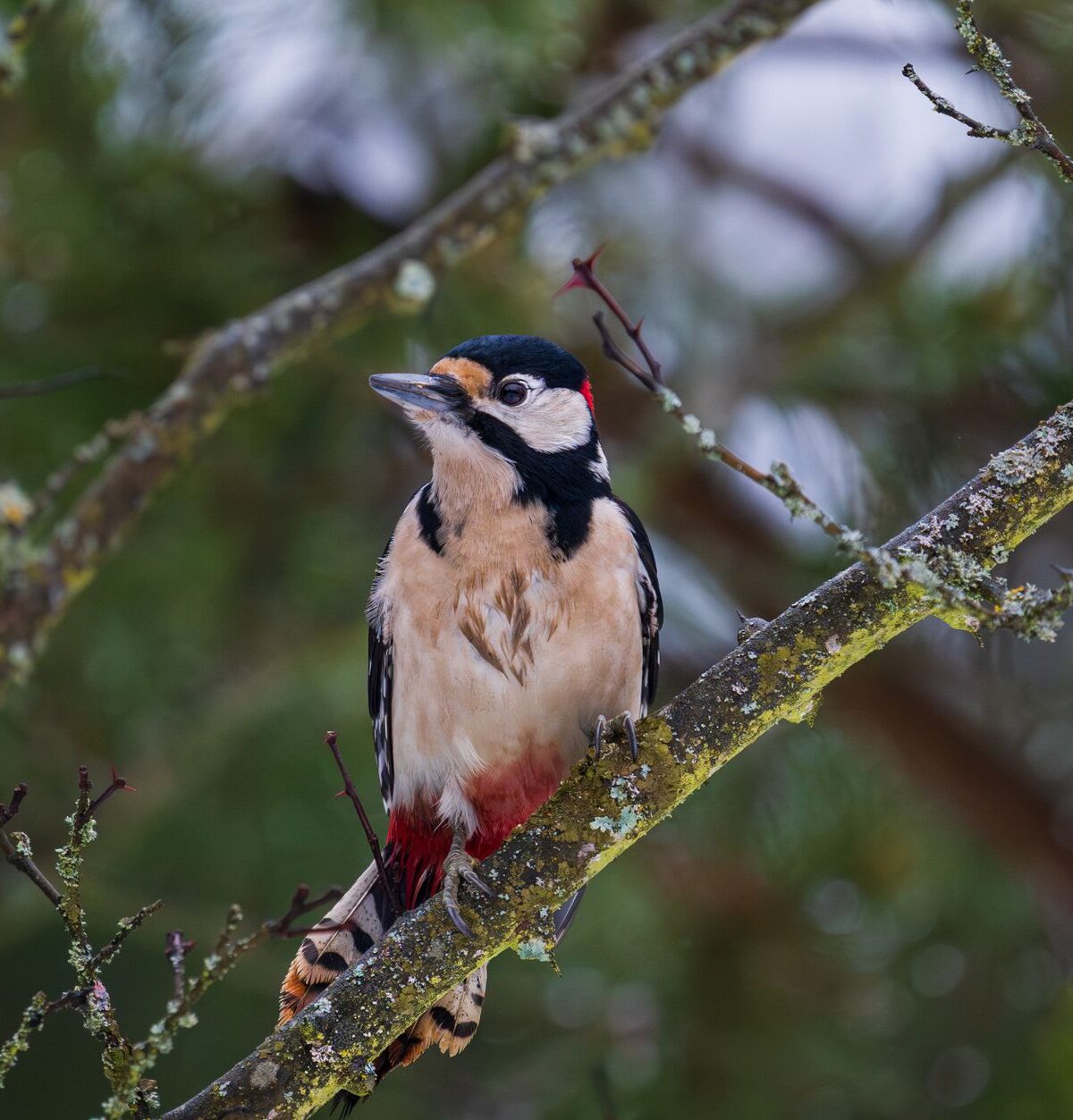
GREAT SPOTTED WOODPECKER
Dendrocopos major
DESCRIPTION
Great Spotted Woodpecker (Dendrocopos major) is a striking bird known for its distinctive black and white plumage, accented by a bright red patch on the back of the head in males. This woodpecker is often seen clinging to tree trunks, using its strong beak to drill into the bark in search of insects and larvae. It plays a vital role in forest ecosystems by creating nesting cavities that are later used by other species.
FUN FACTS
- Great Spotted Woodpeckers can peck at a rate of up to 20 times per second, which allows them to create their characteristic nesting holes efficiently
- | They have a specialized shock-absorbing structure in their skulls that protects their brains from the impact of pecking, allowing them to forage without injury
QUICK INFO
Lifespan5-10 years in the wild
Average Weight70-90 g
Average Length23-26 cm
Diet TypeOmnivore
Social Structurepair, typically seen in monogamous pairs during the breeding season
Activity PatternDiurnal
Breeding SeasonSpring (April-June)
- Habitat
- This species prefers deciduous and mixed forests, often found in areas with mature trees. They are also adaptable and can thrive in urban parks and gardens.
- Biomes
- Temperate Forest, Boreal Forest
- Native Range
- Great Spotted Woodpeckers are native to Europe and parts of Asia, ranging from the British Isles to Siberia.
- Continent
- Europe, Asia
- Countries
- United Kingdom, Germany, France, Russia, Sweden
- Diet
- Great Spotted Woodpeckers primarily feed on insects, particularly wood-boring beetles and their larvae, but they also consume seeds and nuts.
- Diet Type
- Omnivore
- Favorite Food
- insects, seeds, nuts
- Social Structure
- pair, typically seen in monogamous pairs during the breeding season
- Activity Pattern
- Diurnal
- Group Size
- 1-2
- Territorial
- 1
 LC
LC
 LC
LC
70-90 g
Weight
23-26 cm
Length
- Coloration
- black and white with a red crown in males
- Sexual Dimorphism
- males have a red patch on the back of the head, females do not
- Lifespan
- 5-10 years in the wild
- Offspring per Birth
- 3-6
- Sexual Maturity
- 1 year
- Breeding Season
- Spring (April-June)
LC
Least Concern
IUCN Red List Status
- Population Status
- The population of Great Spotted Woodpeckers is currently stable across much of their range.
- Wild Population Estimate
- 1,000,000-2,000,000
- Population Trend
- Stable
- Endangered
- 0
- Threats
- Main threats include habitat loss due to deforestation and changes in land use. However, they are generally adaptable and can thrive in modified habitats.
- Predators
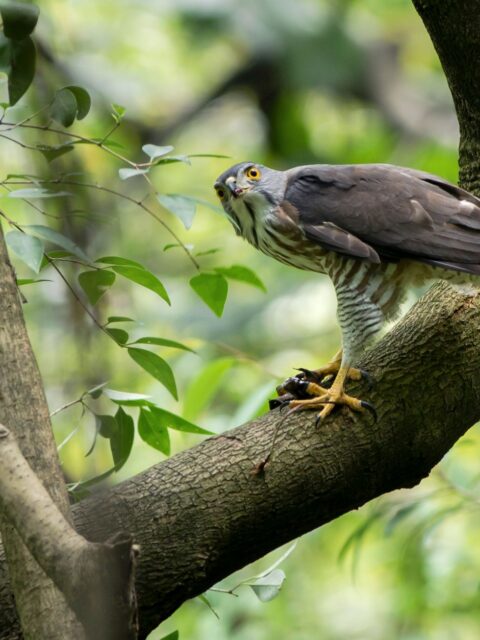
- Eurasian Sparrowhawk, Common Buzzard, domestic cats
- Defense Mechanisms
- They use their strong beaks to create noise and can escape quickly by flying away from threats.
- Found in Zoos
- Uncommon