


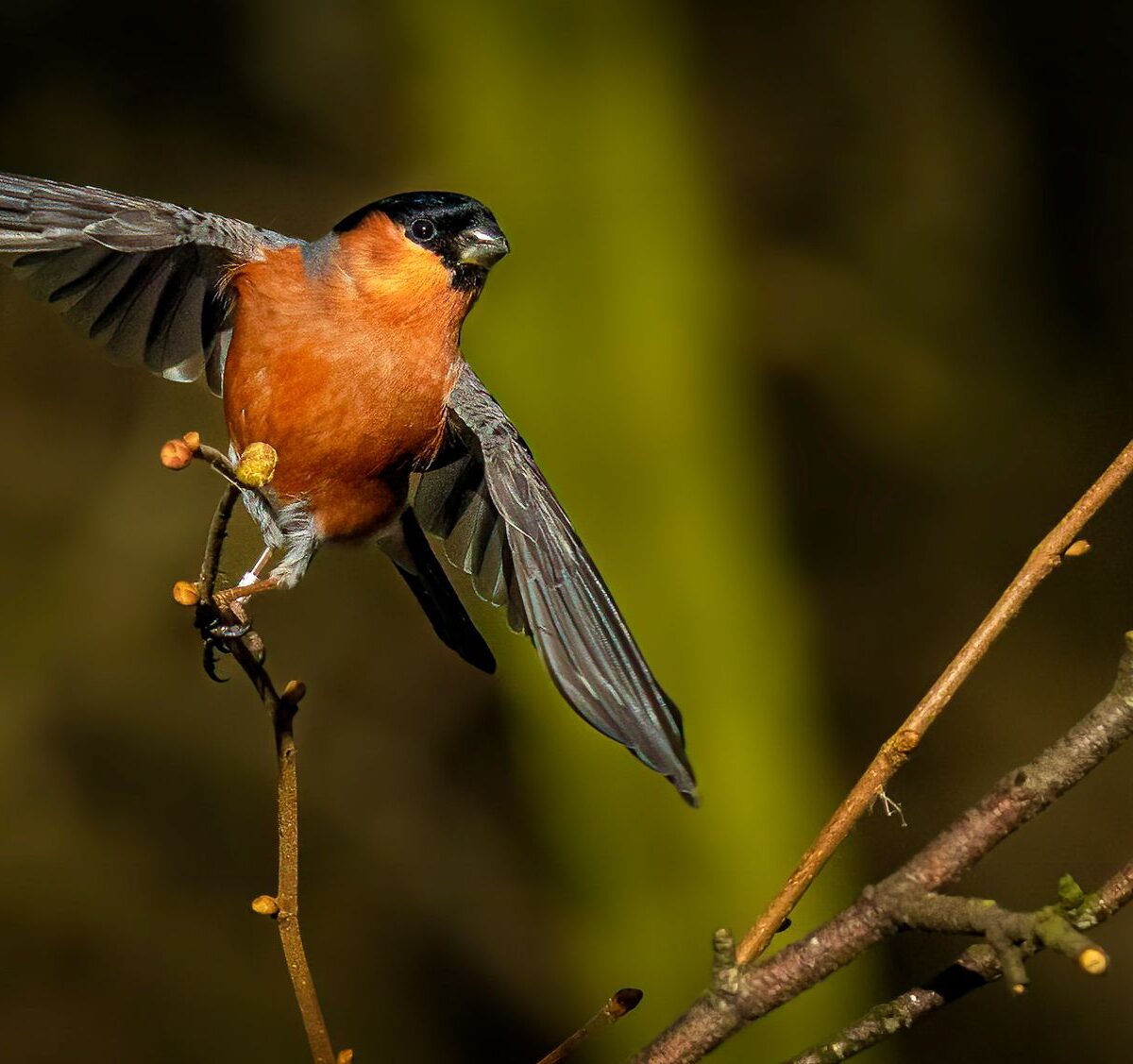
GREATER ANTILLEAN BULLFINCH
Loxigilla violacea
DESCRIPTION
Greater Antillean bullfinch (Loxigilla violacea) is commonly known as the Antillean bullfinch and is a small, robust bird found in the Greater Antilles. It exhibits a striking appearance with a predominantly black plumage, accented by a bright yellow underbelly and a distinctive red patch on the forehead. This species is known for its melodious song and is often found in pairs or small groups, foraging in trees and shrubs.
FUN FACTS
- The Greater Antillean bullfinch is known for its ability to mimic sounds, including the calls of other birds and even human-made noises
- This mimicry can help it communicate with others and may also serve as a defense mechanism against predators by confusing them with false sounds.| In some cultures, the Greater Antillean bullfinch is considered a symbol of good luck and is often featured in local folklore
- Its melodious song is appreciated by birdwatchers and nature enthusiasts alike, making it a beloved species in its native range
QUICK INFO
Lifespanup to 10 years in the wild
Average Weight20-30 g
Average Length15-18 cm
Diet TypeOmnivore
Social Structurepair or group, often seen in small flocks
Activity PatternDiurnal
Breeding SeasonSpring (March-May)
- Habitat
- This species inhabits a variety of environments, including forests, gardens, and urban areas. It prefers areas with dense vegetation where it can easily find food and shelter.
- Biomes
- Tropical Rainforest, Urban
- Native Range
- The Greater Antillean bullfinch is native to the Greater Antilles, including Cuba, Jamaica, Hispaniola, and Puerto Rico.
- Continent
- North America, Caribbean
- Countries
- Cuba, Jamaica, Hispaniola, Puerto Rico
- Diet
- The Greater Antillean bullfinch primarily feeds on seeds, fruits, and insects. It is known to forage in various habitats, often using its strong bill to crack open seeds.
- Diet Type
- Omnivore
- Favorite Food
- seeds, fruits, insects
- Social Structure
- pair or group, often seen in small flocks
- Activity Pattern
- Diurnal
- Group Size
- 2-10
- Territorial
- 0

 LC
LC
20-30 g
Weight
15-18 cm
Length
- Coloration
- predominantly black with a yellow underbelly and red forehead patch
- Sexual Dimorphism
- males are generally darker than females
- Lifespan
- up to 10 years in the wild
- Offspring per Birth
- 2-4
- Sexual Maturity
- 1 year
- Breeding Season
- Spring (March-May)
LC
Least Concern
IUCN Red List Status
- Population Status
- The population is currently stable, but habitat loss poses a potential threat.
- Wild Population Estimate
- unknown
- Population Trend
- Stable
- Endangered
- 0
- Threats
- Main threats include habitat destruction due to urbanization and agriculture. Additionally, invasive species may compete for resources.
- Predators
- Cats, snakes, and larger birds of prey are known to prey on the Greater Antillean bullfinch.
- Defense Mechanisms
- The species relies on its ability to blend into its surroundings and its agility to evade predators.
- Found in Zoos
- Uncommon