


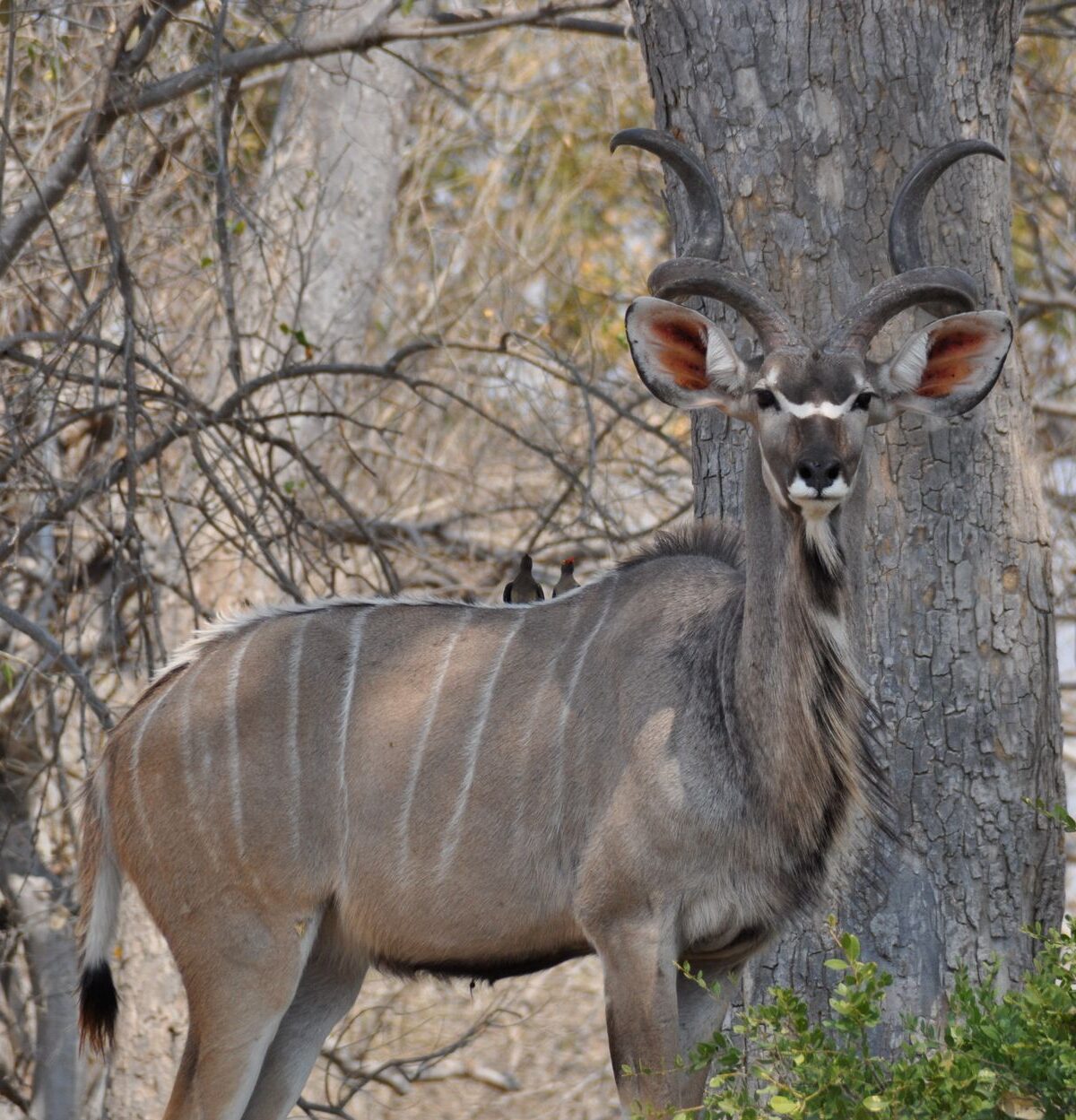
GREATER KUDU
Tragelaphus strepsiceros
DESCRIPTION
Greater Kudu (Tragelaphus strepsiceros) is a large antelope known for its impressive spiral horns and striking coloration. Males typically have a grayish-brown coat with white vertical stripes, while females are lighter and lack horns. These animals are primarily found in open woodlands and savannas, where they exhibit a shy and elusive behavior, often relying on their keen senses to detect predators.
FUN FACTS
- Greater Kudus are known for their impressive leaps, which can reach heights of up to 3 meters, allowing them to escape predators effectively
- | The spiral horns of male Greater Kudus can grow up to 1.8 meters long, making them one of the longest horned antelopes in the world
QUICK INFO
Lifespan10-15 years in the wild, up to 20 years in captivi
Average Weight120-300 kg
Average Length1.8-2.5 m
Diet TypeHerbivore
Social StructureThey are typically solitary or found in small groups, often consisting of females and their young. Males are more solitary, especially outside of the breeding season.
Activity PatternCrepuscular
Breeding SeasonYear-round, with peaks depending on the region
- Habitat
- Greater Kudus inhabit a range of environments, including savannas, woodlands, and bushlands. They prefer areas with dense vegetation for cover and access to water sources.
- Biomes
- Savanna, Woodland
- Native Range
- Greater Kudus are native to eastern and southern Africa, ranging from South Sudan to South Africa.
- Continent
- Africa
- Countries
- South Sudan, Uganda, Kenya, Tanzania, Zambia, Botswana, Namibia, South Africa
- Diet
- Greater Kudus are herbivores that primarily feed on leaves, shoots, and fruits. They are known to browse on a variety of vegetation, adapting their diet based on seasonal availability.
- Diet Type
- Herbivore
- Favorite Food
- leaves, shoots, fruits
- Social Structure
- They are typically solitary or found in small groups, often consisting of females and their young. Males are more solitary, especially outside of the breeding season.
- Activity Pattern
- Crepuscular
- Group Size
- 1-10
- Territorial
- 0
 LC
LC
 VU
VU
 LC
LC
120-300 kg
Weight
1.8-2.5 m
Length
1.2 m at shoulder
Height (Shoulder)
- Coloration
- Grayish-brown with white vertical stripes
- Sexual Dimorphism
- Males are larger and have long spiral horns, while females are smaller and hornless.
- Lifespan
- 10-15 years in the wild, up to 20 years in captivi
- Gestation Period
- 210 days
- Offspring per Birth
- 1
- Sexual Maturity
- 1.5-2 years
- Breeding Season
- Year-round, with peaks depending on the region
LC
Least Concern
IUCN Red List Status
- Population Status
- The population of Greater Kudus is currently stable in many areas, although they face threats from habitat loss and hunting.
- Wild Population Estimate
- 100,000-200,000
- Population Trend
- Stable
- Endangered
- 0
- Threats
- Main threats include habitat loss due to agriculture and urbanization, as well as poaching for bushmeat and trophies. Conservation efforts are in place to protect their habitats and manage hunting.
- Predators
- Lions, leopards, hyenas, and wild dogs are known predators of Greater Kudus.
- Defense Mechanisms
- They rely on their excellent camouflage and agility to evade predators, often using dense vegetation for cover.
- Compatible Animals
- Zebras, giraffes, various antelope species
- Found in Zoos
- Common