


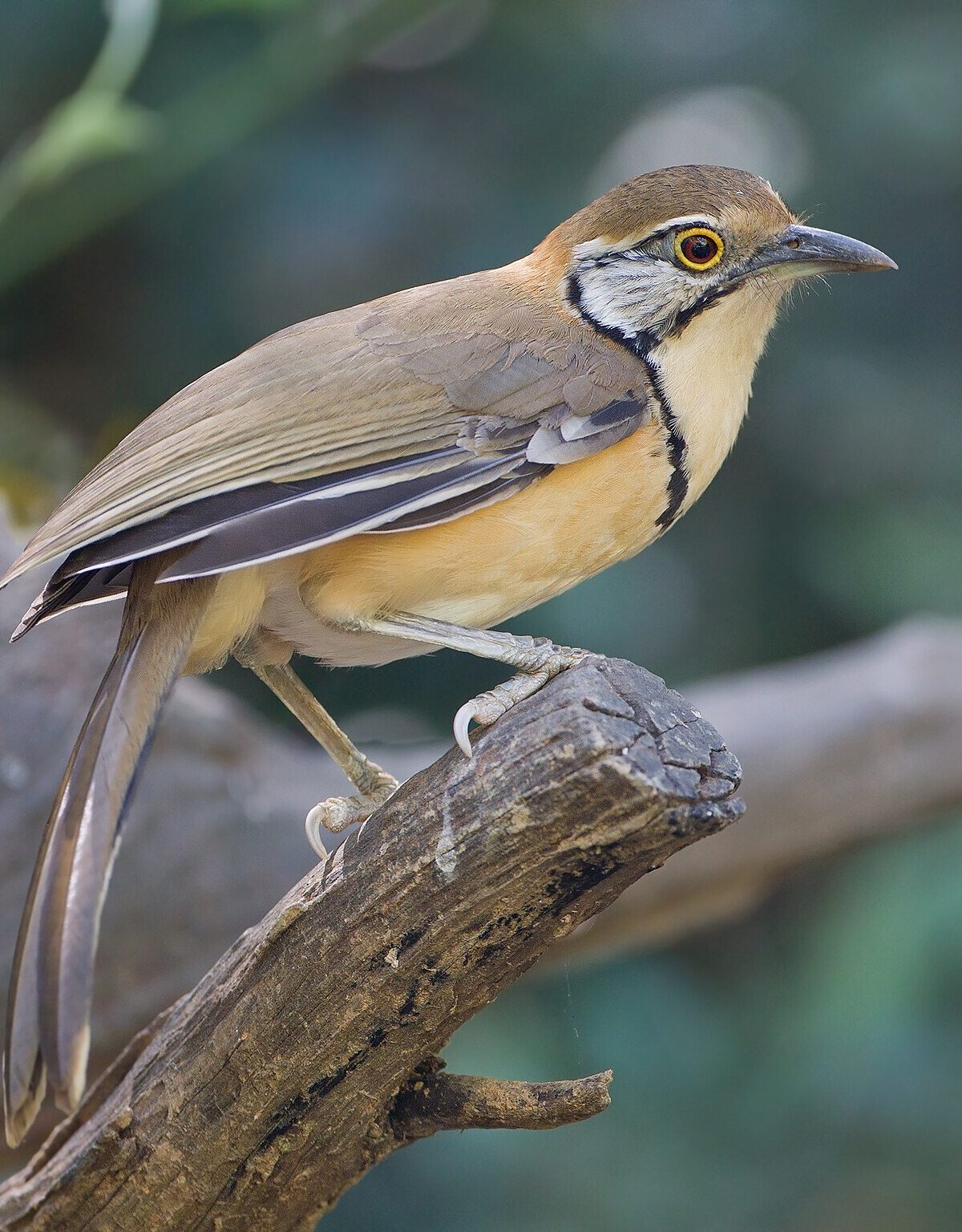
GREATER NECKLACED LAUGHING THRUSH
Garrulax pectoralis
DESCRIPTION
Greater Necklaced Laughing Thrush (Garrulax pectoralis) is a striking bird known for its distinctive necklaced plumage and vibrant coloration. It typically exhibits a combination of brown, black, and white feathers, with a prominent white throat and a dark crown. This species is social and often found in groups, engaging in lively vocalizations that contribute to its common name, reflecting its playful and gregarious nature.
FUN FACTS
- The Greater Necklaced Laughing Thrush is known for its playful behavior, often engaging in social interactions that include chasing and play-fighting
- Their vocalizations are not only a means of communication but also serve to establish social bonds within their groups.| This species has a unique ability to mimic sounds from their environment, including other bird calls and even human-made noises, showcasing their intelligence and adaptability
QUICK INFO
Lifespanup to 10 years in the wild
Average Weight100-150 g
Average Length25-30 cm
Diet TypeOmnivore
Social Structuregroup — they are often found in small flocks, which helps in foraging and protection from predators.
Activity PatternDiurnal
Breeding SeasonSpring (March-May)
- Habitat
- This species inhabits subtropical or tropical moist lowland forests and montane forests. It prefers dense undergrowth where it can find food and shelter.
- Biomes
- Tropical Rainforest, Montane Forest
- Native Range
- The Greater Necklaced Laughing Thrush is native to Southeast Asia, particularly found in the regions of Myanmar, Thailand, Laos, Vietnam, and southern China.
- Continent
- Asia
- Countries
- Myanmar, Thailand, Laos, Vietnam, China
- Diet
- The Greater Necklaced Laughing Thrush primarily feeds on insects, fruits, and seeds. It forages on the ground and in shrubs, using its strong bill to extract food items.
- Diet Type
- Omnivore
- Favorite Food
- insects, fruits, seeds
- Social Structure
- group — they are often found in small flocks, which helps in foraging and protection from predators.
- Activity Pattern
- Diurnal
- Group Size
- 5-15
- Territorial
- 0
 LC
LC
 VU
VU
100-150 g
Weight
25-30 cm
Length
- Coloration
- brown and black with a distinctive white throat and necklaced pattern
- Sexual Dimorphism
- males and females are similar in appearance
- Lifespan
- up to 10 years in the wild
- Offspring per Birth
- 3-5
- Sexual Maturity
- 1 year
- Breeding Season
- Spring (March-May)
LC
Least Concern
IUCN Red List Status
- Population Status
- The population is currently stable, but habitat loss poses a potential threat.
- Wild Population Estimate
- unknown
- Population Trend
- Stable
- Endangered
- 0
- Threats
- Habitat destruction due to deforestation and agricultural expansion is the main threat to this species. Additionally, they may be affected by hunting in some areas.
- Predators
- snakes, birds of prey, and larger mammals
- Defense Mechanisms
- They rely on their social structure and vocalizations to warn each other of danger.
- Found in Zoos
- Uncommon