


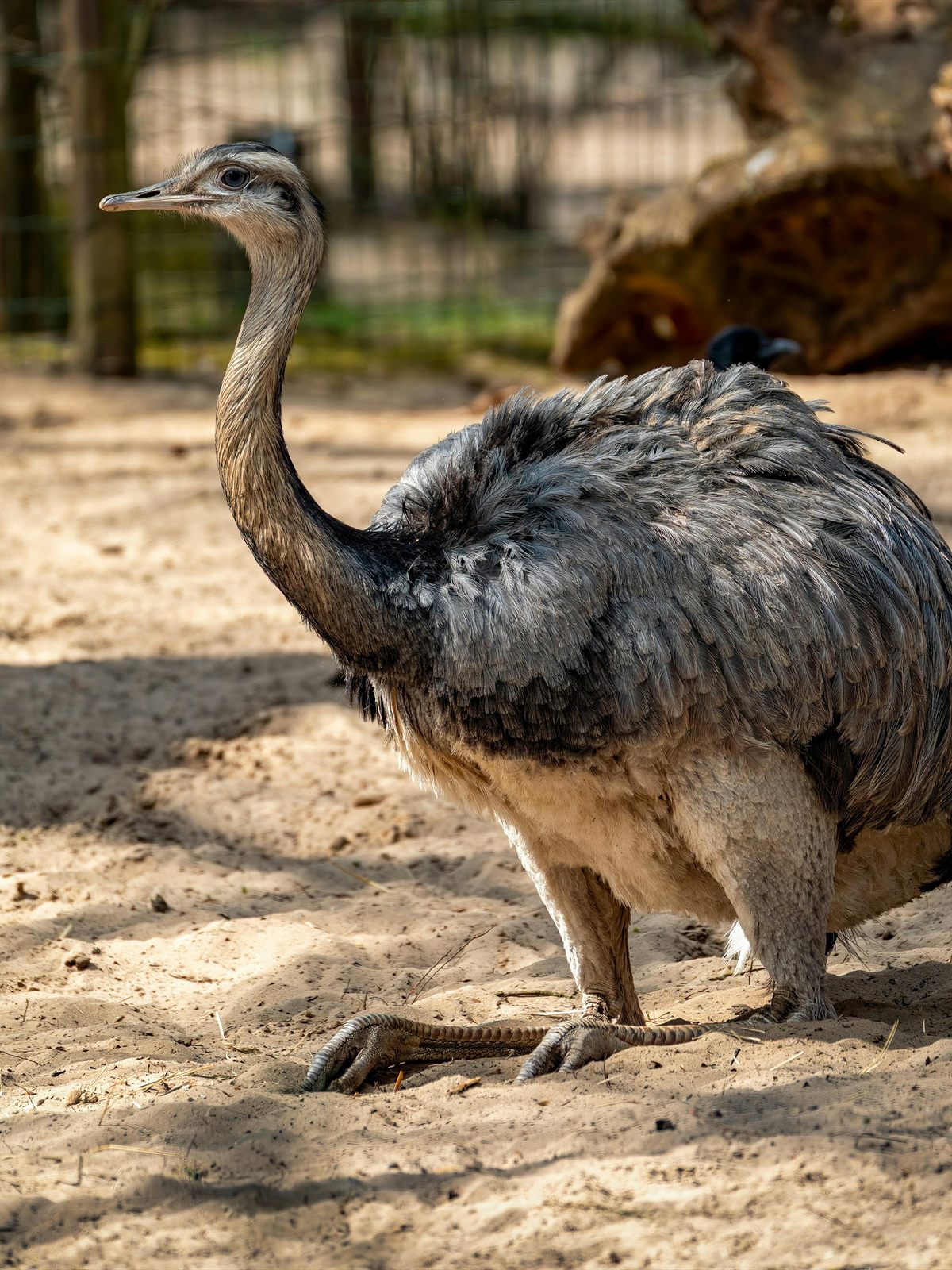
GREATER RHEA
Rhea americana
DESCRIPTION
Greater Rhea is a large flightless bird native to South America, often recognized for its long legs and neck, resembling an ostrich. It has a grayish-brown plumage with a lighter underbelly, which helps it blend into its grassland habitat. These birds are social and often found in groups, displaying interesting behaviors such as communal nesting and protective parenting.
FUN FACTS
- Greater Rheas can run at speeds of up to 60 km/h, making them one of the fastest birds on land
- They are also known for their unique nesting behavior, where males build nests and incubate the eggs laid by multiple females, showcasing a fascinating aspect of their reproductive strategy
QUICK INFO
Lifespan10-15 years in the wild, up to 20 in captivity
Average Weight40-60 kg
Average Length1.5-1.8 m
Diet TypeHerbivore
Social Structuregroup — Greater Rheas are typically found in flocks, which provide safety in numbers against predators.
Activity PatternDiurnal
Breeding SeasonSpring (September-November)
- Habitat
- Greater Rheas inhabit open grasslands, savannas, and scrublands, where they can forage for food and evade predators. They prefer areas with ample vegetation for cover and nesting.
- Biomes
- Grassland, Savanna
- Native Range
- Greater Rheas are found across the central and southern regions of South America, particularly in countries like Argentina, Brazil, and Uruguay.
- Continent
- South America
- Countries
- Argentina, Brazil, Uruguay, Paraguay
- Diet
- Greater Rheas primarily feed on a variety of plant materials, seeds, fruits, and occasionally insects. Their diet reflects their herbivorous nature, with a preference for grasses and leaves.
- Diet Type
- Herbivore
- Favorite Food
- grasses, seeds, fruits
- Social Structure
- group — Greater Rheas are typically found in flocks, which provide safety in numbers against predators.
- Activity Pattern
- Diurnal
- Group Size
- 5-30
- Territorial
- 0

 NT
NT
40-60 kg
Weight
1.5-1.8 m
Length
1.5 m at shoulder
Height (Shoulder)
- Coloration
- grayish-brown with lighter underparts
- Sexual Dimorphism
- males are generally larger than females
- Lifespan
- 10-15 years in the wild, up to 20 in captivity
- Sexual Maturity
- 2-3 years
- Breeding Season
- Spring (September-November)
LC
Least Concern
IUCN Red List Status
- Population Status
- The population of Greater Rheas is currently stable, but they face threats from habitat loss and hunting.
- Wild Population Estimate
- 50,000-100,000
- Population Trend
- Stable
- Endangered
- 0
- Threats
- Main threats include habitat destruction due to agriculture and hunting for their feathers and meat. Conservation efforts are needed to ensure their habitats are protected.
- Predators
- pumas, jaguars, and large birds of prey such as eagles
- Defense Mechanisms
- Greater Rheas rely on their speed and agility to escape predators, often running at high speeds to evade capture.
- Found in Zoos
- Common