


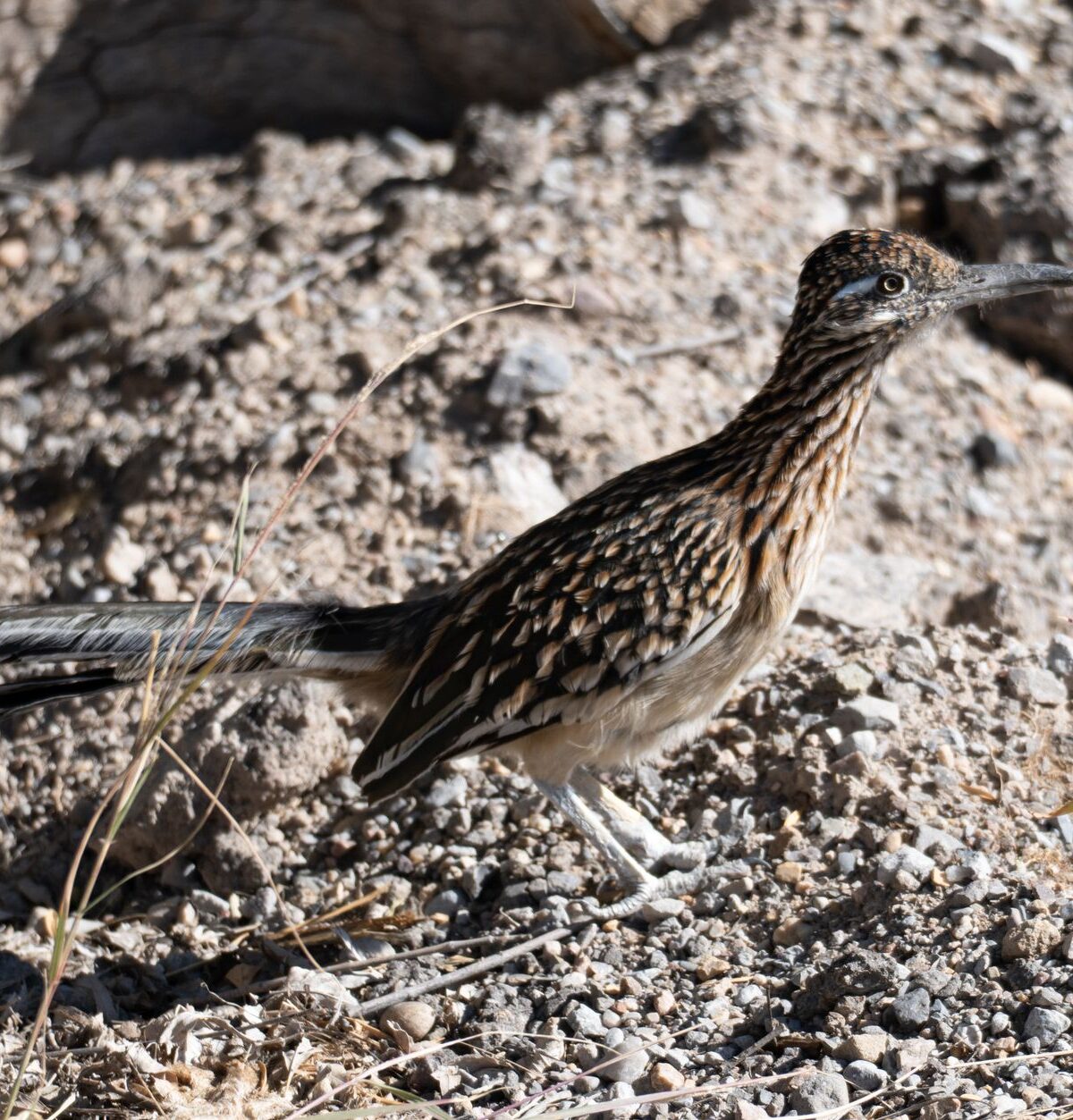
GREATER ROADRUNNER
DESCRIPTION
Also called the Roadrunner, the Greater Roadrunner is a large, ground-dwelling bird known for its distinctive long tail and striking plumage, which features a combination of brown, white, and black streaks. This bird is highly adapted to its arid desert environment, exhibiting remarkable speed and agility, capable of running at speeds up to 20 miles per hour. Greater Roadrunners are known for their unique behavior, often seen foraging for food on the ground and displaying a curious and bold demeanor.
FUN FACTS
- Greater Roadrunners are known for their unique courtship displays, which include elaborate dances and vocalizations to attract mates
- They are also famous for their ability to eat venomous snakes, including rattlesnakes, showcasing their remarkable hunting skills and adaptability.| The Greater Roadrunner is the state bird of New Mexico, symbolizing the state's unique desert environment and wildlife
- Their iconic status has made them a popular subject in various forms of media, including cartoons and literature
QUICK INFO
Lifespanup to 7 years in the wild, longer in captivity
Average Weight200-300 g
Average Length60-70 cm
Diet TypeCarnivore
Social Structuresolitary or in pairs, often seen alone except during breeding season
Activity PatternDiurnal
Breeding SeasonSpring (March-June)
- Habitat
- Greater Roadrunners inhabit open, arid regions such as deserts and scrublands. They prefer areas with sparse vegetation that allows for easy movement and visibility.
- Biomes
- Desert, Grassland
- Native Range
- The native range of the Greater Roadrunner extends from the southwestern United States down through Mexico and into Central America.
- Continent
- North America, Central America
- Countries
- United States, Mexico, Guatemala, Honduras
- Diet
- Greater Roadrunners primarily eat insects, small mammals, and reptiles, including snakes. They are known for their opportunistic feeding habits, often hunting and scavenging.
- Diet Type
- Carnivore
- Favorite Food
- insects, small mammals, reptiles
- Social Structure
- solitary or in pairs, often seen alone except during breeding season
- Activity Pattern
- Diurnal
- Group Size
- 1-2
- Territorial
- 1
 CR
CR
 LC
LC
200-300 g
Weight
60-70 cm
Length
- Coloration
- brown and white streaked plumage with a distinctive crest
- Sexual Dimorphism
- males and females are similar in appearance, but males are generally larger
- Lifespan
- up to 7 years in the wild, longer in captivity
- Offspring per Birth
- 2-6
- Sexual Maturity
- 1 year
- Breeding Season
- Spring (March-June)
LC
Least Concern
IUCN Red List Status
- Population Status
- The population of Greater Roadrunners is currently stable, with no significant declines reported.
- Wild Population Estimate
- unknown
- Population Trend
- Stable
- Endangered
- 0
- Threats
- Main threats include habitat loss due to urbanization and agricultural expansion. Additionally, road traffic poses a risk to their populations as they often forage near roads.
- Predators
- Coyotes, hawks, snakes, and domestic cats are known predators of the Greater Roadrunner.
- Defense Mechanisms
- Greater Roadrunners use their speed to escape predators and can also employ aggressive displays to deter threats.
- Found in Zoos
- Uncommon