


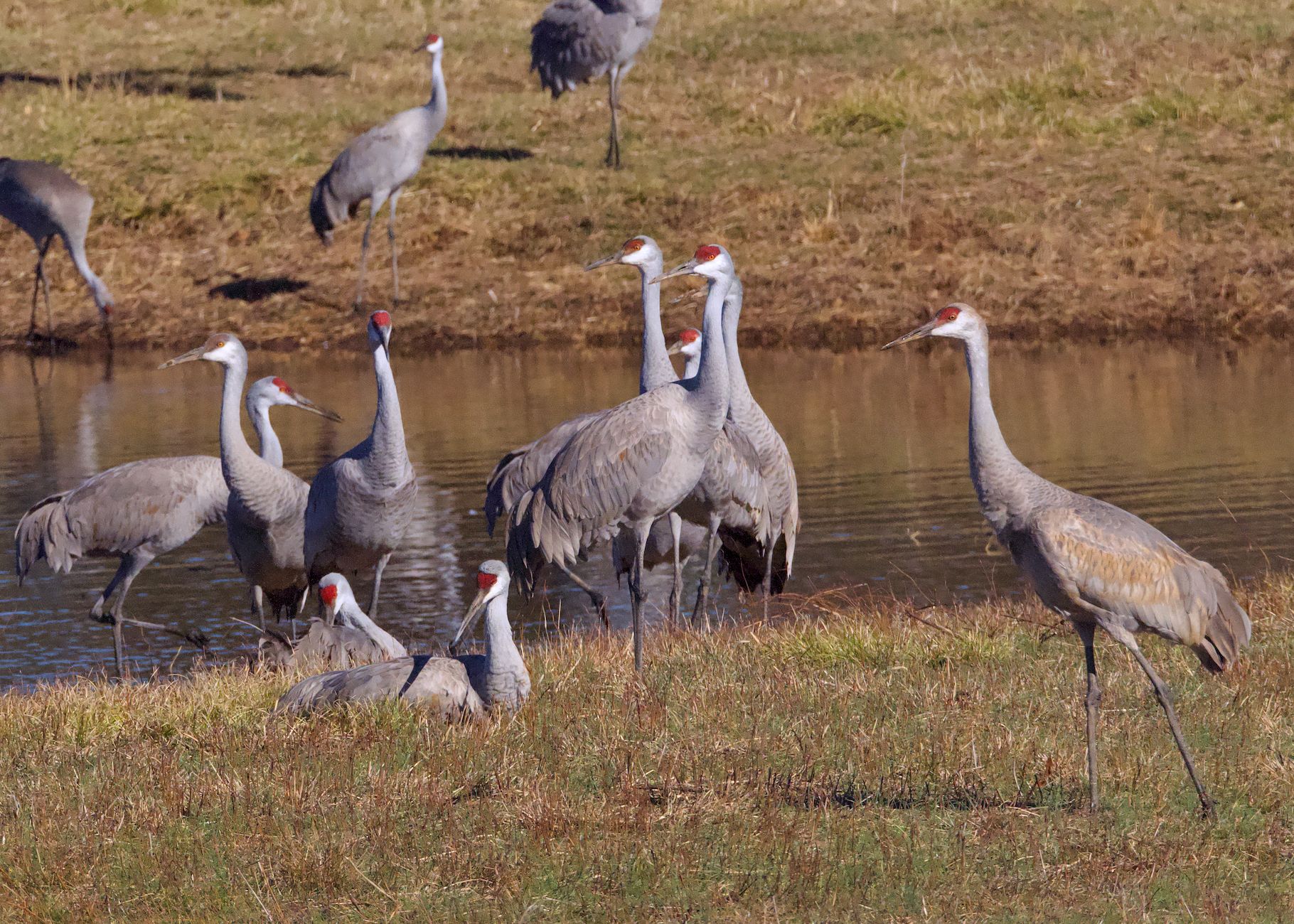
GREATER SANDHILL CRANE
Antigone canadensis
DESCRIPTION
Greater Sandhill Crane (Antigone canadensis) is a large, elegant bird known for its long legs and neck, with a distinctive gray plumage and a red crown on its head. These cranes are highly social and often seen in large flocks, especially during migration. They are known for their elaborate courtship dances and vocalizations, which include trumpeting calls that can be heard over long distances.
FUN FACTS
- Greater Sandhill Cranes are known for their impressive migratory journeys, traveling thousands of miles between their breeding and wintering grounds
- They can fly at altitudes of up to 10,000 feet and are often seen soaring gracefully in the sky
- | These cranes are also famous for their elaborate courtship rituals, which include synchronized dancing and vocalizations
- Their dances can involve jumping, bowing, and flapping their wings, showcasing their strength and agility
QUICK INFO
Lifespan20-30 years in the wild.
Average Weight4.5-7 kg
Average Length1.2-1.5 m
Diet TypeOmnivore
Social StructureThey are typically seen in pairs or small groups, especially during the breeding season, but can form larger flocks during migration.
Activity PatternDiurnal
Breeding SeasonSpring (March-May)
- Habitat
- They inhabit wetlands, grasslands, and agricultural fields, often nesting in marshy areas. These cranes prefer open spaces where they can easily spot predators.
- Biomes
- Wetlands, Grasslands
- Native Range
- Greater Sandhill Cranes are found across North America, with breeding populations in Canada and the northern United States, and wintering grounds in the southern United States and Mexico.
- Continent
- North America
- Countries
- United States, Canada, Mexico
- Diet
- Greater Sandhill Cranes are omnivorous, feeding on a variety of plant materials, seeds, insects, and small animals. They often forage in wetlands and agricultural fields.
- Diet Type
- Omnivore
- Favorite Food
- grains, seeds, insects
- Social Structure
- They are typically seen in pairs or small groups, especially during the breeding season, but can form larger flocks during migration.
- Activity Pattern
- Diurnal
- Group Size
- 5-50
- Territorial
- 1

 LC
LC
 VU
VU
4.5-7 kg
Weight
1.2-1.5 m
Length
1.2 m at shoulder
Height (Shoulder)
- Coloration
- Gray plumage with a red crown and black facial markings.
- Sexual Dimorphism
- Males are generally larger than females.
- Lifespan
- 20-30 years in the wild.
- Offspring per Birth
- 1-2
- Sexual Maturity
- 2-3 years
- Breeding Season
- Spring (March-May)
LC
Least Concern
IUCN Red List Status
- Population Status
- The population of Greater Sandhill Cranes is currently stable, with some populations increasing due to conservation efforts.
- Wild Population Estimate
- 600,000-700,000
- Population Trend
- Increasing
- Endangered
- 0
- Threats
- Main threats include habitat loss due to agricultural expansion and wetland drainage. Additionally, they face risks from climate change and human disturbance.
- Conservation Program
- Various conservation programs are in place to protect their habitats and manage populations.
- Predators
- Coyotes, foxes, eagles, and large birds of prey.
- Defense Mechanisms
- They use their size and loud calls to deter predators, and can also fly away quickly if threatened.
- Compatible Animals
- Other crane species, waterfowl
- Found in Zoos
- Common