


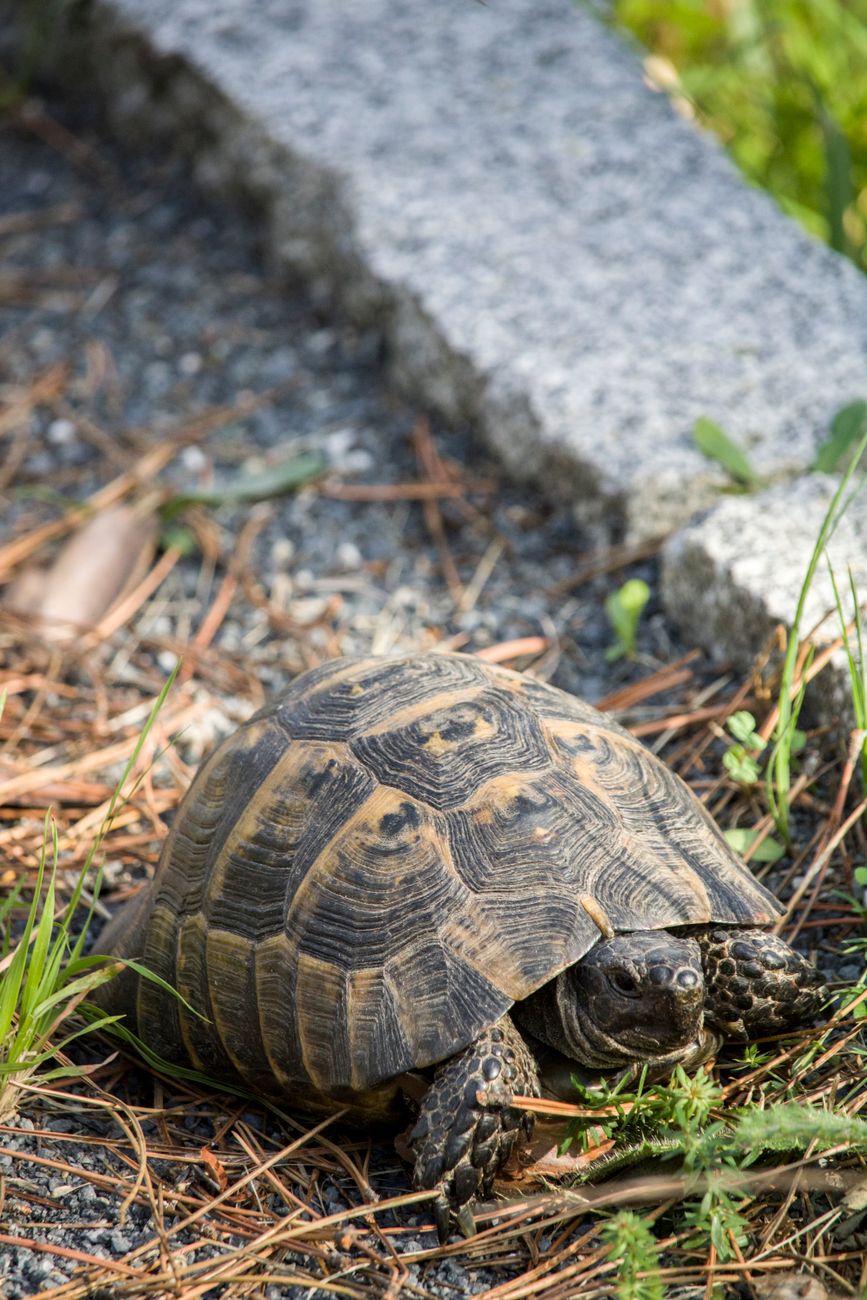
GREEK TORTOISE
Testudo graeca
DESCRIPTION
Greek Tortoise (Testudo graeca) is commonly known as the Mediterranean Tortoise and the Spur-thighed Tortoise. This species is characterized by its high-domed shell, which can vary in color from brown to yellow with dark patterns. They are primarily terrestrial and exhibit a slow, deliberate movement, often basking in the sun during the day and seeking shelter in burrows or under vegetation during the hottest parts of the day.
FUN FACTS
- Greek Tortoises can live for over a century, making them one of the longest-living reptiles
- They have a unique ability to survive in harsh environments by entering a state of brumation during extreme temperatures, which allows them to conserve energy and water.| These tortoises are known for their strong homing instincts, often returning to the same location after being moved
- This behavior is thought to be linked to their ability to navigate using the Earth's magnetic field
QUICK INFO
Lifespan50-100 years in the wild, up to 150 years in capti
Average Weight1-3 kg
Average Length20-30 cm
Diet TypeHerbivore
Social Structuresolitary, occasionally seen in small groups during breeding
Activity PatternDiurnal
Breeding SeasonSpring (April-June)
- Habitat
- Greek Tortoises inhabit dry, open areas with plenty of vegetation, including scrublands and grasslands. They prefer habitats that provide both sun and shade for thermoregulation.
- Biomes
- Mediterranean, Grassland
- Native Range
- The native range of the Greek Tortoise includes parts of Southern Europe, North Africa, and the Mediterranean islands.
- Continent
- Europe, Africa
- Countries
- Greece, Turkey, Italy, Tunisia, Algeria, Morocco
- Diet
- Greek Tortoises are herbivores, primarily feeding on a variety of grasses, leaves, and flowers. They may also consume fruits and vegetables when available.
- Diet Type
- Herbivore
- Favorite Food
- grasses, leaves, flowers
- Social Structure
- solitary, occasionally seen in small groups during breeding
- Activity Pattern
- Diurnal
- Group Size
- 1-3
- Territorial
- 0

 VU
LC
VU
LC
1-3 kg
Weight
20-30 cm
Length
- Coloration
- brown to yellow with dark patterns on the shell
- Sexual Dimorphism
- males tend to have a concave plastron and longer tails compared to females
- Lifespan
- 50-100 years in the wild, up to 150 years in capti
- Gestation Period
- 60-90 days
- Offspring per Birth
- 3-10
- Sexual Maturity
- 5-10 years
- Breeding Season
- Spring (April-June)
VU
Vulnerable
IUCN Red List Status
- Population Status
- The population of Greek Tortoises is declining due to habitat loss and illegal collection for the pet trade.
- Wild Population Estimate
- unknown
- Population Trend
- Decreasing
- Endangered
- 1
- Threats
- Main threats include habitat destruction due to urbanization and agriculture, as well as illegal collection for the pet trade. Climate change also poses a risk to their habitats.
- Predators
- foxes, birds of prey, domestic dogs, and humans
- Defense Mechanisms
- Greek Tortoises can retract into their shells for protection against predators.
- Found in Zoos
- Common