


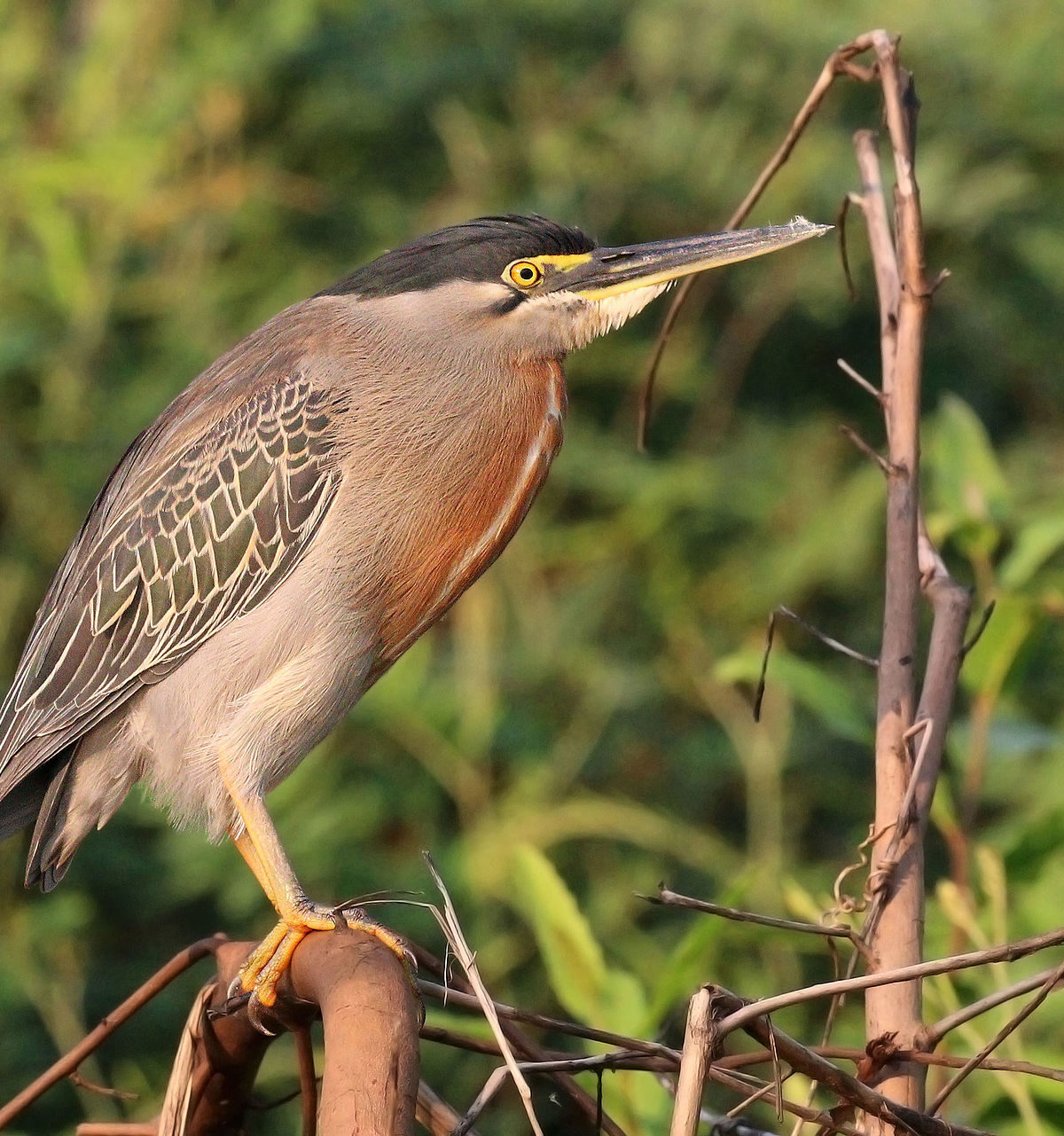
GREEN-BACKED HERON
Butorides striata
DESCRIPTION
The Green-Backed Heron, also known as Butorides striata, is a small heron characterized by its striking greenish-black back and wings, contrasting with its white underparts. This bird typically has a stout body, a short neck, and a sharp, pointed bill, which it uses to catch prey. It is known for its stealthy hunting behavior, often seen standing motionless at the water's edge or stalking slowly through shallow waters.
FUN FACTS
- Green-Backed Herons are known for their unique hunting technique of using bait, such as small twigs or insects, to lure fish closer
- This behavior showcases their intelligence and adaptability in foraging strategies
- | These herons are also quite vocal, producing a variety of calls that can be heard during their breeding season, which helps in establishing territory and attracting mates
- Their calls can vary significantly between individuals, adding to their unique behavioral repertoire
QUICK INFO
Lifespan10-15 years in the wild
Average Weight200-400 g
Average Length50-60 cm
Diet TypePiscivore
Social Structuresolitary or in pairs, typically seen alone while hunting
Activity PatternDiurnal
Breeding SeasonSpring to early summer
- Habitat
- This species inhabits a range of wetland environments, including marshes, mangroves, and the edges of lakes and rivers. It prefers areas with dense vegetation for cover and nesting.
- Biomes
- Wetlands, Coastal, Tropical Rainforest
- Native Range
- The Green-Backed Heron is found across a wide range, including parts of Africa, Asia, and the islands of the Indian Ocean.
- Continent
- Africa, Asia
- Countries
- India, Sri Lanka, Bangladesh, Myanmar, Thailand, Malaysia, Indonesia, Philippines, Madagascar, various African countries
- Diet
- The Green-Backed Heron primarily feeds on fish, amphibians, and invertebrates. It employs a variety of hunting techniques, including waiting patiently for prey or using tools to lure fish.
- Diet Type
- Piscivore
- Favorite Food
- fish, amphibians
- Social Structure
- solitary or in pairs, typically seen alone while hunting
- Activity Pattern
- Diurnal
- Group Size
- 1-2
- Territorial
- 1
 LC
LC
200-400 g
Weight
50-60 cm
Length
- Coloration
- greenish-black back, white underparts, yellow legs
- Lifespan
- 10-15 years in the wild
- Offspring per Birth
- 3-5
- Sexual Maturity
- 1-2 years
- Breeding Season
- Spring to early summer
LC
Least Concern
IUCN Red List Status
- Population Status
- The population is currently stable, but local declines may occur due to habitat loss.
- Wild Population Estimate
- Unknown
- Population Trend
- Stable
- Endangered
- 0
- Threats
- Main threats include habitat destruction due to urbanization and pollution of water bodies. Climate change also poses a risk to their wetland habitats.
- Predators
- Larger birds of prey, snakes, and mammals such as raccoons may prey on Green-Backed Herons, especially their eggs and young.
- Defense Mechanisms
- They rely on camouflage and stealth to avoid detection by predators.
- Found in Zoos
- Uncommon