


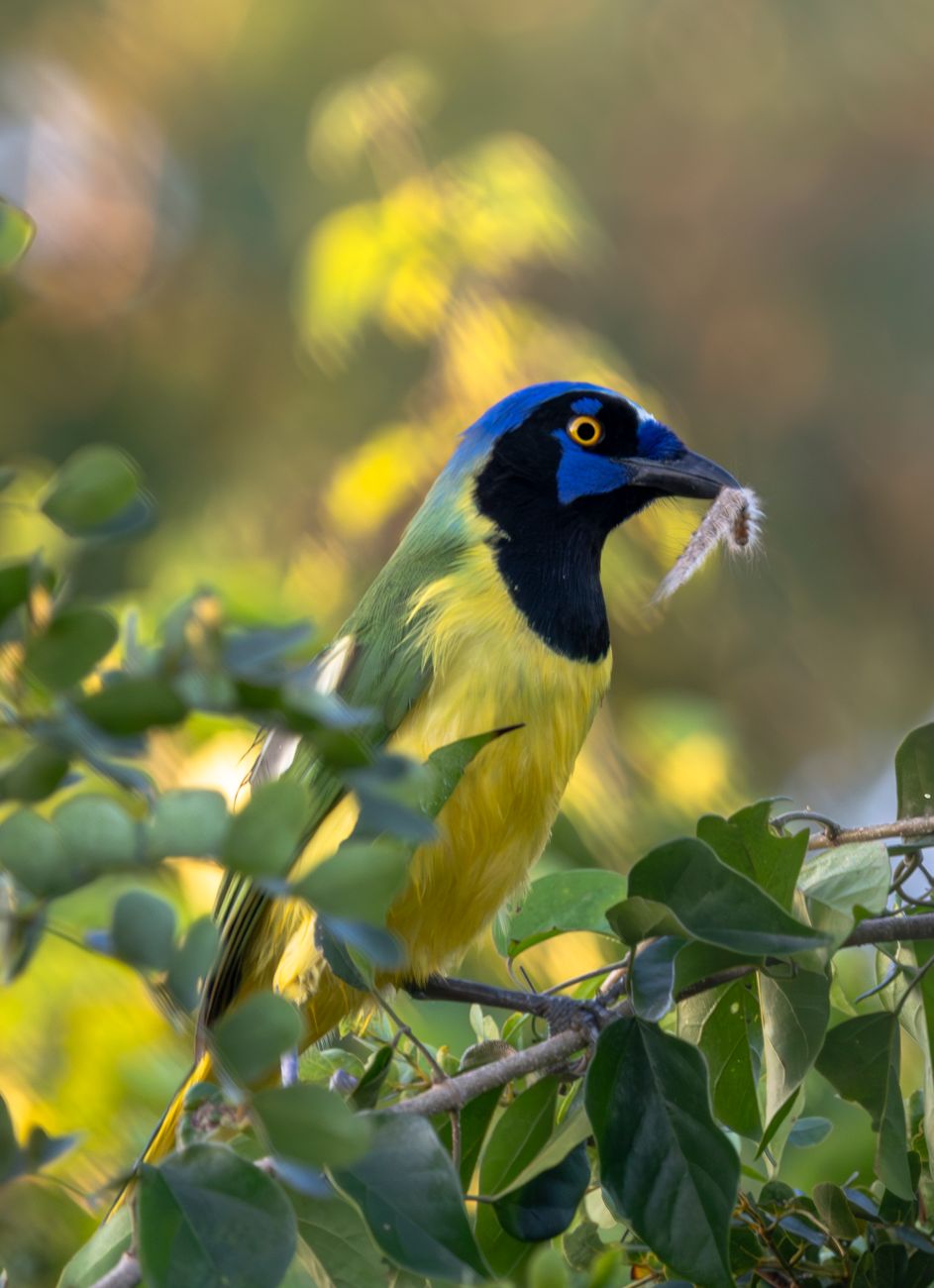
GREEN JAY
Cyanocorax yncas
DESCRIPTION
Green Jay (Cyanocorax yncas) is a striking bird known for its vibrant green plumage, complemented by a black crown and bright blue wings and tail. This species is often found in social groups, displaying playful and curious behavior, which includes vocalizations and acrobatics. Ecologically, Green Jays play a significant role in seed dispersal within their habitats, contributing to the health of their ecosystems.
FUN FACTS
- Green Jays are known for their playful nature, often engaging in games and social interactions with other members of their flock
- They have a diverse range of vocalizations, which they use to communicate with each other, making them one of the more vocal species in their family
- | In some regions, Green Jays have been observed using tools to access food, showcasing their intelligence and adaptability
- Their striking coloration not only makes them a favorite among birdwatchers but also plays a role in their social interactions and mating displays
QUICK INFO
Lifespanup to 10 years in the wild
Average Weight70-100 g
Average Length25-30 cm
Diet TypeOmnivore
Social Structuregroup — they are often found in small flocks, which enhances their foraging efficiency and social interactions.
Activity PatternDiurnal
Breeding SeasonSpring (March-June)
- Habitat
- Green Jays inhabit tropical and subtropical forests, often favoring areas with dense vegetation. They are also found in edges of woodlands and shrubby areas, where they can easily find food and nesting sites.
- Biomes
- Tropical Rainforest, Subtropical Forest
- Native Range
- The native range of the Green Jay extends from southern Texas in the United States through Central America to western Ecuador.
- Continent
- North America, Central America, South America
- Countries
- United States, Mexico, Guatemala, Honduras, Nicaragua, Costa Rica, Panama, Ecuador
- Diet
- Green Jays primarily feed on fruits, seeds, and insects, showcasing their omnivorous diet. They are known to forage in trees and shrubs, often using their intelligence to access food sources.
- Diet Type
- Omnivore
- Favorite Food
- fruits, seeds, insects
- Social Structure
- group — they are often found in small flocks, which enhances their foraging efficiency and social interactions.
- Activity Pattern
- Diurnal
- Group Size
- 5-15
- Territorial
- 0
 LC
LC
 CR
CR
70-100 g
Weight
25-30 cm
Length
- Coloration
- vibrant green body with a black head and blue wings and tail
- Lifespan
- up to 10 years in the wild
- Offspring per Birth
- 3-5
- Sexual Maturity
- 1-2 years
- Breeding Season
- Spring (March-June)
LC
Least Concern
IUCN Red List Status
- Population Status
- The population of Green Jays is currently stable, with no significant declines reported.
- Wild Population Estimate
- unknown
- Population Trend
- Stable
- Endangered
- 0
- Threats
- Habitat loss due to deforestation and agricultural expansion poses a threat to Green Jays. Additionally, they may face competition from invasive species in some areas.
- Predators
- snakes, hawks, and larger birds of prey
- Defense Mechanisms
- Green Jays use their agility and social behavior to evade predators, often alarm calling to warn others of danger.
- Found in Zoos
- Uncommon