


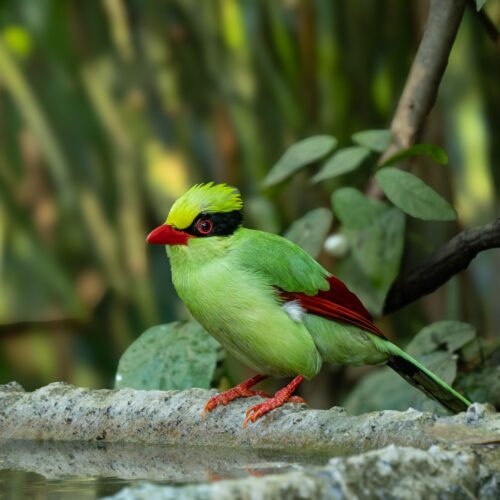
GREEN MAGPIE
Cissa chinensis
DESCRIPTION
The Green Magpie (Cissa chinensis) is a striking bird known for its vibrant green plumage, accented with black and white markings. It has a long tail and a distinctive, loud call that can often be heard in its natural habitat. This species is highly social and often found in pairs or small groups, foraging in the trees and underbrush of its environment.
FUN FACTS
- The Green Magpie is known for its intelligence and problem-solving abilities, often using tools to access food
- | They have a unique social structure, often engaging in cooperative breeding, where non-breeding individuals help care for the young
QUICK INFO
Lifespan10-15 years in the wild
Average Weight150-200 g
Average Length30-35 cm
Diet TypeOmnivore
Social StructureThey are typically found in pairs or small groups, often engaging in cooperative behaviors.
Activity PatternDiurnal
Breeding SeasonSpring (March-May)
- Habitat
- Green Magpies inhabit dense forests and woodlands, often near water sources. They prefer areas with plenty of foliage for cover and nesting.
- Biomes
- Tropical Rainforest, Subtropical Forest
- Native Range
- The Green Magpie is native to Southeast Asia, particularly found in countries like Myanmar, Thailand, and Malaysia.
- Continent
- Asia
- Countries
- Myanmar, Thailand, Malaysia, Vietnam, Laos
- Diet
- The Green Magpie primarily feeds on insects, fruits, and small vertebrates. It forages in trees and on the ground, using its keen eyesight to spot food.
- Diet Type
- Omnivore
- Favorite Food
- insects, fruits
- Social Structure
- They are typically found in pairs or small groups, often engaging in cooperative behaviors.
- Activity Pattern
- Diurnal
- Group Size
- 2-10
- Territorial
- 1
 LC
LC
 VU
VU
 LC
LC
150-200 g
Weight
30-35 cm
Length
- Coloration
- Vibrant green body with black wings and a white-tipped tail.
- Lifespan
- 10-15 years in the wild
- Offspring per Birth
- 2-4
- Sexual Maturity
- 1-2 years
- Breeding Season
- Spring (March-May)
LC
Least Concern
IUCN Red List Status
- Population Status
- The population is currently stable, but habitat loss poses a potential threat.
- Wild Population Estimate
- Unknown
- Population Trend
- Stable
- Endangered
- 0
- Threats
- Main threats include habitat destruction due to deforestation and human encroachment. Additionally, they may be affected by the pet trade.
- Predators
- Snakes, large birds of prey, and domestic cats.
- Defense Mechanisms
- They use their agility to escape predators and can also make loud calls to alert others of danger.
- Found in Zoos
- Uncommon