


GREEN PACMAN FROG
Ceratophrys cranwelli
DESCRIPTION
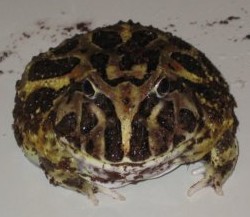
Green Pacman Frog (Ceratophrys cranwelli) is commonly known as Cranwell's Pacman Frog and Argentine Horned Frog. This species is characterized by its round, flattened body and large mouth, which gives it a distinctive appearance. They are primarily green with various patterns of yellow and brown, allowing them to blend into their natural habitat, which consists of leaf litter and vegetation in tropical environments.
FUN FACTS
- Green Pacman Frogs are known for their impressive size relative to other frogs, with some individuals reaching up to 15 cm in length
- They have a unique feeding strategy where they can consume prey that is almost as large as themselves, showcasing their powerful jaws and strong digestive systems.|These frogs are also popular in the pet trade due to their striking appearance and relatively easy care requirements
- However, potential owners should be aware of their specific habitat needs and dietary requirements to ensure their health and well-being
QUICK INFO
Lifespan5-10 years in the wild, up to 15 years in captivit
Average Weight200-300 g
Average Length10-15 cm
Diet TypeCarnivore
Social Structuresolitary, they typically prefer to live alone except during breeding season.
Activity PatternNocturnal
Breeding SeasonRainy season (varies by region)
- Habitat
- Green Pacman Frogs inhabit humid, tropical environments, often found in leaf litter and dense vegetation. They prefer areas with ample moisture and cover to aid in their ambush hunting strategy.
- Biomes
- Tropical Rainforest
- Native Range
- This species is native to the subtropical and tropical regions of South America, particularly in Argentina and Paraguay.
- Continent
- South America
- Countries
- Argentina, Paraguay
- Diet
- They are carnivorous and primarily feed on insects, small rodents, and other small animals. Their voracious appetite and ability to consume prey larger than themselves are notable traits.
- Diet Type
- Carnivore
- Favorite Food
- insects, small rodents
- Social Structure
- solitary, they typically prefer to live alone except during breeding season.
- Activity Pattern
- Nocturnal
- Group Size
- 1-2
- Territorial
- 1
 VU
VU
 LC
LC
200-300 g
Weight
10-15 cm
Length
- Coloration
- primarily green with yellow and brown patterns
- Sexual Dimorphism
- males are generally smaller than females and have more pronounced vocal sacs.
- Lifespan
- 5-10 years in the wild, up to 15 years in captivit
- Offspring per Birth
- 100-200
- Sexual Maturity
- 1-2 years
- Breeding Season
- Rainy season (varies by region)
LC
Least Concern
IUCN Red List Status
- Population Status
- The population is currently stable, but habitat destruction poses a potential threat.
- Wild Population Estimate
- unknown
- Population Trend
- Stable
- Endangered
- 0
- Threats
- Main threats include habitat loss due to deforestation and agricultural expansion. Additionally, they are sometimes collected for the pet trade, which can impact local populations.
- Predators
- birds, snakes, larger amphibians
- Defense Mechanisms
- They can inflate their bodies to appear larger and may also use camouflage to avoid detection.
- Found in Zoos
- Common