


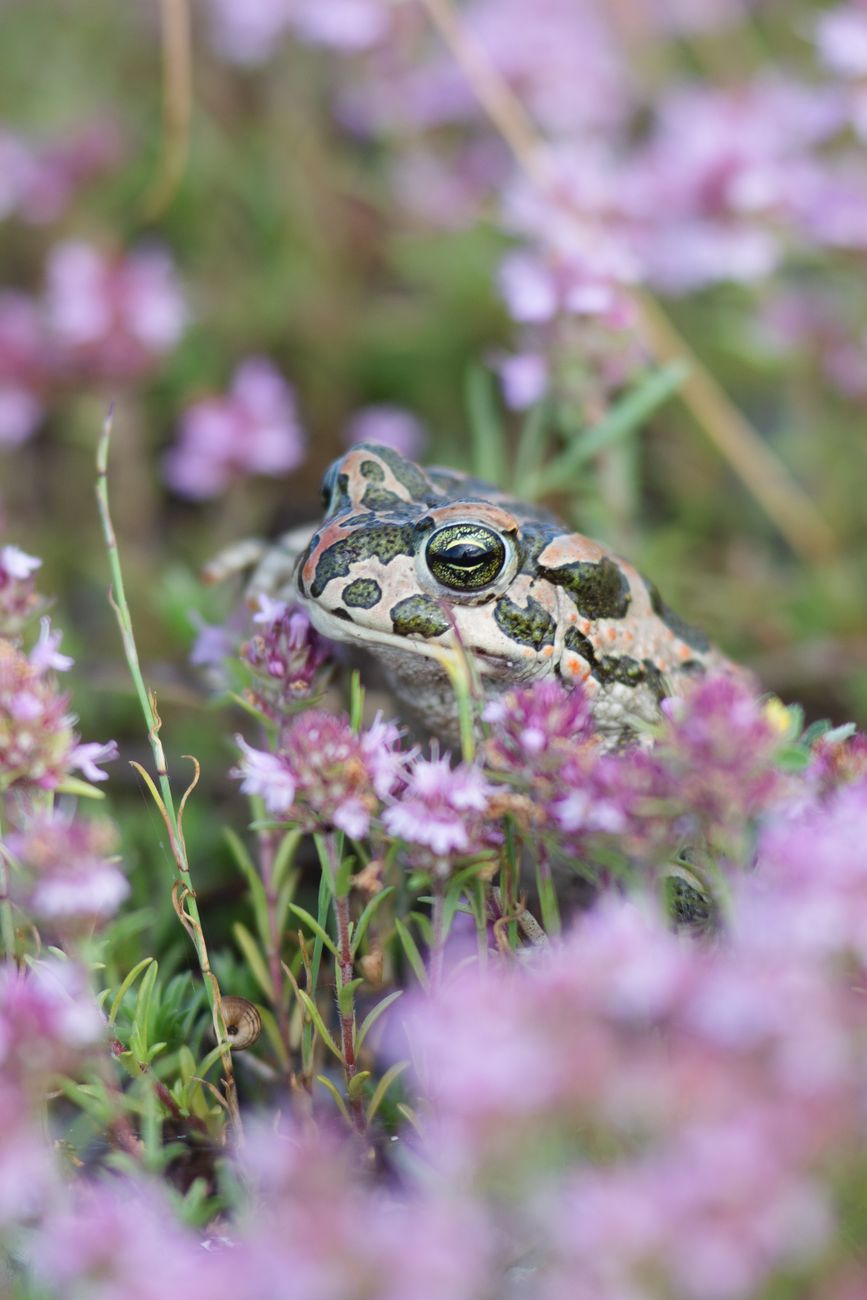
GREEN TOAD
Bufo viridis
DESCRIPTION
Green Toad (Bufo viridis) is commonly known as the European Green Toad, characterized by its vibrant green coloration and distinctive dark spots. This species exhibits a robust body and can vary in size, typically reaching lengths of 6 to 10 cm. Green Toads are primarily nocturnal and are often found in a variety of habitats, including grasslands, agricultural fields, and near water bodies, where they engage in breeding activities during the warmer months.
FUN FACTS
- Green Toads are known for their impressive vocalizations during the breeding season, with males producing a series of distinctive calls that can be heard from a distance
- These calls not only attract females but also establish territory among competing males
- | Interestingly, Green Toads have a unique ability to adapt to various environmental conditions, allowing them to thrive in both urban and rural settings
- Their resilience makes them a fascinating subject for studies on amphibian adaptability in changing climates
QUICK INFO
Lifespan5-10 years in the wild
Average Weight30-70 g
Average Length6-10 cm
Diet TypeInsectivore
Social Structuresolitary, with males and females coming together only during the breeding season
Activity PatternNocturnal
Breeding SeasonSpring to early summer (April-June)
- Habitat
- Green Toads thrive in a range of habitats, including open grasslands, shrublands, and areas near freshwater sources. They prefer environments with ample vegetation for cover and breeding sites.
- Biomes
- Temperate Forest, Grassland, Wetland
- Native Range
- The native range of the Green Toad includes parts of Europe and Asia, extending from the Iberian Peninsula to the Balkans and into parts of Central Asia.
- Continent
- Europe, Asia
- Countries
- Spain, Portugal, France, Italy, Greece, Turkey, Ukraine
- Diet
- Green Toads primarily consume insects and other small invertebrates, making them effective predators in their ecosystems. Their diet can include ants, beetles, and various larvae.
- Diet Type
- Insectivore
- Favorite Food
- insects, larvae
- Social Structure
- solitary, with males and females coming together only during the breeding season
- Activity Pattern
- Nocturnal
- Group Size
- 1-10
- Territorial
- 0
 VU
VU
 LC
LC

30-70 g
Weight
6-10 cm
Length
- Coloration
- vibrant green with dark spots
- Sexual Dimorphism
- males are generally smaller and have more pronounced vocal sacs than females
- Lifespan
- 5-10 years in the wild
- Offspring per Birth
- 1000-3000 eggs
- Sexual Maturity
- 2-3 years
- Breeding Season
- Spring to early summer (April-June)
LC
Least Concern
IUCN Red List Status
- Population Status
- The population of Green Toads is currently stable in many areas, although local declines have been observed due to habitat loss.
- Wild Population Estimate
- unknown
- Population Trend
- Stable
- Endangered
- 0
- Threats
- Main threats to Green Toads include habitat destruction due to urbanization and agricultural expansion, as well as pollution of water bodies. Climate change may also impact their breeding habitats.
- Predators
- birds, snakes, small mammals, and larger amphibians
- Defense Mechanisms
- Green Toads can secrete toxins from their skin to deter predators, making them unpalatable.
- Found in Zoos
- Uncommon