


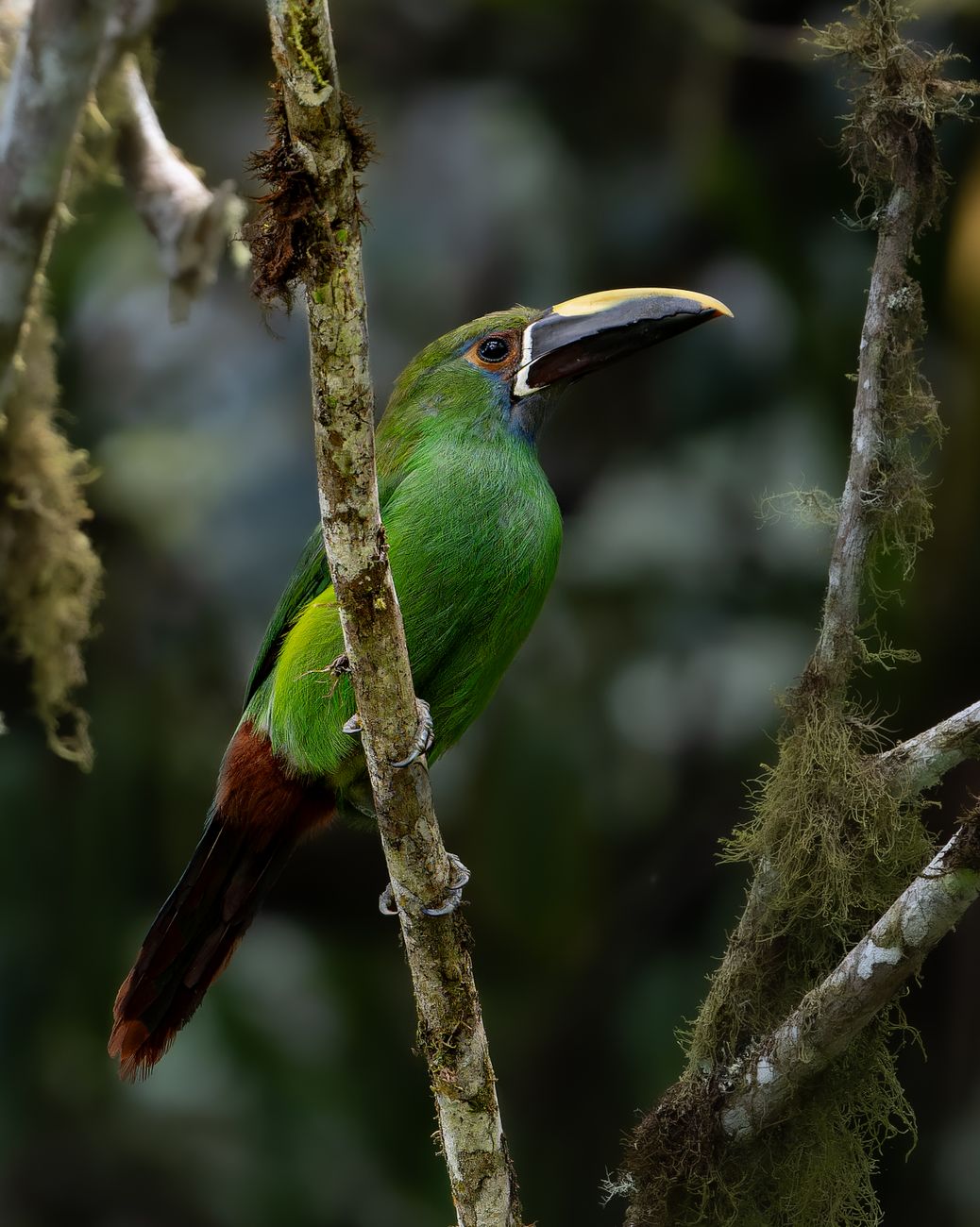
GREEN TOUCANET
Aulacorhynchus prasinus
DESCRIPTION
Green Toucanet (Aulacorhynchus prasinus) is a vibrant bird known for its striking green plumage and distinctive large bill. This species exhibits a range of colors, including yellow and blue accents, particularly around the face and throat. Green Toucanets are social birds, often found in small groups, and are known for their playful behavior as they move through the canopy of their forest habitats.
FUN FACTS
- Green Toucanets are known for their unique feeding behavior, where they often toss fruits into the air to break them open before eating
- This not only helps them access the fruit but also allows them to share food with other toucanets in their group
- | Their large bills, while seemingly cumbersome, are actually quite lightweight due to their hollow structure, allowing for efficient foraging without adding much weight
QUICK INFO
Lifespan10-15 years in the wild, up to 20 years in captivi
Average Weight150-200 g
Average Length30-35 cm
Diet TypeOmnivore
Social StructureThey are typically found in small groups or pairs, often seen foraging together in the trees.
Activity PatternDiurnal
Breeding SeasonSpring (March-May)
- Habitat
- Green Toucanets inhabit humid tropical and subtropical forests, often favoring areas with abundant fruiting trees. They are typically found in the mid to upper canopy layers of these forests.
- Biomes
- Tropical Rainforest, Subtropical Forest
- Native Range
- This species is native to Central America, ranging from southern Mexico to western Panama.
- Continent
- North America, Central America
- Countries
- Mexico, Guatemala, Honduras, El Salvador, Nicaragua, Costa Rica, Panama
- Diet
- They primarily feed on fruits, berries, and occasionally insects. Their strong bills allow them to access a variety of food sources in the treetops.
- Diet Type
- Omnivore
- Favorite Food
- fruits and berries
- Social Structure
- They are typically found in small groups or pairs, often seen foraging together in the trees.
- Activity Pattern
- Diurnal
- Group Size
- 2-10
- Territorial
- 0
 LC
LC
 DD
DD
150-200 g
Weight
30-35 cm
Length
- Coloration
- They have bright green feathers with yellow and blue markings on the face and throat.
- Sexual Dimorphism
- Males and females are similar in appearance, with no significant differences in coloration.
- Lifespan
- 10-15 years in the wild, up to 20 years in captivi
- Offspring per Birth
- 2-4
- Sexual Maturity
- 2-3 years
- Breeding Season
- Spring (March-May)
LC
Least Concern
IUCN Red List Status
- Population Status
- The population is currently stable, but habitat loss poses a potential threat.
- Wild Population Estimate
- 50,000-100,000
- Population Trend
- Stable
- Endangered
- 0
- Threats
- Main threats include habitat destruction due to deforestation and agricultural expansion. These activities reduce their natural habitat and food sources.
- Predators
- Snakes, raptors, and larger mammals may prey on Green Toucanets, particularly when they are nesting.
- Defense Mechanisms
- They often rely on their ability to blend into the foliage for camouflage and may use vocalizations to warn others of danger.
- Found in Zoos
- Uncommon