


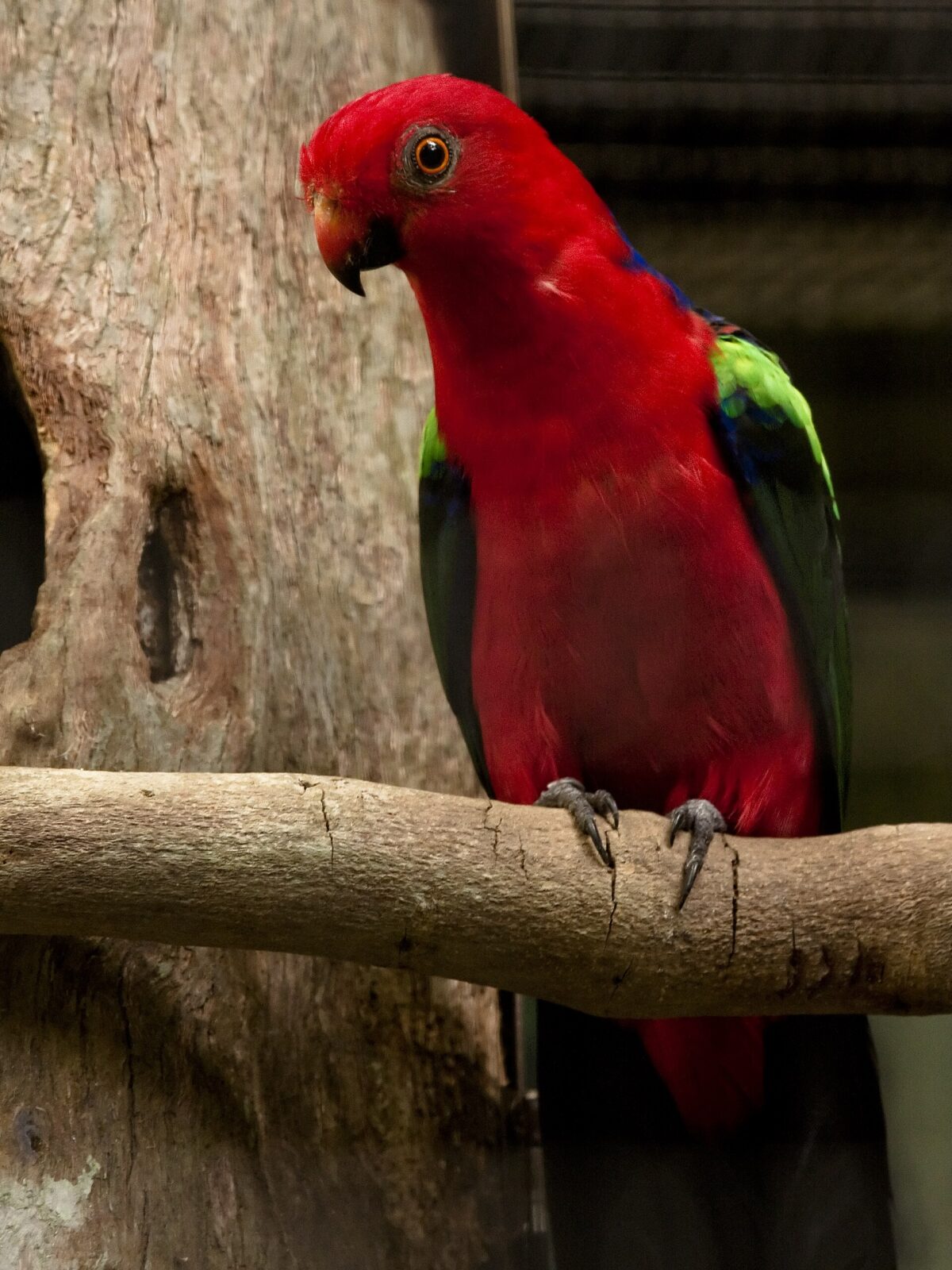
GREEN-WINGED KING PARROT
Alisterus chloropterus
DESCRIPTION
Green-winged King Parrot (Alisterus chloropterus) is also known as the Red-winged Parrot, recognized for its striking green wings and vibrant red underparts. This medium-sized parrot exhibits sexual dimorphism, with males showcasing a more vivid coloration compared to females, which are generally more subdued. They are often found in pairs or small groups, displaying a range of social behaviors and vocalizations that contribute to their lively presence in their natural habitat.
FUN FACTS
- Green-winged King Parrots are known for their intelligence and ability to mimic sounds, including human speech, making them popular among bird enthusiasts
- They also play a crucial role in their ecosystem as seed dispersers, helping to maintain the health of their forest habitats
QUICK INFO
Lifespan15-20 years in the wild, up to 30 in captivity
Average Weight150-200 g
Average Length30-35 cm
Diet TypeHerbivore
Social StructureThey are typically found in pairs or small groups, often forming strong bonds with their mates.
Activity PatternDiurnal
Breeding SeasonSpring to early summer (September to January)
- Habitat
- Green-winged King Parrots inhabit subtropical and tropical rainforests, often favoring areas with dense foliage. They are also found in adjacent woodlands and gardens, where they can access food sources.
- Biomes
- Tropical Rainforest, Subtropical Forest
- Native Range
- They are native to the eastern coast of Australia, particularly in Queensland and New South Wales.
- Continent
- Australia
- Countries
- Australia
- Diet
- They primarily feed on seeds, fruits, and flowers, foraging in the canopy of trees. Their diet is supplemented with various plant materials, making them important seed dispersers in their ecosystem.
- Diet Type
- Herbivore
- Favorite Food
- seeds, fruits, flowers
- Social Structure
- They are typically found in pairs or small groups, often forming strong bonds with their mates.
- Activity Pattern
- Diurnal
- Group Size
- 2-10
- Territorial
- 0
 LC
LC
 VU
VU
150-200 g
Weight
30-35 cm
Length
- Coloration
- Males are bright green with a red underbelly and blue wings, while females are more muted with green and yellow tones.
- Sexual Dimorphism
- Males are more brightly colored than females.
- Lifespan
- 15-20 years in the wild, up to 30 in captivity
- Offspring per Birth
- 2-4
- Sexual Maturity
- 1-2 years
- Breeding Season
- Spring to early summer (September to January)
LC
Least Concern
IUCN Red List Status
- Population Status
- The population is currently stable, but habitat loss poses a potential threat.
- Wild Population Estimate
- 50,000-100,000
- Population Trend
- Stable
- Endangered
- 0
- Threats
- Main threats include habitat destruction due to logging and land clearing for agriculture. Additionally, they may be affected by the pet trade, although this is less significant.
- Predators
- Natural predators include birds of prey and snakes, which may target eggs and young birds.
- Defense Mechanisms
- They rely on their ability to fly quickly and their camouflage in foliage to evade predators.
- Compatible Animals
- Other medium-sized parrots, finches, canaries
- Found in Zoos
- Uncommon