


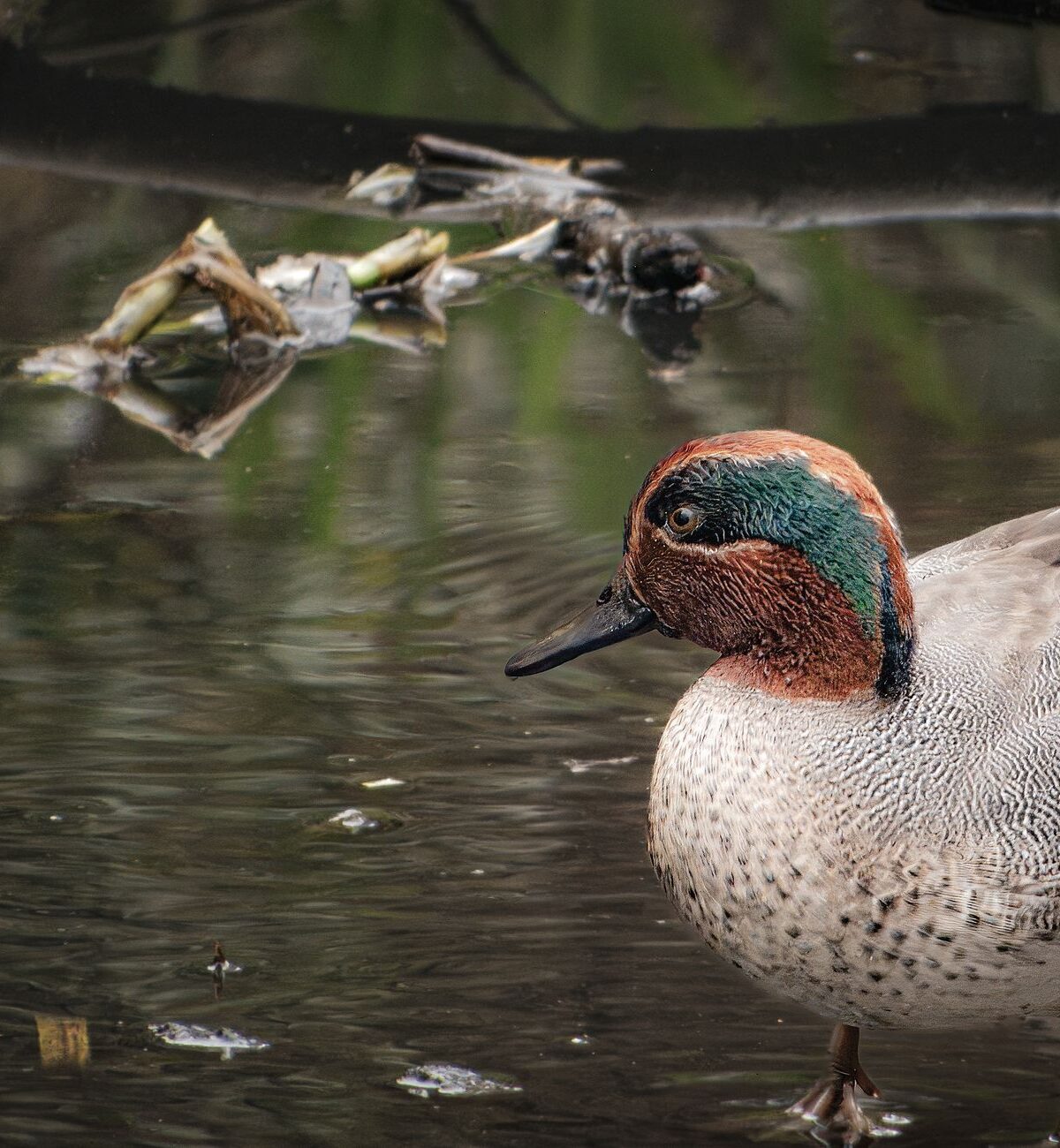
GREEN WINGED TEAL
DESCRIPTION
Also called Eurasian Teal and Common Teal, Green Winged Teal is a small dabbling duck known for its striking appearance. Males exhibit a distinctive green patch on their wings, along with a chestnut-colored head and a white vertical stripe on their flanks, while females are mottled brown for camouflage. They are often found in shallow wetlands and are known for their agile flight and social behavior, often seen in small groups or pairs.
FUN FACTS
- Green Winged Teal are one of the smallest dabbling ducks, making them highly agile flyers
- They can reach speeds of up to 50 miles per hour during flight, which helps them evade predators
- | During migration, Green Winged Teal can travel long distances, sometimes flying over 1,000 miles non-stop
- Their migratory behavior is influenced by seasonal changes and food availability, showcasing their adaptability
QUICK INFO
Lifespan5-10 years in the wild, up to 15 in captivity
Average Weight0.5-1 kg
Average Length34-38 cm
Diet TypeOmnivore
Social StructureThey are often found in pairs or small groups, especially during the breeding season.
Activity PatternDiurnal
Breeding SeasonSpring (March-May)
- Habitat
- Green Winged Teal inhabit freshwater marshes, ponds, and shallow lakes. They prefer areas with abundant vegetation for cover and feeding.
- Biomes
- Wetlands, Temperate Forest
- Native Range
- Green Winged Teal are found across Europe, Asia, and North America, migrating seasonally between breeding and wintering grounds.
- Continent
- North America, Europe, Asia
- Countries
- United States, Canada, United Kingdom, France, Russia
- Diet
- Green Winged Teal primarily feeds on aquatic plants, seeds, and small invertebrates. They forage by dabbling in the water and grazing on vegetation.
- Diet Type
- Omnivore
- Favorite Food
- aquatic plants, seeds, invertebrates
- Social Structure
- They are often found in pairs or small groups, especially during the breeding season.
- Activity Pattern
- Diurnal
- Group Size
- 2-20
- Territorial
- 0

 LC
LC
 VU
VU
0.5-1 kg
Weight
34-38 cm
Length
- Coloration
- Males have a chestnut head, green wing patch, and grayish body, while females are mottled brown.
- Sexual Dimorphism
- Males are more colorful with distinct markings, while females are more camouflaged.
- Lifespan
- 5-10 years in the wild, up to 15 in captivity
- Offspring per Birth
- 6-12
- Sexual Maturity
- 1 year
- Breeding Season
- Spring (March-May)
LC
Least Concern
IUCN Red List Status
- Population Status
- The population is currently stable, with no immediate threats to their numbers.
- Wild Population Estimate
- 1,000,000-2,000,000
- Population Trend
- Stable
- Endangered
- 0
- Threats
- Main threats include habitat loss due to wetland drainage and pollution. Climate change also poses a risk to their migratory patterns and breeding habitats.
- Predators
- Foxes, raccoons, birds of prey, and larger fish can prey on Green Winged Teal, especially their eggs and young.
- Defense Mechanisms
- They rely on their ability to quickly take flight and their cryptic coloration for camouflage.
- Compatible Animals
- Other dabbling ducks, such as Mallards and Northern Pintails
- Found in Zoos
- Uncommon