


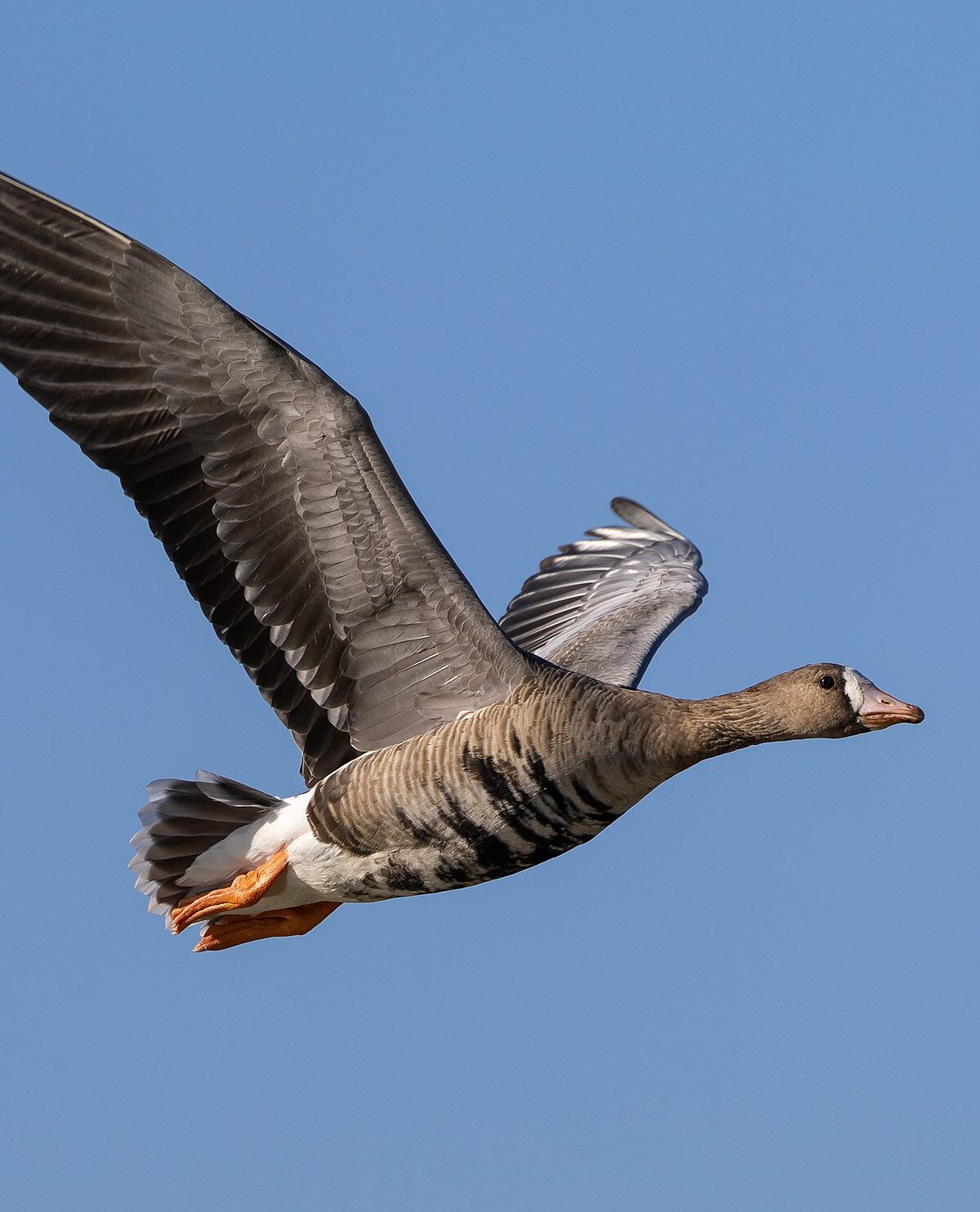
GREENLAND WHITE-FRONTED GOOSE
Anser albifrons flavirostris
DESCRIPTION
Greenland White-fronted Goose (Anser albifrons flavirostris) is a medium-sized goose characterized by its distinctive white forehead and black head. It has a grayish-brown body with a pale belly and a yellow-orange bill, which is particularly notable during the breeding season. This species is known for its migratory behavior, traveling from its breeding grounds in Greenland to wintering areas in Ireland and the UK, where it forms large flocks.
FUN FACTS
- Greenland White-fronted Geese are known for their impressive migratory journeys, traveling thousands of kilometers between their breeding and wintering grounds
- They are also unique among geese for their strong fidelity to specific breeding sites, often returning to the same location year after year.|These geese have a fascinating social structure, often forming lifelong pair bonds
- During the breeding season, they engage in elaborate courtship displays, which include synchronized swimming and vocalizations to strengthen their pair relationships
QUICK INFO
Lifespan10-15 years in the wild.
Average Weight2.5-3.5 kg
Average Length65-75 cm
Diet TypeHerbivore
Social Structuregroup — they are often seen in flocks, especially during migration and wintering.
Activity PatternDiurnal
Breeding SeasonSpring (May-June)
- Habitat
- This species inhabits tundra and coastal areas during the breeding season, while wintering in grasslands and agricultural fields. They prefer wetlands and areas with abundant vegetation for foraging.
- Biomes
- Tundra, Grassland
- Native Range
- Breeds in Greenland and migrates to winter in Ireland and the UK.
- Continent
- North America, Europe
- Countries
- Greenland, Ireland, United Kingdom
- Diet
- The Greenland White-fronted Goose primarily feeds on grasses, sedges, and other herbaceous plants. It forages in fields and wetlands, often grazing in agricultural areas.
- Diet Type
- Herbivore
- Favorite Food
- grasses, sedges
- Social Structure
- group — they are often seen in flocks, especially during migration and wintering.
- Activity Pattern
- Diurnal
- Group Size
- 50-200
- Territorial
- 0
 LC
LC
 VU
VU
2.5-3.5 kg
Weight
65-75 cm
Length
- Coloration
- Grayish-brown body with a white forehead and black head.
- Sexual Dimorphism
- Males and females are similar in appearance, with no significant differences.
- Lifespan
- 10-15 years in the wild.
- Offspring per Birth
- 3-6
- Sexual Maturity
- 2-3 years
- Breeding Season
- Spring (May-June)
VU
Vulnerable
IUCN Red List Status
- Population Status
- The population of Greenland White-fronted Geese has been declining due to habitat loss and hunting pressures.
- Wild Population Estimate
- approximately 20,000
- Population Trend
- Decreasing
- Endangered
- 1
- Threats
- Main threats include habitat destruction due to agricultural expansion and hunting. Climate change also poses a risk by altering their breeding and feeding habitats.
- Conservation Program
- There are ongoing conservation efforts in place to protect their habitats and manage hunting.
- Predators
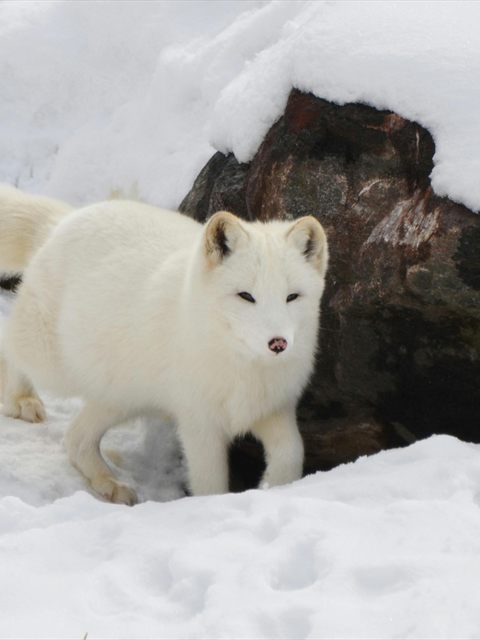
- Arctic foxes, large birds of prey, and humans.
- Defense Mechanisms
- They rely on flocking behavior for safety and can be quite vocal to alert others of potential threats.
- Found in Zoos
- Uncommon