


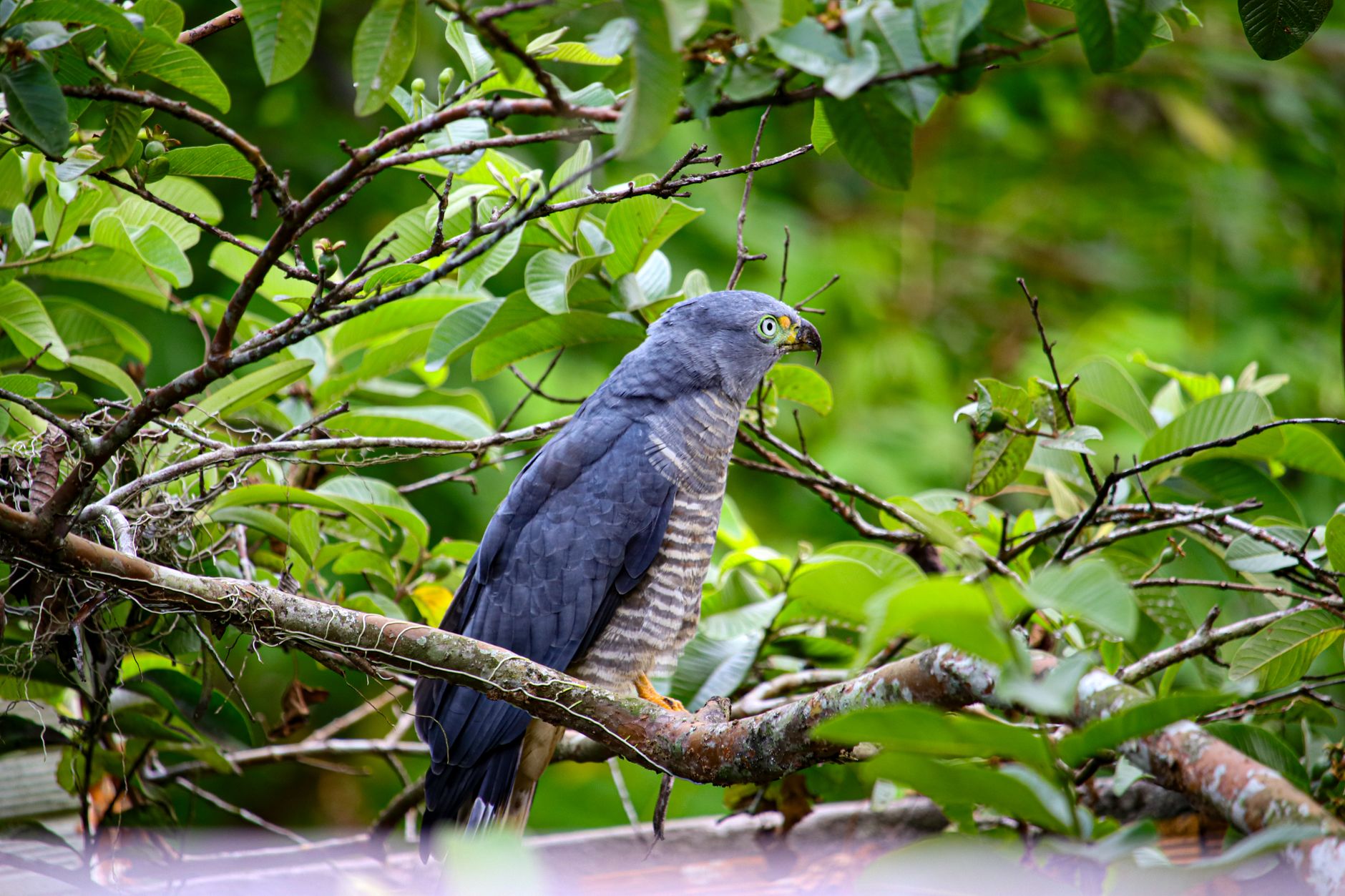
GREY HAWK
Buteo plagiatus
DESCRIPTION
Grey Hawk (Buteo plagiatus) is a medium-sized raptor known for its distinctive grey plumage and white underparts. This bird exhibits a unique behavior of hunting from a perch, often swooping down to catch its prey. It primarily inhabits open woodlands and scrub areas, where it can easily spot small mammals and birds.
FUN FACTS
- Grey Hawks are known for their impressive hunting skills, often catching prey mid-air during their swift dives
- They have a unique vocalization that sounds like a series of sharp whistles, which they use to communicate with each other in their territory.| These birds are also known for their adaptability, often adjusting their hunting strategies based on the availability of prey in their environment
- Their striking appearance and behavior make them a favorite among birdwatchers and wildlife enthusiasts
QUICK INFO
Lifespan10-15 years in the wild
Average Weight600-800 g
Average Length45-55 cm
Diet TypeCarnivore
Social Structuresolitary or pair, often seen alone or with a mate during breeding season
Activity PatternDiurnal
Breeding SeasonSpring (March-May)
- Habitat
- Grey Hawks prefer open woodlands, scrublands, and areas with scattered trees. They are often found near water sources, which provide ample hunting opportunities.
- Biomes
- Temperate Forest, Savanna
- Native Range
- The Grey Hawk is native to parts of Central America and the southern United States, extending into northern South America.
- Continent
- North America, Central America, South America
- Countries
- United States, Mexico, Guatemala, Honduras, Nicaragua, Costa Rica, Panama, Colombia, Venezuela
- Diet
- Grey Hawks primarily feed on small mammals, birds, and reptiles. They are known to hunt by waiting on a high perch and then diving down to capture their prey.
- Diet Type
- Carnivore
- Favorite Food
- small mammals, birds, reptiles
- Social Structure
- solitary or pair, often seen alone or with a mate during breeding season
- Activity Pattern
- Diurnal
- Group Size
- 1-2
- Territorial
- 1
 CR
CR
600-800 g
Weight
45-55 cm
Length
- Coloration
- primarily grey with white underparts and a dark tail
- Sexual Dimorphism
- females are generally larger than males
- Lifespan
- 10-15 years in the wild
- Offspring per Birth
- 2-4
- Sexual Maturity
- 2-3 years
- Breeding Season
- Spring (March-May)
LC
Least Concern
IUCN Red List Status
- Population Status
- The population of Grey Hawks is currently stable, though habitat loss poses a potential threat.
- Wild Population Estimate
- unknown
- Population Trend
- Stable
- Endangered
- 0
- Threats
- Main threats include habitat destruction due to agriculture and urban development. Additionally, they may face risks from hunting and environmental pollution.
- Predators
- larger birds of prey, such as eagles and hawks, as well as mammals like foxes and raccoons may prey on their eggs or young.
- Defense Mechanisms
- Grey Hawks may use their agility and speed to evade predators, and they can also become aggressive when defending their nests.
- Found in Zoos
- Uncommon