


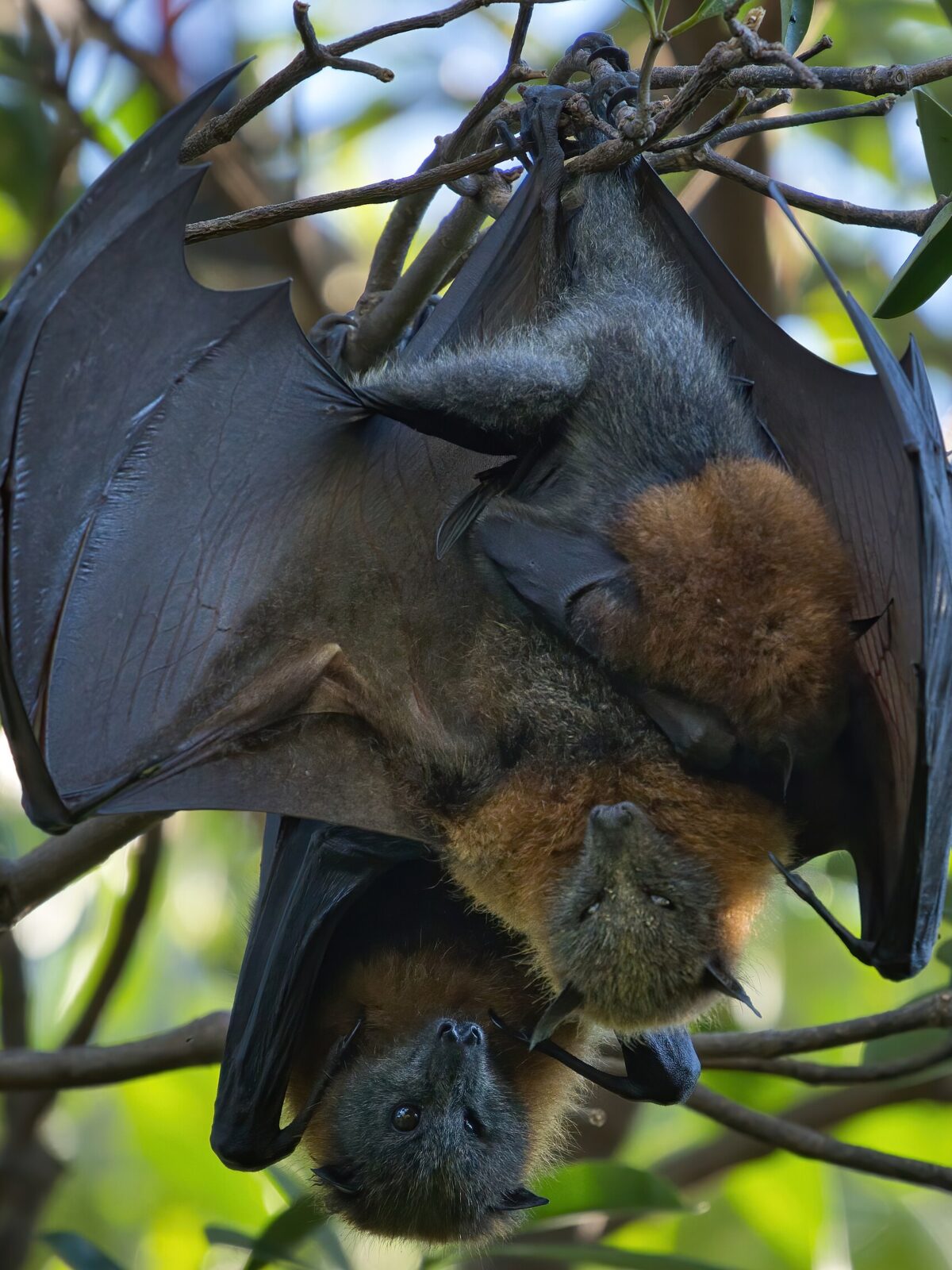
GREY-HEADED FLYING-FOX
Petaurus poliocephalus
DESCRIPTION
Grey-headed Flying-fox (Petaurus poliocephalus) is commonly known as the Grey-headed Fruit Bat. This large bat species is characterized by its distinctive grey head and dark brown body, with a wingspan that can reach up to 1 meter. They are social animals, often roosting in large colonies and are known for their important role in pollination and seed dispersal in their ecosystems.
FUN FACTS
- Grey-headed Flying-foxes are known for their impressive flying abilities, capable of traveling up to 50 kilometers in a single night to find food
- They play a crucial role in their ecosystems as pollinators and seed dispersers, helping to maintain the health of forests and other habitats.| These bats have a unique social structure, often forming large colonies that can be quite noisy, especially during the breeding season
- Their vocalizations can be heard from a distance, and they communicate with each other through a variety of sounds, including screeches and grunts
QUICK INFO
Lifespan10-15 years in the wild, up to 20 years in captivi
Average Weight600-1,200 g
Average Length25-30 cm
Diet TypeHerbivore
Social StructureThey are social animals, often found in large roosting groups that can number in the thousands.
Activity PatternNocturnal
Breeding SeasonLate summer to early autumn (February-April)
- Habitat
- Grey-headed Flying-foxes inhabit a variety of forested areas, including rainforests, woodlands, and urban parks. They prefer areas with abundant flowering trees, which provide their primary food sources.
- Biomes
- Tropical Rainforest, Temperate Forest
- Native Range
- They are native to eastern Australia, ranging from Queensland to New South Wales and Victoria.
- Continent
- Australia
- Countries
- Australia
- Diet
- They primarily feed on nectar, fruits, and flowers, making them vital for the health of their habitats. Their feeding habits help in the pollination of various plant species.
- Diet Type
- Herbivore
- Favorite Food
- nectar, fruits, flowers
- Social Structure
- They are social animals, often found in large roosting groups that can number in the thousands.
- Activity Pattern
- Nocturnal
- Group Size
- 100-1,000
- Territorial
- 0
600-1,200 g
Weight
25-30 cm
Length
- Coloration
- Grey head with dark brown body and wings
- Lifespan
- 10-15 years in the wild, up to 20 years in captivi
- Gestation Period
- 100-120 days
- Offspring per Birth
- 1
- Sexual Maturity
- 1-2 years
- Breeding Season
- Late summer to early autumn (February-April)
VU
Vulnerable
IUCN Red List Status
- Population Status
- The population is currently declining due to habitat loss and other threats.
- Wild Population Estimate
- 50,000-100,000
- Population Trend
- Decreasing
- Endangered
- 1
- Threats
- Main threats include habitat destruction, climate change, and hunting. Urban development has significantly reduced their natural roosting and feeding areas.
- Conservation Program
- Various conservation programs are in place to protect their habitats and raise awareness about their ecological importance.
- Predators
- Natural predators include raptors and large fruit-eating bats that may compete for food resources.
- Found in Zoos
- Uncommon