


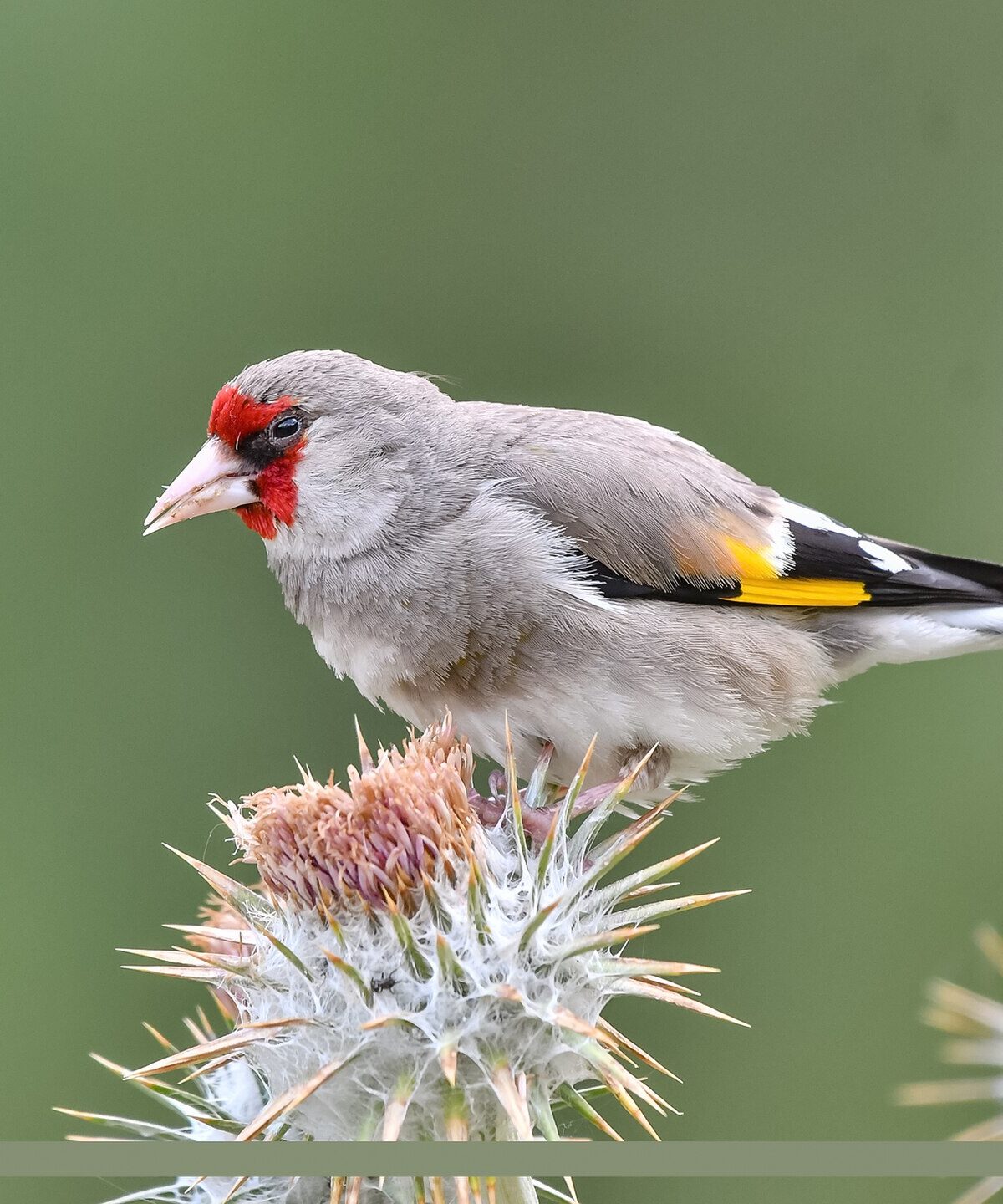
GREY-HEADED GOLDFINCH
Carduelis carduelis caniceps
DESCRIPTION
Grey-headed goldfinch (Carduelis carduelis caniceps) is a small passerine bird characterized by its distinctive grey head and bright yellow underparts. This species exhibits a lively behavior, often seen flitting about in search of seeds and insects. In terms of ecology, it prefers open woodlands and scrub areas where it can find ample food and nesting sites.
FUN FACTS
- Grey-headed goldfinches are known for their melodious songs, which they use to communicate with each other, especially during the breeding season
- Their vibrant colors and lively behavior make them a favorite among birdwatchers and nature enthusiasts.| These birds are highly social and often engage in playful interactions with one another, which can include chasing and fluttering around in the air
- Their adaptability to different habitats allows them to thrive in various environments, making them a resilient species
QUICK INFO
Lifespan3-5 years in the wild
Average Weight12-15 g
Average Length12-14 cm
Diet TypeHerbivore
Social Structuregroup — they are often found in small flocks, especially outside the breeding season.
Activity PatternDiurnal
Breeding SeasonSpring (April-June)
- Habitat
- This species inhabits open woodlands, scrublands, and areas with scattered trees. It is often found in regions that provide a mix of open space and cover for foraging.
- Biomes
- Temperate Forest, Grassland
- Native Range
- The Grey-headed goldfinch is native to parts of Central Asia, including regions of Mongolia and northern China.
- Continent
- Asia
- Countries
- Mongolia, China
- Diet
- The Grey-headed goldfinch primarily feeds on seeds, particularly those of grasses and weeds, as well as some insects during the breeding season.
- Diet Type
- Herbivore
- Favorite Food
- seeds, particularly from grasses
- Social Structure
- group — they are often found in small flocks, especially outside the breeding season.
- Activity Pattern
- Diurnal
- Group Size
- 5-15
- Territorial
- 0
 LC
LC
12-15 g
Weight
12-14 cm
Length
- Coloration
- The plumage is primarily yellow with a grey head and black wings.
- Sexual Dimorphism
- Males and females are similar in appearance, though males may have slightly brighter coloration.
- Lifespan
- 3-5 years in the wild
- Offspring per Birth
- 3-5
- Sexual Maturity
- 1 year
- Breeding Season
- Spring (April-June)
LC
Least Concern
IUCN Red List Status
- Population Status
- The population of Grey-headed goldfinches is currently stable, though habitat loss poses a potential threat.
- Wild Population Estimate
- Unknown
- Population Trend
- Stable
- Endangered
- 0
- Threats
- Habitat loss due to agricultural expansion and urbanization is a significant threat to this species. Additionally, climate change may impact their food sources.
- Predators
- Common predators include birds of prey and domestic cats.
- Defense Mechanisms
- They rely on their agility and speed to evade predators, often taking flight at the first sign of danger.
- Found in Zoos
- Rare