


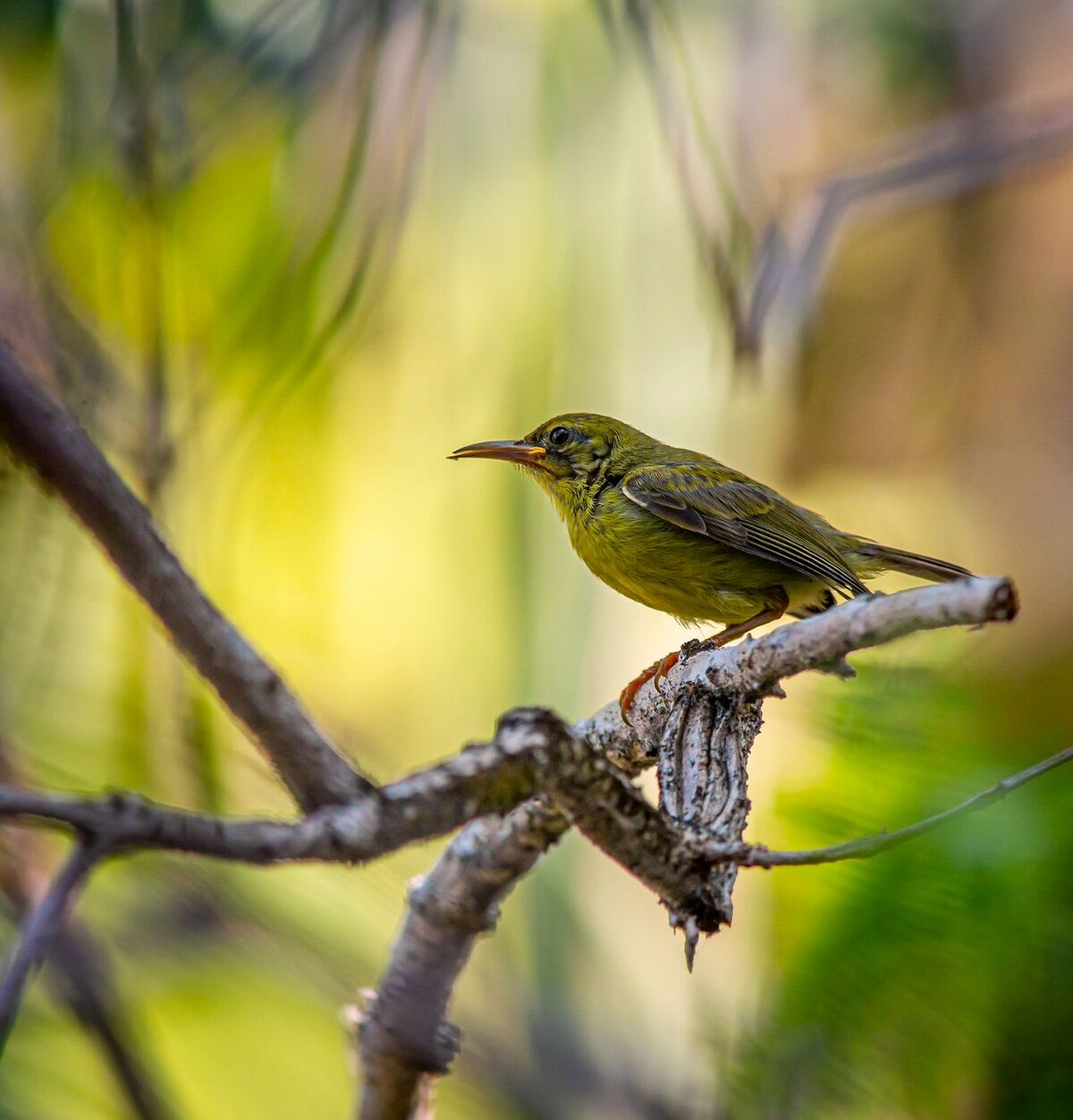
GREY-HEADED OLIVE-BACK
Nesocharis capistrata
DESCRIPTION
Grey-headed Olive-back (Nesocharis capistrata) is a small, colorful bird known for its striking olive-green back and distinctive grey head. This species exhibits a lively behavior, often seen flitting through foliage in search of insects and nectar. It plays a vital role in its ecosystem as a pollinator, contributing to the health of the plants it frequents.
FUN FACTS
- Grey-headed Olive-backs are known for their impressive flying skills, allowing them to hover in place while feeding on nectar
- They have a unique courtship display where males perform aerial acrobatics to impress females, showcasing their agility and vibrant colors
QUICK INFO
LifespanApproximately 3-5 years in the wild.
Average Weight10-15 g
Average Length10-12 cm
Diet TypeOmnivore
Social StructureThey are generally solitary or found in pairs during the breeding season.
Activity PatternDiurnal
Breeding SeasonVaries by region, typically during the rainy season.
- Habitat
- Grey-headed Olive-backs inhabit dense, humid forests and edges, often near water sources. They prefer areas with abundant flowering plants, which provide their primary food source.
- Biomes
- Tropical Rainforest, Subtropical Forest
- Native Range
- This species is native to the tropical regions of West and Central Africa.
- Continent
- Africa
- Countries
- Cameroon, Gabon, Republic of the Congo, Democratic Republic of the Congo
- Diet
- It primarily feeds on nectar from flowers, supplemented by small insects and larvae.
- Diet Type
- Omnivore
- Favorite Food
- nectar, small insects
- Social Structure
- They are generally solitary or found in pairs during the breeding season.
- Activity Pattern
- Diurnal
- Group Size
- 1-2
- Territorial
- 1
 LC
LC
10-15 g
Weight
10-12 cm
Length
- Coloration
- Olive-green back, grey head, and yellow underparts.
- Sexual Dimorphism
- Males are more brightly colored than females, with more vivid yellow underparts.
- Lifespan
- Approximately 3-5 years in the wild.
- Offspring per Birth
- 2-4
- Sexual Maturity
- 6-12 months
- Breeding Season
- Varies by region, typically during the rainy season.
LC
Least Concern
IUCN Red List Status
- Population Status
- The population is currently stable, but habitat loss poses a potential threat.
- Wild Population Estimate
- Unknown
- Population Trend
- Stable
- Endangered
- 0
- Threats
- Habitat destruction due to logging and agricultural expansion is the main threat to this species. Additionally, climate change may impact their food sources.
- Predators
- Snakes, larger birds, and small mammals may prey on Grey-headed Olive-backs.
- Defense Mechanisms
- They use their agility to evade predators and often hide in dense foliage.
- Found in Zoos
- Uncommon