


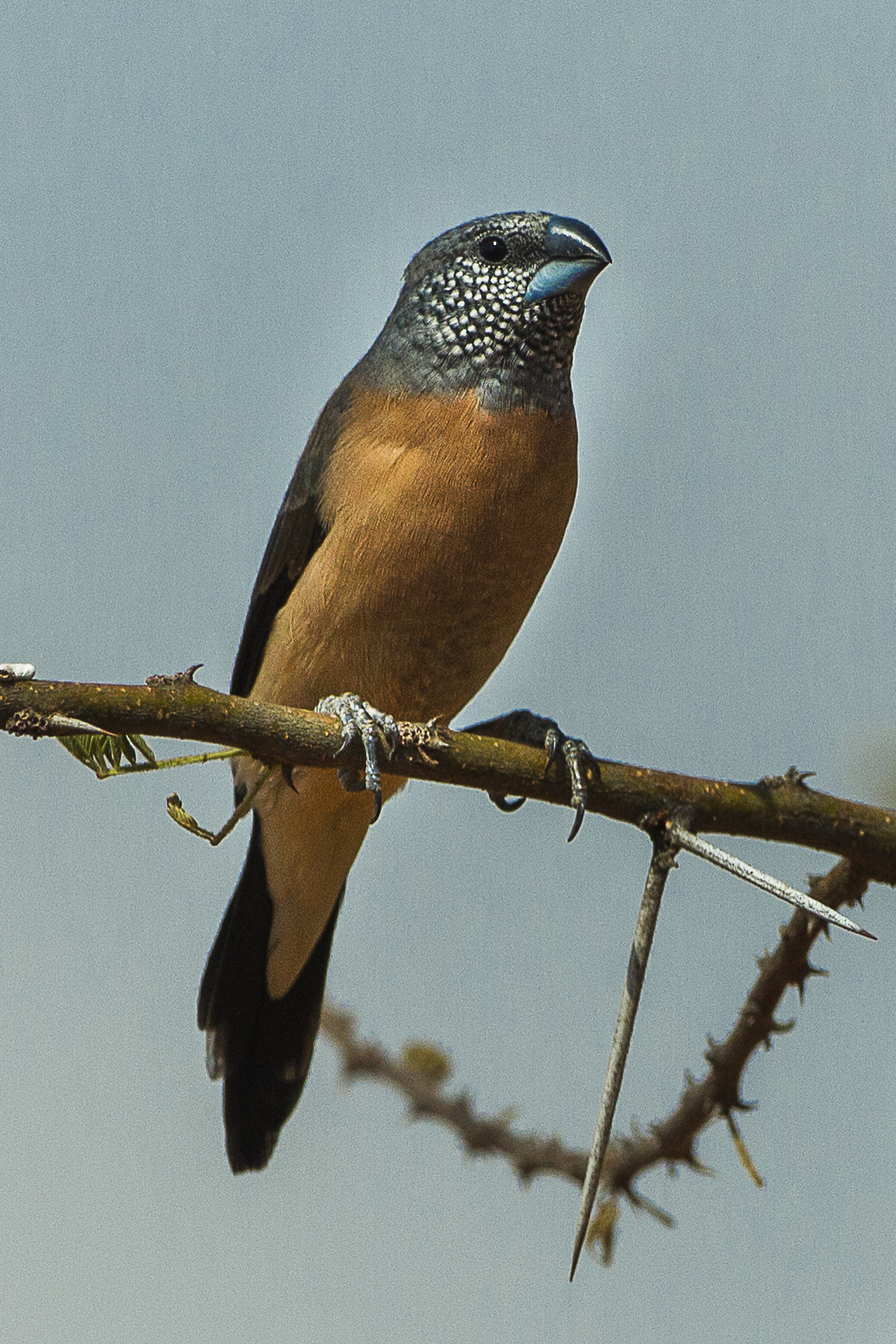
GREY-HEADED SILVERBILL
Spermophaga griseicapilla
DESCRIPTION
Grey-headed Silverbill (Spermophaga griseicapilla) is a small, finch-like bird characterized by its distinctive grey head and contrasting brown body. This species exhibits a sociable nature, often found in small flocks, and is known for its melodious calls. Inhabiting grasslands and open areas, it plays a vital role in seed dispersal within its ecosystem.
FUN FACTS
- Grey-headed Silverbills are known for their intricate nesting behavior, often building nests in dense grass or shrubs, which provides protection from predators
- They are also popular in aviculture due to their charming personalities and social nature.| These birds have a unique way of communicating, using a variety of chirps and whistles to maintain contact with their flock, especially when foraging or in flight
QUICK INFO
Lifespan3-5 years in the wild
Average Weight10-15 g
Average Length11-12 cm
Diet TypeGranivore
Social StructureThey are typically found in small flocks, which can enhance foraging efficiency and provide safety in numbers.
Activity PatternDiurnal
Breeding SeasonVaries by region, typically during the rainy season
- Habitat
- This species thrives in open grasslands, savannas, and agricultural fields. It prefers areas with sparse vegetation that provide ample foraging opportunities.
- Biomes
- Savanna, Grassland
- Native Range
- The Grey-headed Silverbill is native to parts of Africa and the Indian subcontinent, particularly in regions with suitable grassland habitats.
- Continent
- Africa, Asia
- Countries
- India, Pakistan, Nepal, Bangladesh, Sri Lanka, parts of East Africa
- Diet
- The Grey-headed Silverbill primarily feeds on seeds, particularly those of grasses and other herbaceous plants. It may also consume small insects occasionally.
- Diet Type
- Granivore
- Favorite Food
- grass seeds
- Social Structure
- They are typically found in small flocks, which can enhance foraging efficiency and provide safety in numbers.
- Activity Pattern
- Diurnal
- Group Size
- 5-30
- Territorial
- 0
 LC
LC
 LC
LC
10-15 g
Weight
11-12 cm
Length
- Coloration
- The bird has a grey head, brownish body, and white underparts, with a distinctive black bill.
- Sexual Dimorphism
- Males and females are similar in appearance, though males may have slightly brighter coloration.
- Lifespan
- 3-5 years in the wild
- Offspring per Birth
- 3-6
- Sexual Maturity
- 6 months
- Breeding Season
- Varies by region, typically during the rainy season
LC
Least Concern
IUCN Red List Status
- Population Status
- The population of Grey-headed Silverbills is currently stable, with no significant declines reported.
- Wild Population Estimate
- Unknown
- Population Trend
- Stable
- Endangered
- 0
- Threats
- Habitat loss due to agricultural expansion and urbanization poses a threat to their populations. However, they are adaptable and can thrive in modified habitats.
- Predators
- Common predators include birds of prey, snakes, and domestic cats.
- Defense Mechanisms
- They rely on their flocking behavior and quick flight to evade predators.
- Compatible Animals
- Other small finches, canaries
- Found in Zoos
- Uncommon