


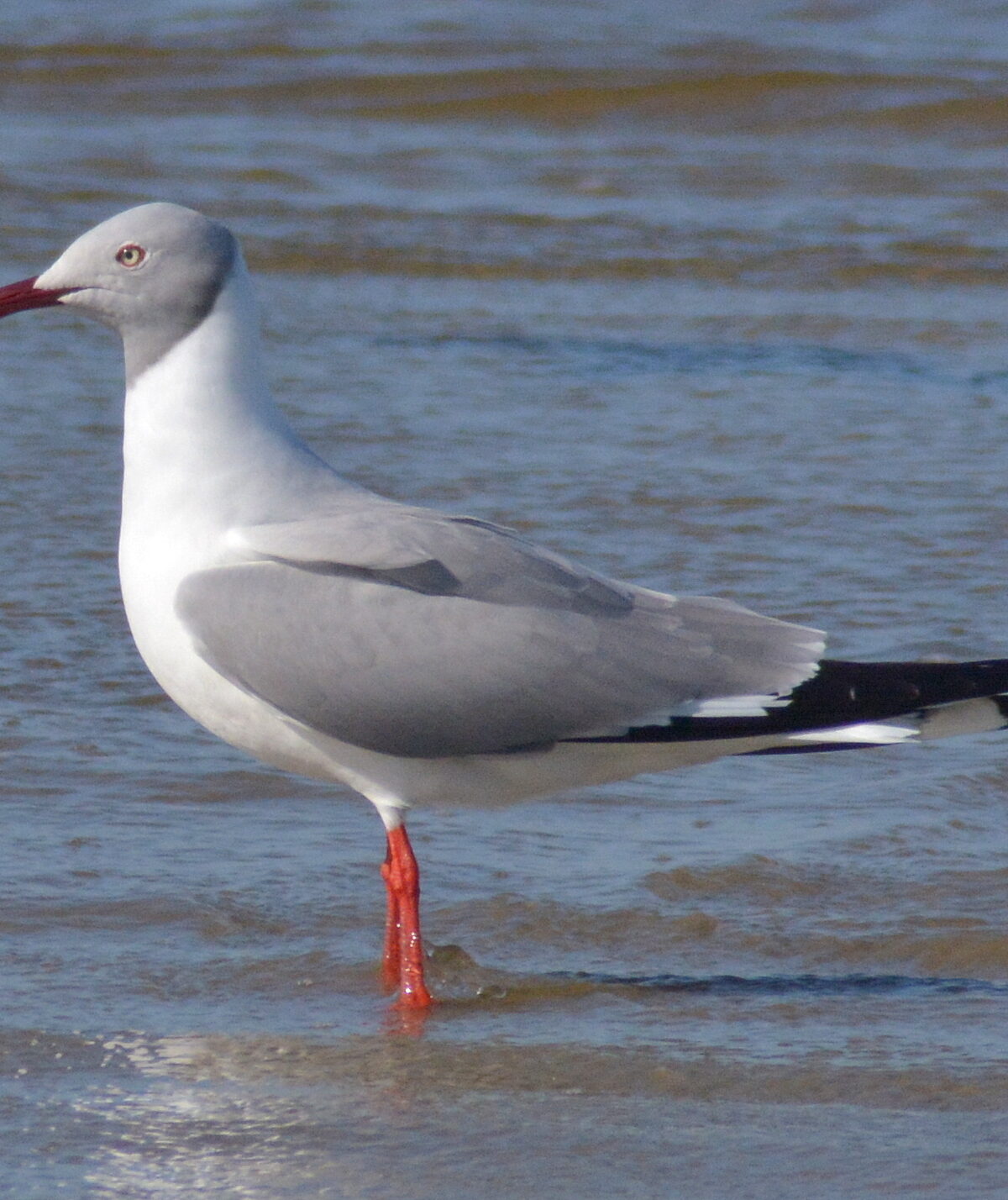
GREY-HOODED GULL
Chroicocephalus cirrocephalus poliocephalus
DESCRIPTION
Grey-hooded gull (Chroicocephalus cirrocephalus poliocephalus) is commonly known as the Poliocephalus gull. This medium-sized gull is characterized by its distinctive grey head, white body, and black wing tips. It is often found near coastal areas and is known for its agile flight and social behavior, often seen foraging in groups.
FUN FACTS
- Grey-hooded gulls are known for their impressive aerial acrobatics, often performing intricate flight patterns while foraging for food
- They have a unique social structure, often forming large colonies during the breeding season, which helps protect against predators.| These gulls are also known for their adaptability, often thriving in urban environments where they can scavenge for food
- Their vocalizations are quite varied, and they use different calls to communicate with each other, especially during breeding
QUICK INFO
Lifespan10-15 years in the wild
Average Weight300-400 g
Average Length35-40 cm
Diet TypeOmnivore
Social StructureThey are often seen in groups, especially during feeding and nesting.
Activity PatternDiurnal
Breeding SeasonSpring (September-November)
- Habitat
- These gulls inhabit coastal regions, estuaries, and sometimes inland lakes. They prefer areas with abundant food sources and suitable nesting sites.
- Biomes
- Coastal, Wetlands
- Native Range
- The Grey-hooded gull is native to the coastal regions of South America, particularly along the Pacific coast from Peru to southern Chile.
- Continent
- South America
- Countries
- Peru, Chile
- Diet
- Grey-hooded gulls primarily feed on small fish, crustaceans, and various invertebrates. They are opportunistic feeders and will scavenge for food as well.
- Diet Type
- Omnivore
- Favorite Food
- small fish, crustaceans
- Social Structure
- They are often seen in groups, especially during feeding and nesting.
- Activity Pattern
- Diurnal
- Group Size
- 10-50
- Territorial
- 0

 VU
VU
300-400 g
Weight
35-40 cm
Length
- Coloration
- Grey head, white body, black wing tips
- Lifespan
- 10-15 years in the wild
- Offspring per Birth
- 2-3
- Sexual Maturity
- 2-3 years
- Breeding Season
- Spring (September-November)
LC
Least Concern
IUCN Red List Status
- Population Status
- The population of Grey-hooded gulls is currently stable, with no significant declines reported.
- Wild Population Estimate
- 50,000-100,000
- Population Trend
- Stable
- Endangered
- 0
- Threats
- Main threats include habitat loss due to coastal development and pollution. Climate change also poses a risk to their breeding habitats.
- Predators
- Foxes, large birds of prey, and domestic animals can pose threats to their nests and young.
- Defense Mechanisms
- They may dive or swoop at potential threats to protect their nests and young.
- Found in Zoos
- Uncommon