


GREY PARROT
Psittacus erithacus
DESCRIPTION
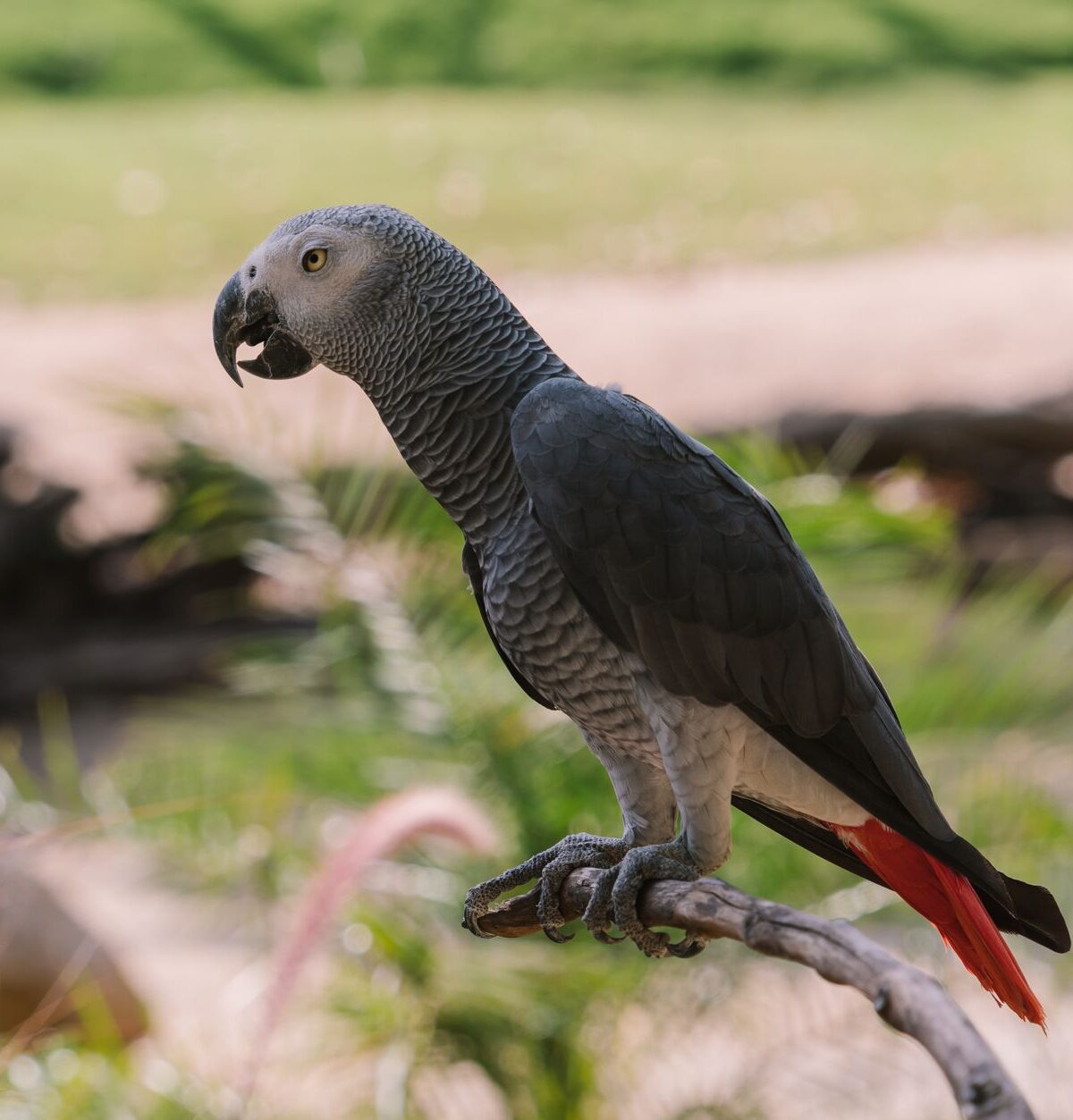
Also called the African Grey Parrot, Grey Parrot is a medium-sized bird known for its striking grey plumage and bright red tail feathers. These parrots are highly intelligent and are renowned for their ability to mimic human speech and other sounds, showcasing their advanced cognitive abilities. In the wild, they are social creatures that often form large flocks, engaging in complex social interactions and communication.
FUN FACTS
- Grey Parrots are considered one of the most intelligent bird species, capable of solving complex puzzles and understanding concepts like shape and color
- They have been known to develop strong bonds with their human caregivers, often displaying affection and even jealousy, which makes them popular pets despite their demanding care needs
QUICK INFO
Lifespan20-30 years in the wild, up to 50 years in captivi
Average Weight400-600 g
Average Length30-35 cm
Diet TypeHerbivore
Social Structuregroup — they are highly social and often found in flocks, which can range from a few individuals to several dozen.
Activity PatternDiurnal
Breeding SeasonSpring (March-May)
- Habitat
- Grey Parrots inhabit tropical rainforests, woodlands, and savannas, often near water sources. They prefer areas with abundant food resources and nesting sites.
- Biomes
- Tropical Rainforest, Savanna
- Native Range
- Grey Parrots are native to the rainforests of West and Central Africa.
- Continent
- Africa
- Countries
- Cameroon, Democratic Republic of the Congo, Gabon, Ivory Coast, Nigeria
- Diet
- Grey Parrots primarily eat seeds, nuts, fruits, and vegetables, with a preference for oil palm fruit. They are known to forage in trees and on the ground for food.
- Diet Type
- Herbivore
- Favorite Food
- seeds, nuts, fruits
- Social Structure
- group — they are highly social and often found in flocks, which can range from a few individuals to several dozen.
- Activity Pattern
- Diurnal
- Group Size
- 5-30
- Territorial
- 0
 LC
LC
 VU
VU
400-600 g
Weight
30-35 cm
Length
- Coloration
- primarily grey with a striking red tail and a white mask around the eyes.
- Sexual Dimorphism
- males and females are similar in appearance, making it difficult to distinguish between the sexes.
- Lifespan
- 20-30 years in the wild, up to 50 years in captivi
- Offspring per Birth
- 2-4
- Sexual Maturity
- 3-5 years
- Breeding Season
- Spring (March-May)
EN
Endangered
IUCN Red List Status
- Population Status
- The population of Grey Parrots is declining due to habitat loss and trapping for the pet trade.
- Wild Population Estimate
- 100,000-200,000
- Population Trend
- Decreasing
- Endangered
- 1
- Threats
- Main threats include habitat destruction due to logging and agriculture, as well as illegal trapping for the pet trade. These factors have significantly impacted their populations in the wild.
- Conservation Program
- Various conservation programs are in place to protect Grey Parrots and their habitats, including habitat restoration and legal protection against trapping.
- Predators
- Snakes, birds of prey, and larger mammals may prey on Grey Parrots, particularly their eggs and young.
- Defense Mechanisms
- Grey Parrots use vocalizations to alert others of danger and may also rely on their ability to fly quickly to escape predators.
- Compatible Animals
- other parrots, small mammals
- Found in Zoos
- Common