


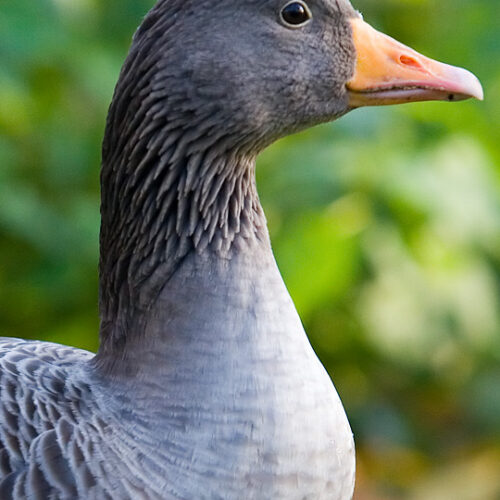
GREYLAG GOOSE
Anser anser
DESCRIPTION
The Greylag Goose is a large waterfowl characterized by its grayish-brown plumage, pinkish-orange bill, and a distinctive white patch on its tail. They are known for their honking calls and are often seen in pairs or small groups. Greylag Geese are highly social birds that exhibit strong family bonds and are often found grazing in fields or near water bodies.
FUN FACTS
- Greylag Geese are the ancestors of most domestic geese breeds, having been domesticated for thousands of years
- They are known for their strong migratory instincts, often traveling long distances between breeding and wintering grounds.|These geese are highly intelligent and can recognize individual humans and other geese
- They have been observed using tools and exhibiting problem-solving skills in various studies
QUICK INFO
Lifespan10-15 years in the wild, up to 30 in captivity
Average Weight3-4 kg
Average Length75-90 cm
Diet TypeHerbivore
Social Structuregroup — they often form large flocks, especially during migration.
Activity PatternDiurnal
Breeding SeasonSpring (March-May)
- Habitat
- Greylag Geese inhabit a variety of wetland environments, including lakes, rivers, and marshes, as well as agricultural fields. They prefer areas with abundant vegetation for grazing.
- Biomes
- Wetlands, Grasslands
- Native Range
- Greylag Geese are native to Europe and Asia, with some populations migrating to North Africa during winter.
- Continent
- Europe, Asia
- Countries
- United Kingdom, Germany, France, Scandinavia, Russia
- Diet
- Greylag Geese primarily feed on grasses, grains, and other vegetation. They are known to forage in agricultural fields and wetlands.
- Diet Type
- Herbivore
- Favorite Food
- grasses, grains
- Social Structure
- group — they often form large flocks, especially during migration.
- Activity Pattern
- Diurnal
- Group Size
- 10-50
- Territorial
- 0

 LC
LC
 VU
VU
3-4 kg
Weight
75-90 cm
Length
- Coloration
- grayish-brown with a lighter belly and a distinctive white tail patch
- Sexual Dimorphism
- males and females are similar in appearance, but males are generally larger.
- Lifespan
- 10-15 years in the wild, up to 30 in captivity
- Offspring per Birth
- 3-8
- Sexual Maturity
- 2-3 years
- Breeding Season
- Spring (March-May)
LC
Least Concern
IUCN Red List Status
- Population Status
- The population of Greylag Geese is currently stable in many areas, although some local populations may face pressures.
- Wild Population Estimate
- 1,000,000-2,000,000
- Population Trend
- Stable
- Endangered
- 0
- Threats
- Main threats include habitat loss due to agricultural expansion and hunting. Climate change may also impact their migratory patterns and breeding success.
- Predators
- foxes, eagles, large birds of prey, and humans
- Defense Mechanisms
- Greylag Geese will hiss and flap their wings to defend themselves and their young from potential threats.
- Compatible Animals
- other waterfowl, ducks, swans
- Found in Zoos
- Common