


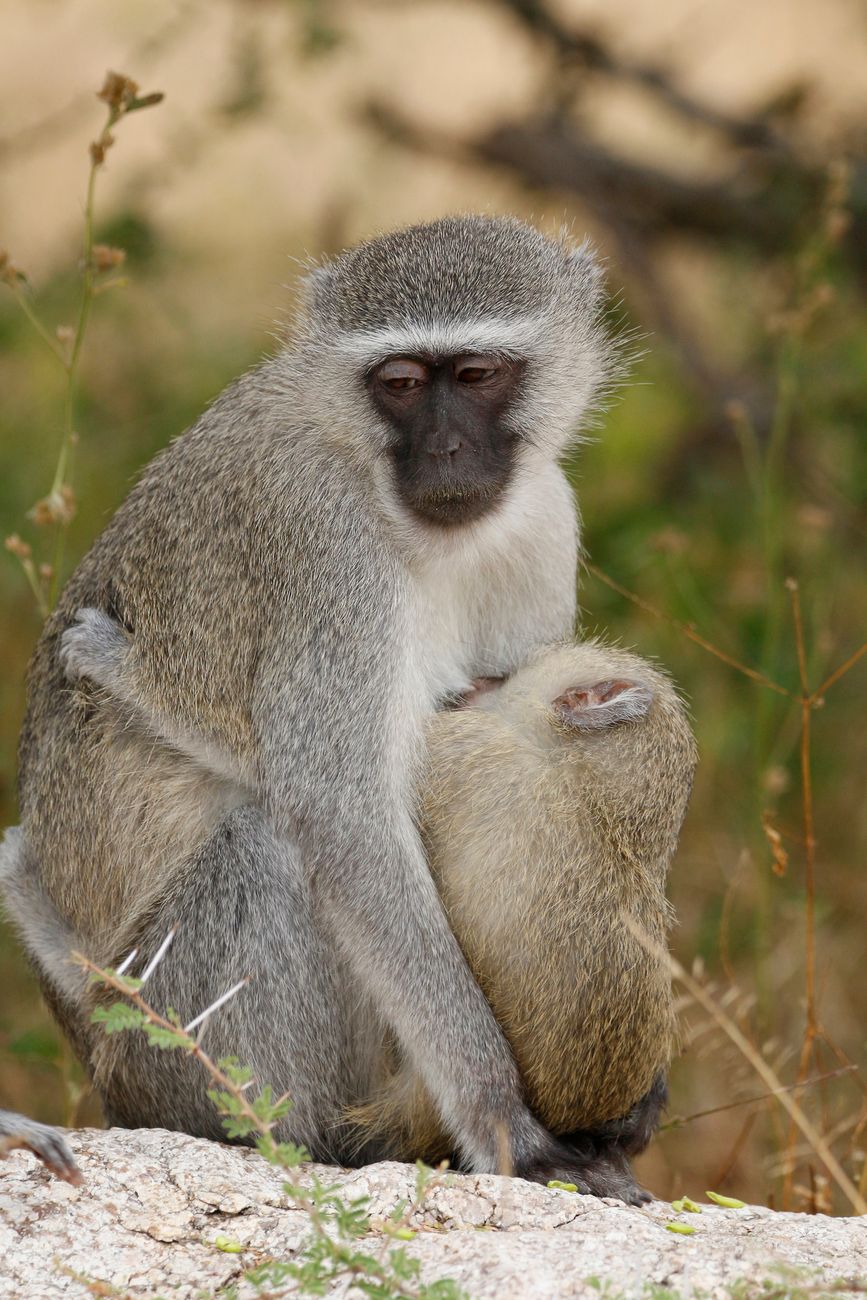
GRIVET MONKEY
Chlorocebus aethiops
DESCRIPTION
Grivet Monkey (Chlorocebus aethiops) is commonly known as the African Green Monkey and Vervet Monkey. This species is characterized by its olive-green fur, white underbelly, and distinctive black face with white fur around the eyes. Grivet Monkeys are highly social animals, often found in troops that exhibit complex social structures and behaviors, including grooming and vocal communication.
FUN FACTS
- Grivet Monkeys are known for their impressive social structures, which can include complex hierarchies and alliances among group members
- They also exhibit a range of vocalizations, with different calls serving specific purposes, such as alerting others to danger or signaling food availability.| These monkeys have been observed using tools, such as using sticks to extract insects from crevices
- This behavior showcases their intelligence and adaptability in foraging strategies
QUICK INFO
Lifespan15-20 years in the wild, up to 25 years in captivi
Average Weight4-8 kg
Average Length40-70 cm
Diet TypeOmnivore
Social StructureGrivet Monkeys live in groups, typically consisting of 10-50 individuals. These groups are often matriarchal, with females forming the core of the social structure.
Activity PatternDiurnal
Breeding SeasonYear-round, with peaks depending on the region
- Habitat
- Grivet Monkeys inhabit a range of environments, including savannas, woodlands, and urban areas. They are adaptable and can thrive in both natural and human-altered landscapes.
- Biomes
- Savanna, Woodland, Urban
- Native Range
- Grivet Monkeys are native to West, Central, and East Africa.
- Continent
- Africa
- Countries
- Senegal, Gambia, Guinea, Nigeria, Cameroon, Kenya, Uganda, Tanzania
- Diet
- Grivet Monkeys are omnivorous, feeding on a variety of fruits, seeds, leaves, and insects. They are known to forage in trees and on the ground, adapting their diet based on seasonal availability.
- Diet Type
- Omnivore
- Favorite Food
- fruits, seeds, leaves, insects
- Social Structure
- Grivet Monkeys live in groups, typically consisting of 10-50 individuals. These groups are often matriarchal, with females forming the core of the social structure.
- Activity Pattern
- Diurnal
- Group Size
- 10-50
- Territorial
- 0
 VU
VU
 LC
LC
4-8 kg
Weight
40-70 cm
Length
- Coloration
- olive-green fur with a white underbelly and black face
- Sexual Dimorphism
- males are generally larger than females
- Lifespan
- 15-20 years in the wild, up to 25 years in captivi
- Gestation Period
- 165 days
- Offspring per Birth
- 1
- Sexual Maturity
- 3-4 years
- Breeding Season
- Year-round, with peaks depending on the region
LC
Least Concern
IUCN Red List Status
- Population Status
- The population of Grivet Monkeys is currently stable, though they face habitat loss in some areas.
- Wild Population Estimate
- 100,000+
- Population Trend
- Stable
- Endangered
- 0
- Threats
- Main threats include habitat destruction due to agriculture and urbanization, as well as hunting in some regions. However, they are adaptable and can thrive in human-altered environments.
- Predators
- Leopards, Eagles, Humans
- Defense Mechanisms
- Grivet Monkeys use alarm calls to warn others of predators and often flee to trees for safety.
- Compatible Animals
- other primates, birds
- Found in Zoos
- Common