


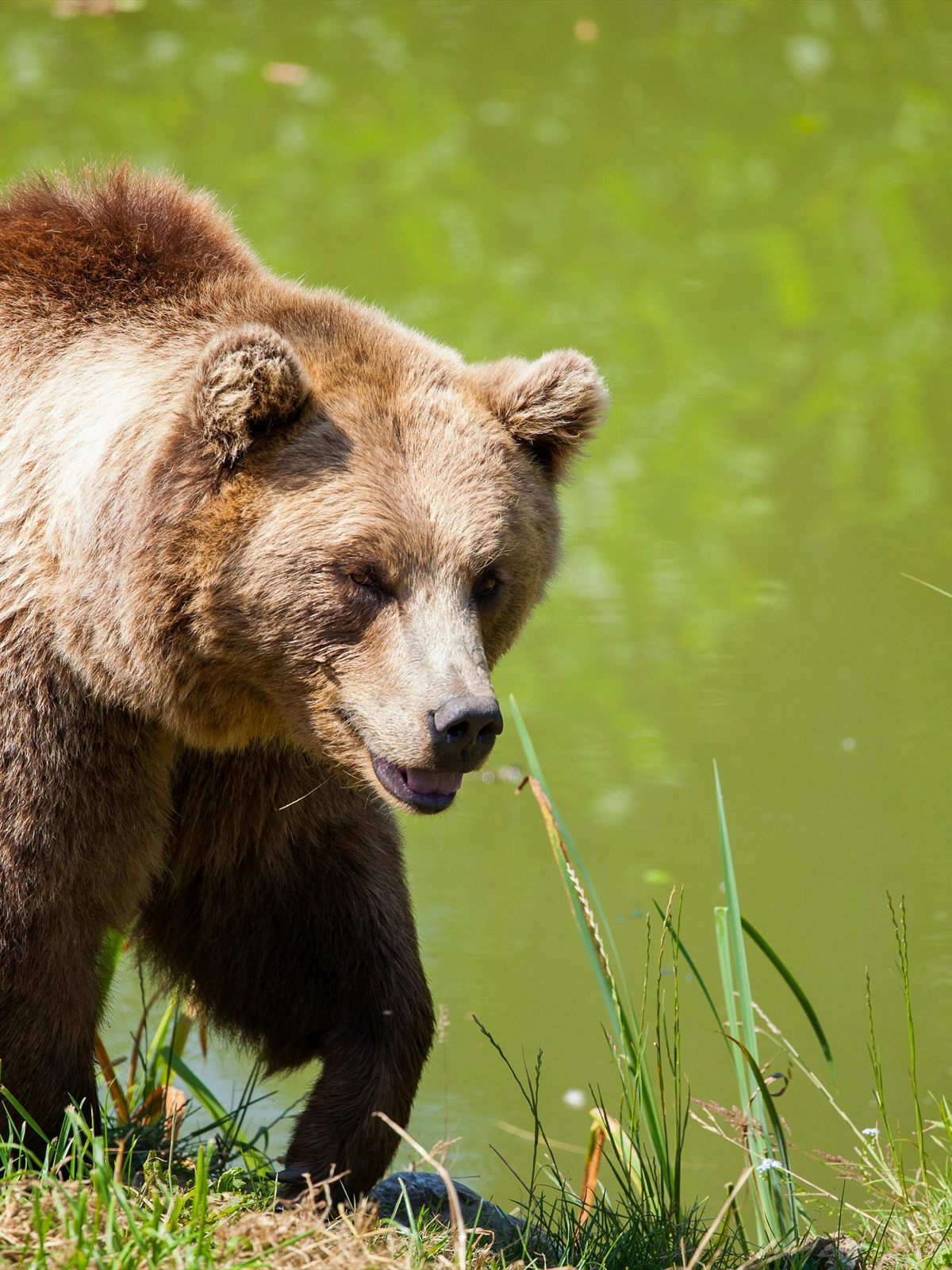
GRIZZLY BEAR
Ursus arctos horribilis
DESCRIPTION
The Grizzly Bear is a large subspecies of the brown bear, known for its distinctive hump on its shoulders and powerful build. They are found primarily in North America and are recognized for their strength and adaptability to various environments.
FUN FACTS
- Grizzly bears can run up to 30 miles per hour | They have an excellent sense of smell, better than that of dogs | Grizzlies can hibernate for up to 7 months without eating, drinking, or urinating
QUICK INFO
Lifespan20-25 years in the wild, up to 30 in captivity
Average Weight180-360 kg
Average Length1.8-2.4 m
Diet TypeOmnivore
Social Structuresolitary, typically live alone except for mothers with cubs
Activity PatternDiurnal
Breeding SeasonSpring (May-June)
- Habitat
- Grizzly bears inhabit diverse environments, including forests, mountains, and tundra. They require large territories with access to food sources and denning sites.
- Biomes
- Temperate Forest, Tundra, Mountain
- Native Range
- Grizzly bears are native to North America, primarily found in Alaska, western Canada, and parts of the contiguous United States.
- Continent
- North America
- Countries
- United States, Canada, Alaska
- Diet
- Grizzly bears are omnivorous, consuming a wide variety of foods including plants, fruits, fish, and small mammals. They are particularly known for their salmon fishing during spawning seasons.
- Diet Type
- Omnivore
- Favorite Food
- salmon, berries, roots
- Social Structure
- solitary, typically live alone except for mothers with cubs
- Activity Pattern
- Diurnal
- Group Size
- 1-3
- Territorial
- 1
180-360 kg
Weight
1.8-2.4 m
Length
1.5 m at shoulder
Height (Shoulder)
- Coloration
- brown fur with lighter tips, giving a grizzled appearance
- Sexual Dimorphism
- males are generally larger than females
- Lifespan
- 20-25 years in the wild, up to 30 in captivity
- Gestation Period
- 180-250 days
- Offspring per Birth
- 1-4
- Sexual Maturity
- 4-5 years
- Breeding Season
- Spring (May-June)
LC
Least Concern
IUCN Red List Status
- Population Status
- The population of grizzly bears is currently stable in some areas but declining in others due to habitat loss and human activity.
- Wild Population Estimate
- 30,000-40,000
- Population Trend
- Stable
- Endangered
- 0
- Threats
- Main threats include habitat destruction, climate change, and human-wildlife conflict. Hunting and poaching also pose risks in certain regions.
- Conservation Program
- Grizzly bear recovery programs in the U.S. and Canada focus on habitat protection and management.
- Predators
- humans, other bears (in rare cases)
- Defense Mechanisms
- Grizzly bears use their size and strength to defend themselves, and they can also run at high speeds to escape threats.
- Compatible Animals
- none
- Found in Zoos
- Common