


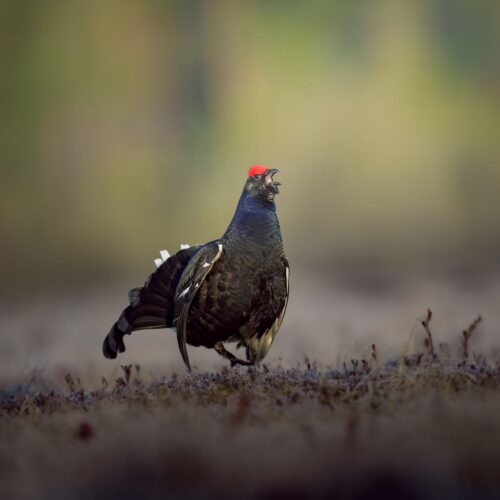
GROUSE
DESCRIPTION
Grouse are medium to large birds known for their distinctive plumage and courtship displays. They are ground-dwelling birds that are often found in forested or open areas.
FUN FACTS
- Grouse can perform impressive mating displays that include elaborate dances and vocalizations | Some species, like the Sage Grouse, have unique breeding grounds called leks | Grouse are known to eat snow to obtain water during winter months
QUICK INFO
Lifespan5-10 years in the wild
Average Weight0.5-3 kg
Average Length30-60 cm
Diet TypeHerbivore
Social Structurepair or group, often seen in small flocks outside of the breeding season
Activity PatternDiurnal
Breeding SeasonSpring (April-June)
- Habitat
- Grouse inhabit a range of environments, including forests, grasslands, and moorlands. They prefer areas with dense cover for nesting and protection.
- Biomes
- Temperate Forest, Grassland, Taiga
- Native Range
- Grouse are found across North America, Europe, and parts of Asia.
- Continent
- North America, Europe, Asia
- Countries
- United States, Canada, United Kingdom, Russia
- Diet
- Grouse primarily feed on a variety of plant materials, including leaves, seeds, and berries. They may also consume insects during the breeding season.
- Diet Type
- Herbivore
- Favorite Food
- leaves, seeds, berries
- Social Structure
- pair or group, often seen in small flocks outside of the breeding season
- Activity Pattern
- Diurnal
- Group Size
- 2-10
- Territorial
- 1
 CR
CR
0.5-3 kg
Weight
30-60 cm
Length
- Coloration
- varies by species, often featuring mottled brown, gray, and white plumage
- Sexual Dimorphism
- males are typically larger and more colorful than females
- Lifespan
- 5-10 years in the wild
- Offspring per Birth
- 6-12
- Sexual Maturity
- 1 year
- Breeding Season
- Spring (April-June)
LC
Least Concern
IUCN Red List Status
- Population Status
- Some species are stable, while others are declining due to habitat loss.
- Wild Population Estimate
- varies by species, generally in the hundreds of thousands
- Population Trend
- Decreasing
- Endangered
- 0
- Threats
- Habitat destruction, hunting, and climate change are significant threats to grouse populations.
- Predators
- foxes, hawks, and larger birds of prey
- Defense Mechanisms
- Grouse rely on camouflage and their ability to remain still to avoid detection.
- Found in Zoos
- Uncommon