


GUATEMALAN MILK SNAKE
Lampropeltis triangulum gaigeae
DESCRIPTION
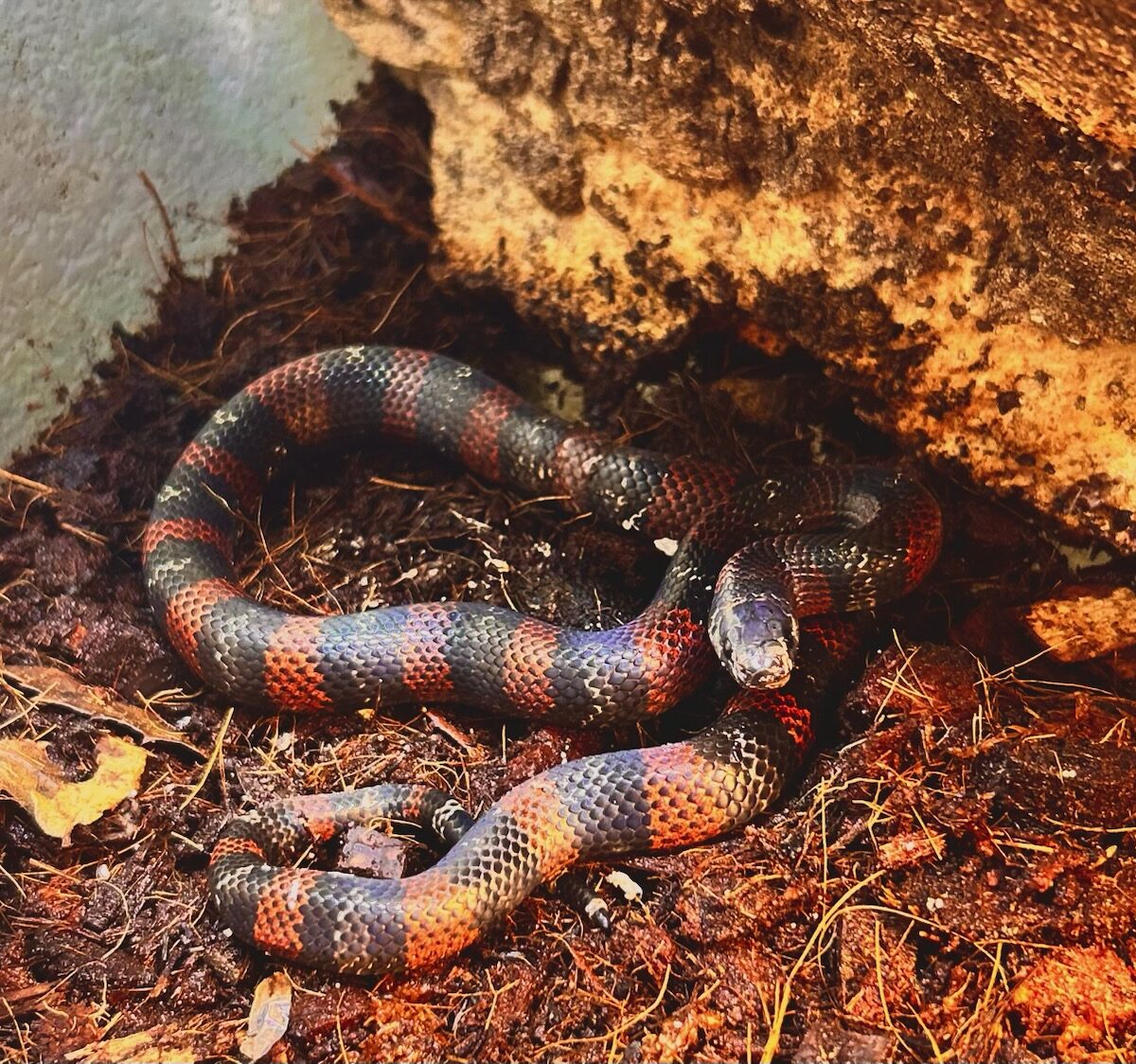
Guatemalan Milk Snake (Lampropeltis triangulum gaigeae) is a strikingly beautiful subspecies of the milk snake, characterized by its vibrant coloration and distinctive pattern of red, black, and yellow bands. This snake is primarily nocturnal, often found in a variety of habitats including forests and grasslands, where it exhibits a secretive behavior, hiding under rocks and logs during the day. Ecologically, it plays a vital role in controlling rodent populations, contributing to the balance of its ecosystem.
FUN FACTS
- Guatemalan Milk Snakes are often mistaken for the venomous coral snake due to their similar coloration, which serves as a form of mimicry to deter predators
- Additionally, they are popular in the pet trade because of their striking appearance and relatively docile nature, making them a favorite among snake enthusiasts
QUICK INFO
Lifespan10-15 years in the wild, up to 20 years in captivi
Average Weight0.5-1.5 kg
Average Length1.2-1.5 m
Diet TypeCarnivore
Social Structuresolitary
Activity PatternNocturnal
Breeding SeasonSpring (April-June)
- Habitat
- This species inhabits a range of environments, including tropical and subtropical forests, as well as grasslands. They are often found in areas with ample cover, such as leaf litter and underbrush.
- Biomes
- Tropical Rainforest, Grassland
- Native Range
- The Guatemalan Milk Snake is native to Central America, specifically found in Guatemala and parts of southern Mexico.
- Continent
- North America
- Countries
- Guatemala, Mexico
- Diet
- Guatemalan Milk Snakes primarily feed on small mammals, birds, and reptiles, using constriction to subdue their prey. They are known to be opportunistic feeders, taking advantage of whatever is available in their environment.
- Diet Type
- Carnivore
- Favorite Food
- small mammals, birds, reptiles
- Social Structure
- solitary
- Activity Pattern
- Nocturnal
- Group Size
- 1
- Territorial
- 0
 VU
VU
0.5-1.5 kg
Weight
1.2-1.5 m
Length
- Coloration
- vibrant red, black, and yellow bands
- Sexual Dimorphism
- males are typically smaller than females
- Lifespan
- 10-15 years in the wild, up to 20 years in captivi
- Offspring per Birth
- 4-12
- Sexual Maturity
- 2-3 years
- Breeding Season
- Spring (April-June)
LC
Least Concern
IUCN Red List Status
- Population Status
- The population of Guatemalan Milk Snakes is currently stable, though habitat loss poses a potential threat.
- Wild Population Estimate
- unknown
- Population Trend
- Stable
- Endangered
- 0
- Threats
- Main threats include habitat destruction due to deforestation and agricultural expansion. Additionally, they may be collected for the pet trade, which can impact local populations.
- Predators
- birds of prey, larger snakes, mammals such as raccoons
- Defense Mechanisms
- When threatened, Guatemalan Milk Snakes may mimic the behavior of venomous snakes, such as rattlesnakes, by coiling and shaking their tails.
- Compatible Animals
- none
- Found in Zoos
- Uncommon