


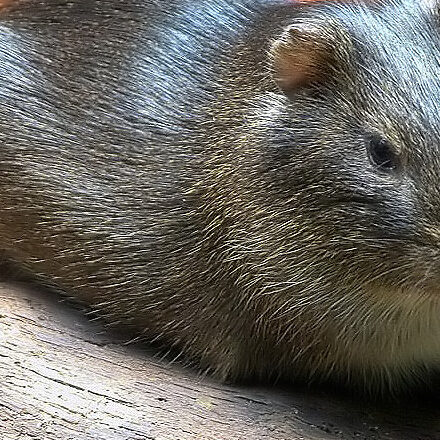
GUINEA PIG
Cavia porcellus
DESCRIPTION
The Guinea Pig (Cavia porcellus) is a small, domesticated rodent known for its friendly nature and vocalizations. Originally from the Andes mountains in South America, they are popular pets and are also used in scientific research.
FUN FACTS
- Guinea pigs cannot produce vitamin C and must obtain it from their diet | They have a unique vocalization called 'wheeking' that indicates excitement | Guinea pigs have been domesticated for over 3,000 years
QUICK INFO
Lifespan4-6 years in the wild, up to 8 years in captivity
Average Weight700-1200 g
Average Length20-25 cm
Diet TypeHerbivore
Social Structuregroup — they are highly social and often live in groups in the wild.
Activity PatternDiurnal
Breeding SeasonYear-round
- Habitat
- Guinea pigs thrive in a variety of environments, typically preferring grassy areas and open fields. They are social animals that often live in groups in the wild.
- Biomes
- Grassland, Savanna
- Native Range
- Andes mountains of South America
- Continent
- South America
- Countries
- Peru, Bolivia, Ecuador
- Diet
- Guinea pigs are herbivores, primarily consuming hay, fresh vegetables, and specially formulated pellets. They require a diet high in fiber to maintain their digestive health.
- Diet Type
- Herbivore
- Favorite Food
- Hay, leafy greens, pellets
- Social Structure
- group — they are highly social and often live in groups in the wild.
- Activity Pattern
- Diurnal
- Group Size
- 2-10
- Territorial
- 0
 VU
VU
 LC
LC
700-1200 g
Weight
20-25 cm
Length
- Coloration
- Varies widely; common colors include brown, black, white, and combinations thereof.
- Sexual Dimorphism
- Males are generally larger than females.
- Lifespan
- 4-6 years in the wild, up to 8 years in captivity
- Gestation Period
- 68-72 days
- Offspring per Birth
- 1-6
- Sexual Maturity
- 3-4 months
- Breeding Season
- Year-round
LC
Least Concern
IUCN Red List Status
- Population Status
- Domesticated populations are stable, but wild populations are less well-documented.
- Population Trend
- Stable
- Endangered
- 0
- Threats
- Habitat loss and hunting in the wild pose threats to wild populations, while domesticated guinea pigs face issues related to neglect and abandonment.
- Predators
- Birds of prey, snakes, and small carnivores
- Defense Mechanisms
- They rely on their speed and ability to hide to escape predators.
- Compatible Animals
- Rabbits, other guinea pigs
- Found in Zoos
- Common