


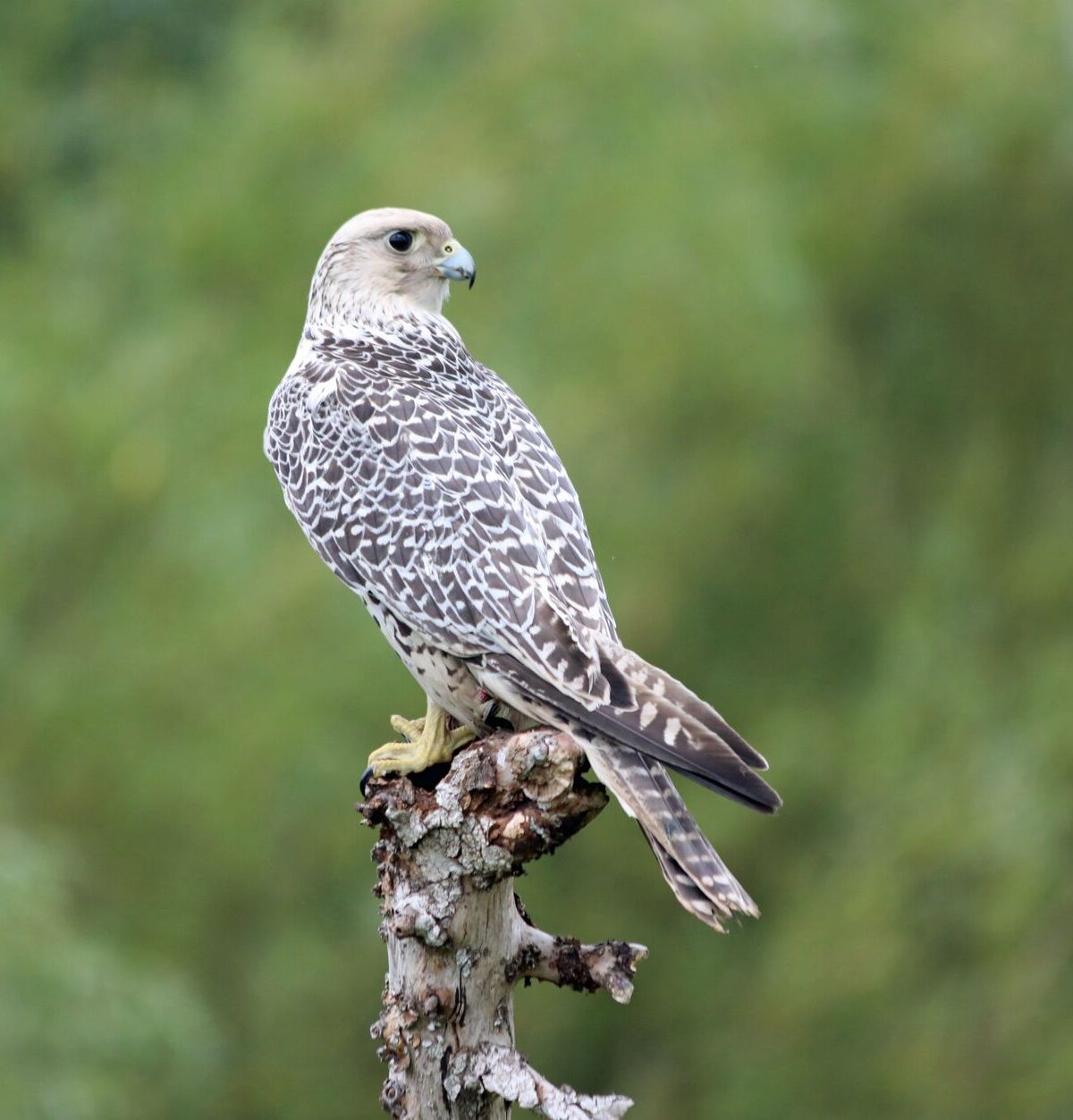
GYRFALCON
Falco rusticolus
DESCRIPTION
Gyrfalcon (Falco rusticolus) is a large bird of prey known for its impressive size and striking plumage, which can vary from white to dark gray. This species exhibits remarkable hunting skills, often preying on birds and small mammals in its Arctic and sub-Arctic habitats. Gyrfalcons are known for their strong territorial behavior and can be seen soaring high in the sky or perched on cliffs, scanning for prey.
FUN FACTS
- Gyrfalcons are the largest of the falcon species and can reach speeds of over 100 mph during a dive, making them one of the fastest birds in the world
- They have a unique hunting technique where they can hover in place while scanning for prey, allowing them to spot small animals from great distances.|In some cultures, Gyrfalcons have been used in falconry for centuries due to their impressive hunting skills and trainability
- They are highly valued by falconers and can be trained to hunt a variety of game, showcasing their intelligence and adaptability
QUICK INFO
Lifespan10-15 years in the wild, up to 25 years in captivi
Average Weight1.0-2.0 kg
Average Length45-65 cm
Diet TypeCarnivore
Social Structuresolitary or pair, typically seen alone or in breeding pairs
Activity PatternDiurnal
Breeding SeasonSpring (April-June)
- Habitat
- Gyrfalcons inhabit open tundra, coastal cliffs, and mountainous regions, often favoring areas with abundant prey. They are adapted to cold environments and can be found in some of the harshest climates.
- Biomes
- Tundra, Boreal Forest
- Native Range
- Gyrfalcons are native to the Arctic and sub-Arctic regions, including parts of North America, Europe, and Asia.
- Continent
- North America, Europe, Asia
- Countries
- Canada, Greenland, Norway, Russia, Iceland, Alaska (USA)
- Diet
- Gyrfalcons primarily feed on birds, such as ptarmigans and ducks, as well as small mammals like hares. They are skilled hunters, using their speed and agility to catch their prey.
- Diet Type
- Carnivore
- Favorite Food
- birds, small mammals
- Social Structure
- solitary or pair, typically seen alone or in breeding pairs
- Activity Pattern
- Diurnal
- Group Size
- 1-2
- Territorial
- 1
 LC
LC
1.0-2.0 kg
Weight
45-65 cm
Length
- Coloration
- plumage varies from white to dark gray, often with speckled patterns
- Sexual Dimorphism
- females are larger than males
- Lifespan
- 10-15 years in the wild, up to 25 years in captivi
- Offspring per Birth
- 2-5
- Sexual Maturity
- 2-3 years
- Breeding Season
- Spring (April-June)
LC
Least Concern
IUCN Red List Status
- Population Status
- The Gyrfalcon population is generally stable, but local declines may occur due to habitat loss and hunting.
- Wild Population Estimate
- unknown
- Population Trend
- Stable
- Endangered
- 0
- Threats
- Main threats include habitat destruction, climate change, and hunting. These factors can impact their breeding success and availability of prey.
- Predators
- eagles, larger birds of prey, humans
- Defense Mechanisms
- Gyrfalcons use their speed and agility to evade predators, and they can also be aggressive when defending their nests.
- Found in Zoos
- Uncommon