


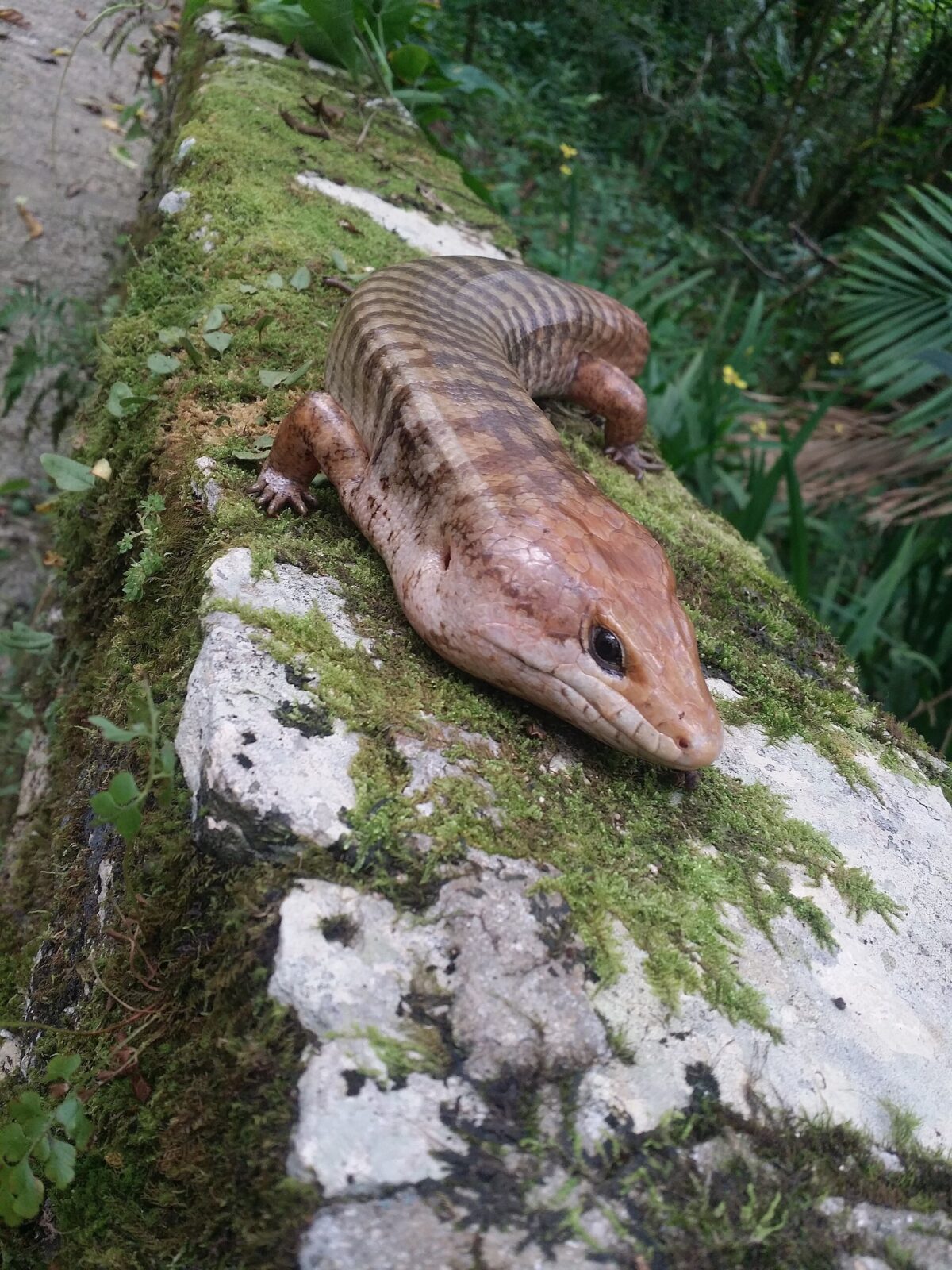
HAITIAN GIANT GALLIWASP
Celestus warreni
DESCRIPTION
Haitian Giant Galliwasp (Celestus warreni) is a large, legless lizard native to Haiti. It has a robust body with smooth, shiny scales that can vary in color from brown to gray, often with lighter markings. This species is primarily terrestrial and is known for its secretive behavior, often hiding under leaf litter or rocks in its natural habitat.
FUN FACTS
- The Haitian Giant Galliwasp is one of the largest members of its family, making it a fascinating subject for herpetologists
- Despite its size, it remains elusive and is rarely seen in the wild, contributing to its mysterious reputation.| This species plays a crucial role in its ecosystem by controlling insect populations, highlighting the importance of conserving its habitat to maintain ecological balance
QUICK INFO
Average Length30-50 cm
Diet TypeInsectivore
Social Structuresolitary
Activity PatternDiurnal
- Habitat
- This species inhabits tropical forests and shrublands, often favoring areas with dense vegetation. It is typically found in moist environments where it can easily find cover.
- Biomes
- Tropical Rainforest, Tropical Dry Forest
- Native Range
- The Haitian Giant Galliwasp is endemic to the island of Hispaniola, specifically found in Haiti.
- Continent
- North America
- Countries
- Haiti
- Diet
- The Haitian Giant Galliwasp primarily feeds on insects and other small invertebrates. It uses its keen sense of smell to locate prey in the leaf litter.
- Diet Type
- Insectivore
- Favorite Food
- insects, small invertebrates
- Social Structure
- solitary
- Activity Pattern
- Diurnal
- Group Size
- 1
- Territorial
- 0
 VU
VU
 LC
LC
30-50 cm
Length
- Coloration
- brown to gray with lighter markings
EN
Endangered
IUCN Red List Status
- Population Status
- The population status of the Haitian Giant Galliwasp is not well-documented, but habitat loss poses a significant threat.
- Population Trend
- Decreasing
- Endangered
- 1
- Threats
- The main threats to the Haitian Giant Galliwasp include habitat destruction due to deforestation and human encroachment. Additionally, climate change may impact its habitat and food sources.
- Predators
- Birds of prey, snakes, and larger mammals may prey on the Haitian Giant Galliwasp.
- Defense Mechanisms
- This species relies on its cryptic coloration to blend into its surroundings, making it less visible to predators.
- Found in Zoos
- Rare