


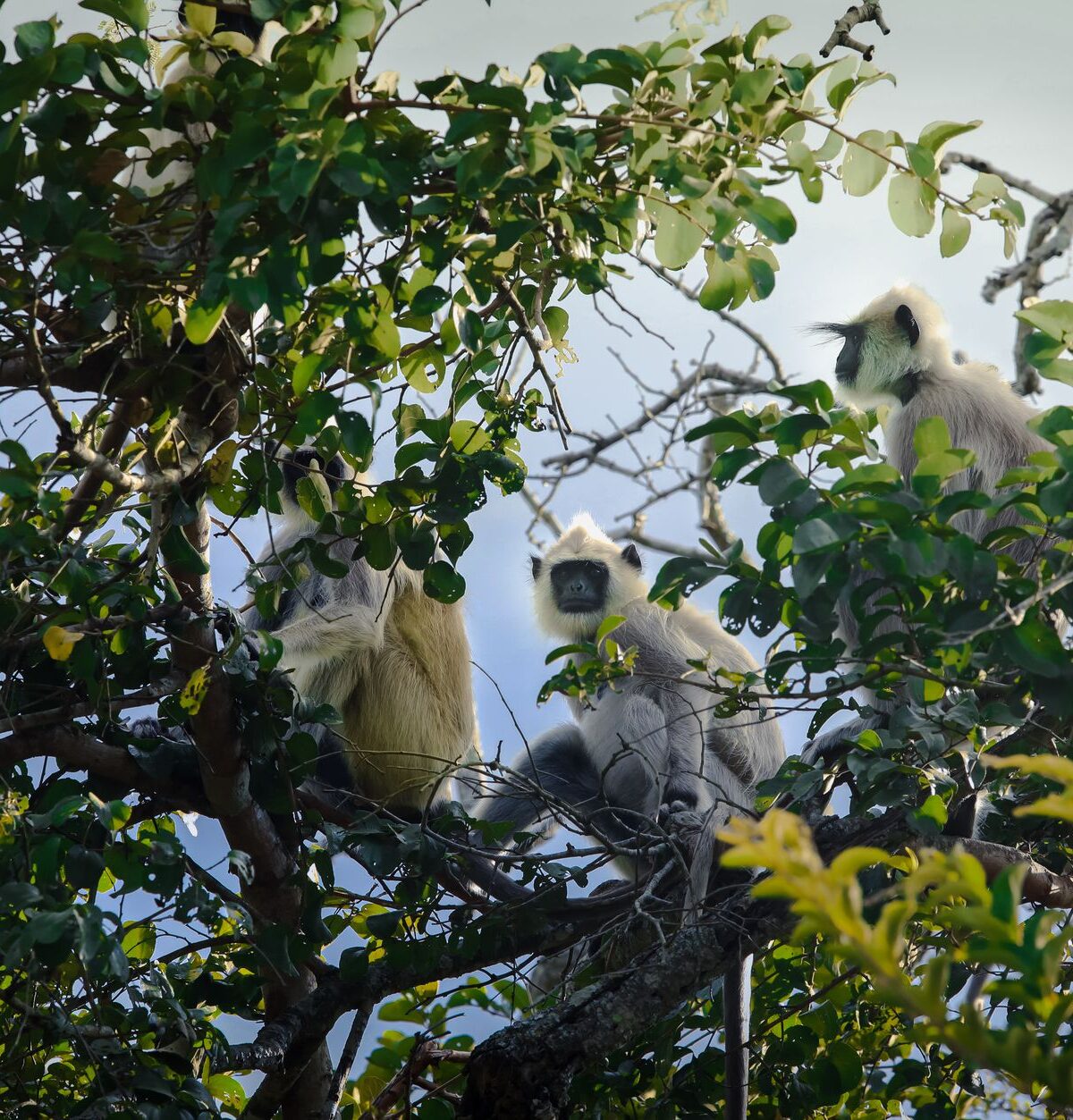
HANUMAN LANGUR
Semnopithecus entellus
DESCRIPTION
Hanuman Langur (Semnopithecus entellus) is commonly known as the Entellus Langur and Sacred Langur. This species is characterized by its long limbs, a slender body, and a distinctive black face surrounded by a white or light-colored fur. They are highly social animals, often found in large groups, and are known for their vocalizations and complex social interactions.
FUN FACTS
- Hanuman Langurs are named after the Hindu deity Hanuman, who is often depicted as a monkey and is revered in Indian culture
- These langurs play a significant role in their ecosystems by helping to disperse seeds through their fruit consumption, contributing to forest regeneration
QUICK INFO
Lifespan15-20 years in the wild, up to 30 in captivity
Average Weight40-50 kg
Average Length50-75 cm
Diet TypeHerbivore
Social StructureThey live in groups, typically consisting of multiple females and a few males, with a clear social hierarchy.
Activity PatternDiurnal
Breeding SeasonYear-round, with peaks during the rainy season
- Habitat
- Hanuman Langurs inhabit a variety of environments, including forests, grasslands, and urban areas. They are adaptable and can thrive in both natural and human-altered landscapes.
- Biomes
- Tropical Rainforest, Savanna, Grassland
- Native Range
- They are native to the Indian subcontinent, primarily found in India, Nepal, and Bangladesh.
- Continent
- Asia
- Countries
- India, Nepal, Bangladesh
- Diet
- Hanuman Langurs primarily consume leaves, fruits, and flowers, making them folivorous. They are known to forage in trees and on the ground, adapting their diet based on seasonal availability.
- Diet Type
- Herbivore
- Favorite Food
- leaves, fruits, flowers
- Social Structure
- They live in groups, typically consisting of multiple females and a few males, with a clear social hierarchy.
- Activity Pattern
- Diurnal
- Group Size
- 10-30
- Territorial
- 1
 VU
VU
 EN
EN
40-50 kg
Weight
50-75 cm
Length
- Coloration
- They have a grayish-brown fur with a lighter underside and a distinctive black face.
- Sexual Dimorphism
- Males are generally larger than females.
- Lifespan
- 15-20 years in the wild, up to 30 in captivity
- Gestation Period
- 200 days
- Offspring per Birth
- 1
- Sexual Maturity
- 3-4 years
- Breeding Season
- Year-round, with peaks during the rainy season
LC
Least Concern
IUCN Red List Status
- Population Status
- The population is currently stable, but habitat loss poses a threat.
- Wild Population Estimate
- 100,000+
- Population Trend
- Stable
- Endangered
- 0
- Threats
- Main threats include habitat destruction due to urbanization and agriculture, as well as human-wildlife conflict. They are sometimes hunted for their meat and fur.
- Predators
- Leopards, Tigers, Humans
- Defense Mechanisms
- They use vocalizations to alert the group of potential threats and can also flee to higher branches to escape predators.
- Compatible Animals
- Other primates, such as macaques, in zoo settings
- Found in Zoos
- Common