


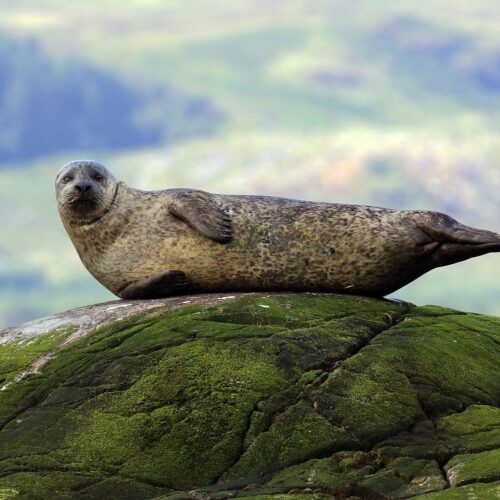
HARBOR SEAL
Phoca vitulina
DESCRIPTION
The Harbor Seal (Phoca vitulina) is a medium-sized pinniped found along the coastlines of the Northern Hemisphere. They are known for their spotted coats and are often seen resting on rocks or beaches.
FUN FACTS
- Harbor seals can dive to depths of over 600 feet | They can hold their breath for up to 30 minutes | They are known to use tools, such as rocks, to help them open shellfish
QUICK INFO
Lifespan20-30 years in the wild
Average Weight60-130 kg
Average Length1.5-2.0 m
Diet TypeCarnivore
Social Structuregroup — often found in small to large groups, especially during breeding season
Activity PatternDiurnal
Breeding SeasonSpring to early summer
- Habitat
- Harbor seals inhabit coastal waters, estuaries, and bays. They prefer areas with sandy or rocky beaches for resting and breeding.
- Biomes
- Coastal, Marine
- Native Range
- They are found along the coasts of North America, Europe, and parts of Asia.
- Continent
- North America, Europe, Asia
- Countries
- United States, Canada, United Kingdom, Norway, Russia
- Diet
- Harbor seals primarily feed on fish and invertebrates. They are opportunistic feeders and will consume a variety of prey depending on availability.
- Diet Type
- Carnivore
- Favorite Food
- fish, squid, crustaceans
- Social Structure
- group — often found in small to large groups, especially during breeding season
- Activity Pattern
- Diurnal
- Group Size
- 5-50
- Territorial
- 0
 VU
VU
 LC
LC
60-130 kg
Weight
1.5-2.0 m
Length
- Coloration
- Gray to brown with dark spots or blotches
- Sexual Dimorphism
- Males are generally larger than females
- Lifespan
- 20-30 years in the wild
- Gestation Period
- 11 months
- Offspring per Birth
- 1
- Sexual Maturity
- 3-5 years
- Breeding Season
- Spring to early summer
LC
Least Concern
IUCN Red List Status
- Population Status
- The population is currently stable in many areas, but some local populations may be threatened.
- Wild Population Estimate
- 300,000+
- Population Trend
- Stable
- Endangered
- 0
- Threats
- Main threats include habitat loss, pollution, and entanglement in fishing gear. Climate change also poses a risk to their habitat.
- Predators
- Orcas, sharks, and large terrestrial mammals like bears
- Defense Mechanisms
- They rely on their agility in water and can quickly dive to escape predators.
- Found in Zoos
- Uncommon