


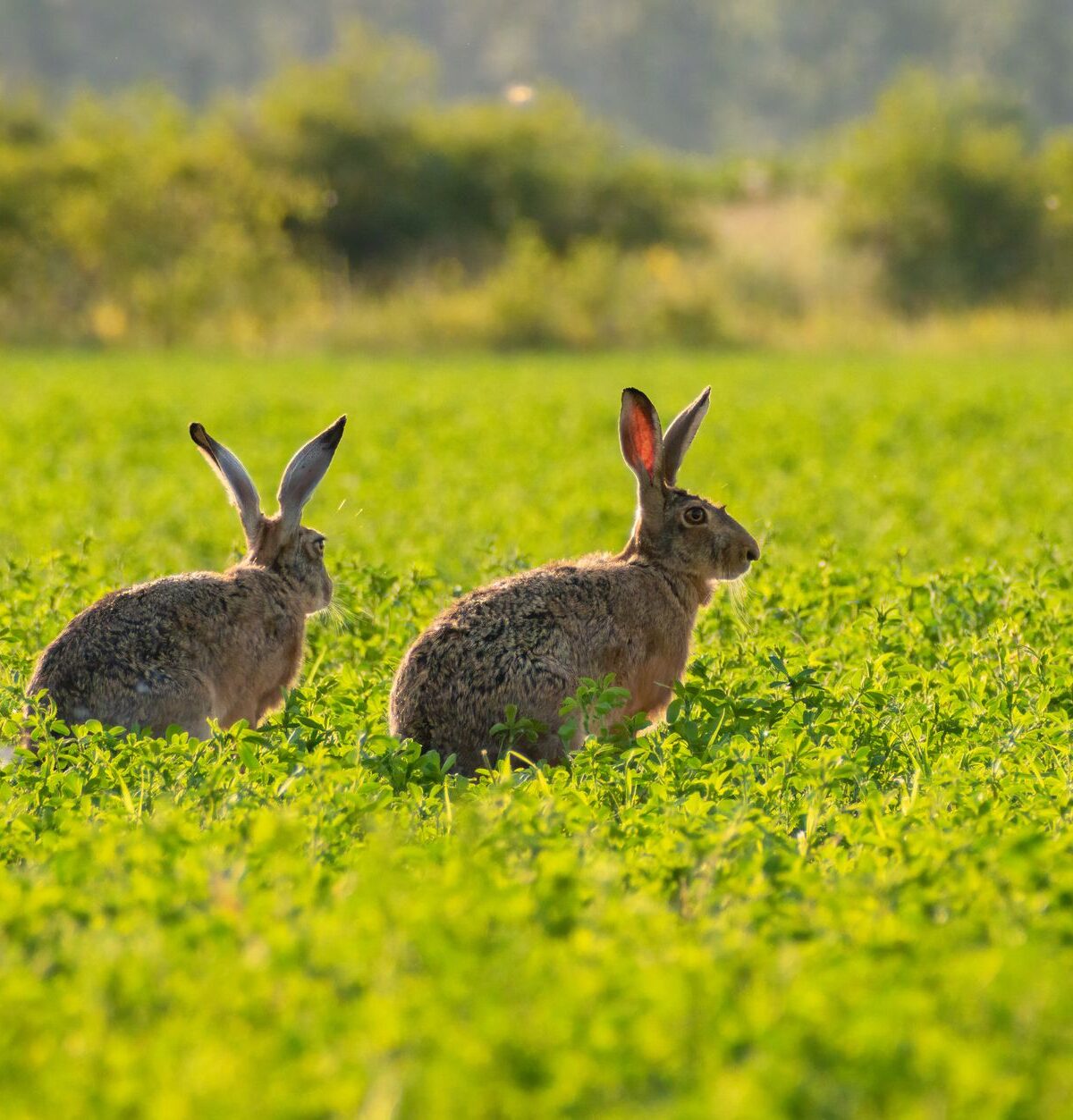
HARE
Lepus europaeus
DESCRIPTION
Hare (Lepus europaeus), commonly known as the European Hare or Brown Hare, is a large species of hare characterized by its long ears, powerful hind legs, and a distinctive brownish-grey fur. This species is known for its remarkable speed and agility, allowing it to escape predators in open fields and grasslands. Hares are primarily solitary animals, but they can also be seen in pairs or small groups, especially during the breeding season when males compete for females.
FUN FACTS
- Hares are known for their incredible speed, capable of reaching up to 70 km/h (43 mph) when fleeing from predators
- Unlike rabbits, hares are born fully furred and with their eyes open, allowing them to be more independent shortly after birth.| The European Hare has a unique courtship behavior where males engage in 'boxing' with each other, a display of strength and agility that is part of their mating ritual
- This behavior can be quite entertaining to observe, as it involves rapid movements and impressive leaps
QUICK INFO
Lifespan3-5 years in the wild, up to 12 years in captivity
Average Weight3-5 kg
Average Length50-70 cm
Diet TypeHerbivore
Social Structuresolitary, but can be seen in pairs during breeding season
Activity PatternCrepuscular
Breeding SeasonSpring (March-May)
- Habitat
- Hares inhabit a variety of environments, including open fields, grasslands, and agricultural areas. They prefer habitats with ample cover for hiding from predators.
- Biomes
- Temperate Grassland, Agricultural
- Native Range
- The native range of the European Hare extends across Europe and parts of Asia.
- Continent
- Europe, Asia
- Countries
- United Kingdom, Germany, France, Italy, Spain
- Diet
- Hares are herbivores that primarily feed on grasses, herbs, and other vegetation. They may also consume bark and shoots during the winter months.
- Diet Type
- Herbivore
- Favorite Food
- grasses, herbs
- Social Structure
- solitary, but can be seen in pairs during breeding season
- Activity Pattern
- Crepuscular
- Group Size
- 1-2
- Territorial
- 0
 LC
LC
 VU
LC
VU
LC
3-5 kg
Weight
50-70 cm
Length
- Coloration
- brownish-grey fur with lighter underparts
- Sexual Dimorphism
- males are generally larger than females
- Lifespan
- 3-5 years in the wild, up to 12 years in captivity
- Gestation Period
- 42 days
- Offspring per Birth
- 2-4
- Sexual Maturity
- 1-2 years
- Breeding Season
- Spring (March-May)
LC
Least Concern
IUCN Red List Status
- Population Status
- The population of European Hares is currently stable in many areas, although it can vary regionally.
- Wild Population Estimate
- 1,000,000+
- Population Trend
- Stable
- Endangered
- 0
- Threats
- Main threats to the European Hare include habitat loss due to agricultural expansion and hunting. Additionally, road traffic poses a significant risk to their populations.
- Predators
- foxes, wolves, birds of prey, domestic dogs
- Defense Mechanisms
- Hares rely on their speed and agility to escape predators, often using zigzag patterns to evade capture.
- Found in Zoos
- Uncommon