


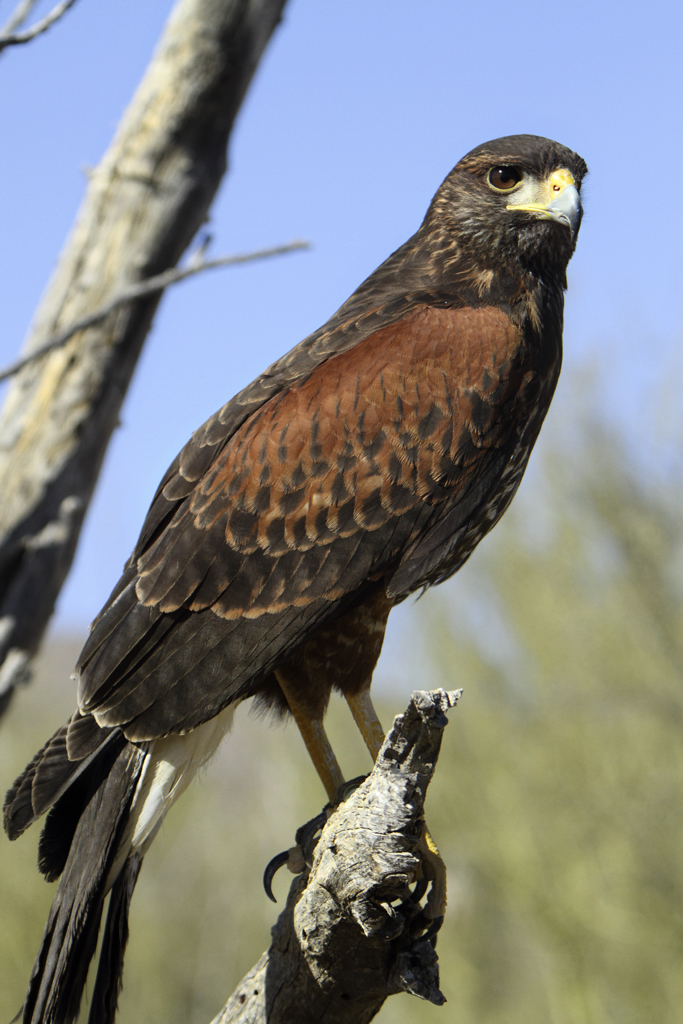
HARRIS' HAWK
Parabuteo unicinctus
DESCRIPTION
Harris' Hawk is a medium-sized raptor known for its striking plumage, which features a dark brown body with white markings on the tail and legs. This species exhibits unique social behavior, often hunting in groups, which is uncommon among hawks. They are highly adaptable and can thrive in various environments, showcasing their intelligence and cooperative hunting strategies.
FUN FACTS
- Harris' Hawks are unique among raptors for their social hunting behavior, often working together to catch prey
- This cooperative strategy allows them to take down larger animals than they could individually
- | They are also known for their intelligence and adaptability, often seen using tools or manipulating their environment to aid in hunting
- Their ability to thrive in various habitats makes them a fascinating subject of study in avian behavior
QUICK INFO
Lifespan10-15 years in the wild, up to 20 years in captivi
Average Weight0.7-1.5 kg
Average Length45-60 cm
Diet TypeCarnivore
Social StructureGroup, often seen hunting in family units or small groups.
Activity PatternDiurnal
Breeding SeasonSpring (March-May)
- Habitat
- Harris' Hawks inhabit arid and semi-arid regions, often found in deserts, scrublands, and open woodlands. They prefer areas with scattered trees or shrubs for nesting and hunting.
- Biomes
- Desert, Grassland, Savanna
- Native Range
- Harris' Hawks are native to the southwestern United States, Mexico, and parts of Central America.
- Continent
- North America, Central America
- Countries
- United States, Mexico, Guatemala, Honduras
- Diet
- Harris' Hawks primarily feed on small mammals, birds, and reptiles. They are known to hunt cooperatively, using teamwork to capture prey more effectively.
- Diet Type
- Carnivore
- Favorite Food
- Rabbits, rodents, birds
- Social Structure
- Group, often seen hunting in family units or small groups.
- Activity Pattern
- Diurnal
- Group Size
- 2-6
- Territorial
- 1
 LC
LC
 LC
LC
0.7-1.5 kg
Weight
45-60 cm
Length
- Coloration
- Dark brown with white markings on the tail and legs.
- Sexual Dimorphism
- Females are generally larger than males.
- Lifespan
- 10-15 years in the wild, up to 20 years in captivi
- Offspring per Birth
- 2-5
- Sexual Maturity
- 2-3 years
- Breeding Season
- Spring (March-May)
LC
Least Concern
IUCN Red List Status
- Population Status
- The population is currently stable, with no immediate threats to their numbers.
- Wild Population Estimate
- 50,000-100,000
- Population Trend
- Stable
- Endangered
- 0
- Threats
- Main threats include habitat loss due to urban development and agricultural expansion. Additionally, they may face risks from poisoning and shooting.
- Predators
- Great Horned Owl, Red-tailed Hawk, larger raptors, and humans.
- Defense Mechanisms
- They use their agility and speed to evade predators, and their social structure allows them to defend against threats collectively.
- Compatible Animals
- None
- Found in Zoos
- Common