


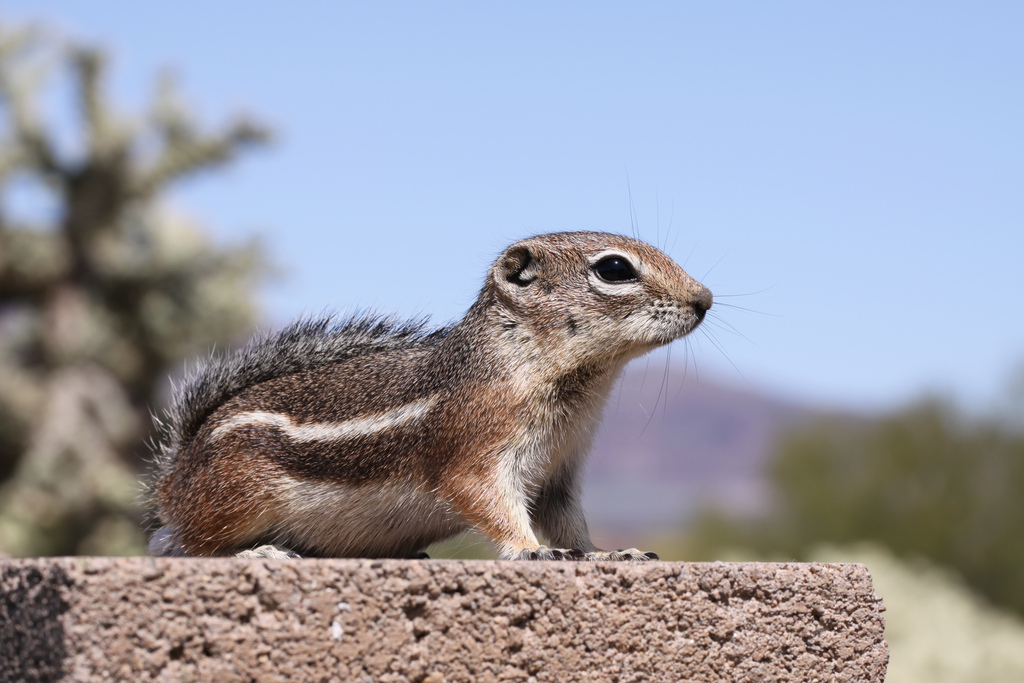
HARRIS’S ANTELOPE GROUND SQUIRREL
Ammospermophilus harrisii
DESCRIPTION
Harris’s Antelope Ground Squirrel (Ammospermophilus harrisii) is also known as Harris's Ground Squirrel. This small rodent is characterized by its slender body, long legs, and a distinctive coloration that includes a light brown coat with white underparts and a dark stripe along its side. They are highly social animals, often seen foraging in groups and exhibiting a range of vocalizations to communicate with one another.
FUN FACTS
- Harris’s Antelope Ground Squirrel is known for its unique social structure, where individuals will take turns standing guard while others forage, allowing them to stay vigilant against predators
- Additionally, these squirrels have a fascinating way of communicating; they use a variety of chirps and whistles to alert others of danger, showcasing their complex social interactions
QUICK INFO
Lifespan3-5 years in the wild, up to 8 years in captivity
Average Weight0.5-1 kg
Average Length25-30 cm
Diet TypeHerbivore
Social StructureThey are typically found in groups, which can range from small family units to larger colonies.
Activity PatternDiurnal
Breeding SeasonSpring (March-May)
- Habitat
- Harris’s Antelope Ground Squirrel inhabits arid and semi-arid regions, often found in grasslands and scrublands. They prefer areas with loose soil for burrowing and ample vegetation for foraging.
- Biomes
- Grassland, Desert
- Native Range
- This species is native to the western United States, particularly in regions such as the Great Basin and parts of the Rocky Mountains.
- Continent
- North America
- Countries
- United States
- Diet
- They primarily feed on seeds, nuts, and various plant materials, but will also consume insects when available.
- Diet Type
- Herbivore
- Favorite Food
- seeds and nuts
- Social Structure
- They are typically found in groups, which can range from small family units to larger colonies.
- Activity Pattern
- Diurnal
- Group Size
- 5-30
- Territorial
- 0
 CR
CR
 LC
LC
 LC
LC
0.5-1 kg
Weight
25-30 cm
Length
- Coloration
- Light brown with a white underbelly and a dark lateral stripe.
- Lifespan
- 3-5 years in the wild, up to 8 years in captivity
- Gestation Period
- 30-32 days
- Offspring per Birth
- 4-8
- Sexual Maturity
- 1 year
- Breeding Season
- Spring (March-May)
LC
Least Concern
IUCN Red List Status
- Population Status
- The population is currently stable, but habitat loss poses a potential threat.
- Wild Population Estimate
- Unknown
- Population Trend
- Stable
- Endangered
- 0
- Threats
- Main threats include habitat destruction due to agricultural expansion and urban development. Additionally, predation by domestic cats and dogs can impact local populations.
- Predators
- Coyotes, hawks, snakes, and domestic cats.
- Defense Mechanisms
- They use burrows for shelter and can quickly retreat underground to escape predators.
- Found in Zoos
- Uncommon