


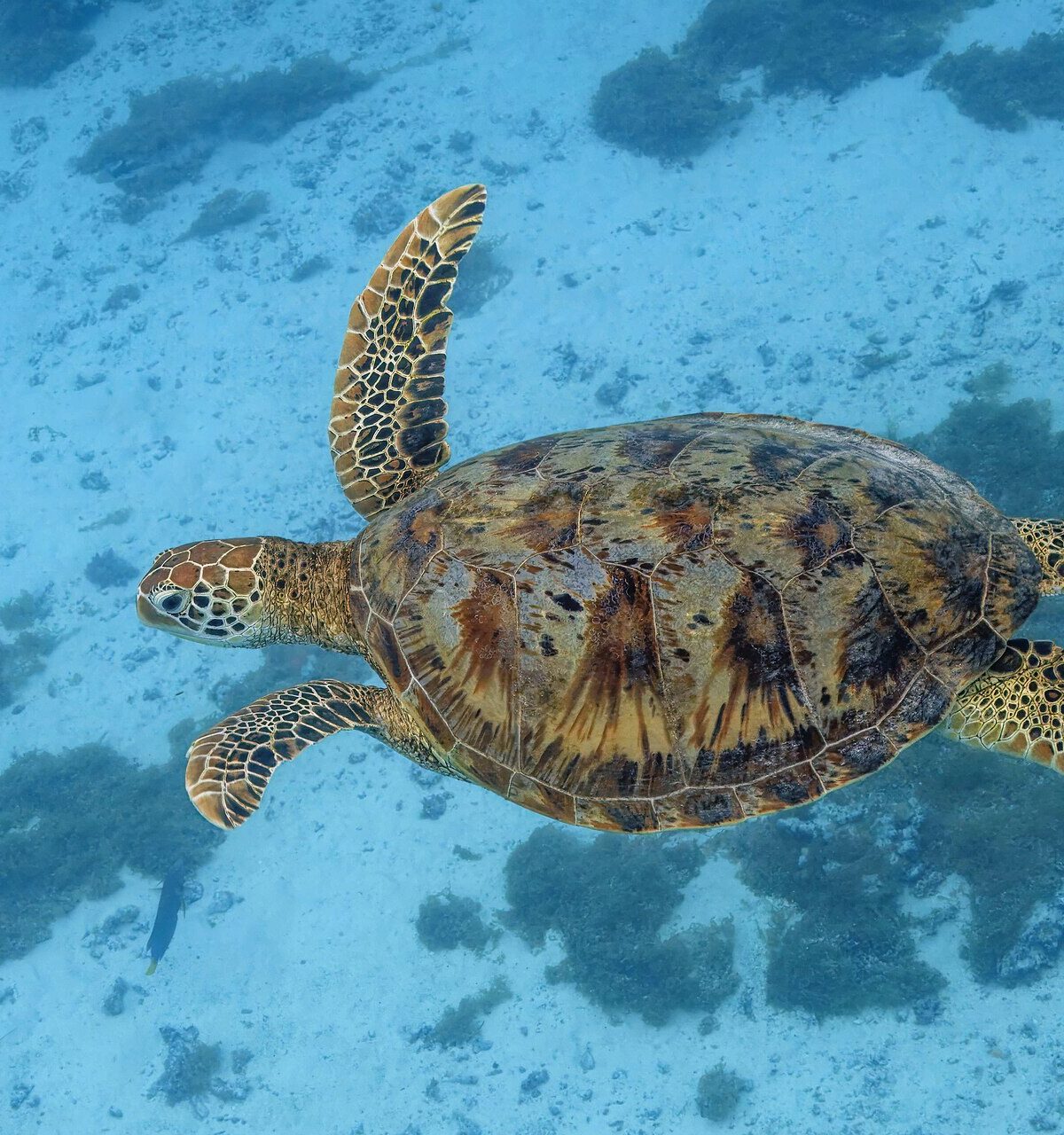
HAWAIIAN GREEN SEA TURTLE
Chelonia mydas
DESCRIPTION
Hawaiian Green Sea Turtle (Chelonia mydas) is commonly known as the Green Turtle due to the greenish color of its body fat. These turtles have a large, rounded shell that can vary in color from olive to dark brown, with a smooth surface and a distinctive pattern of scutes. They are primarily herbivorous, feeding on seagrasses and algae, and are known for their long migrations between feeding and nesting sites, showcasing remarkable navigation skills.
FUN FACTS
- Hawaiian Green Sea Turtles can hold their breath for up to five hours while resting underwater
- They are also known to have a unique way of communicating through a series of vocalizations, especially during mating season
QUICK INFO
Lifespan50-80 years in the wild.
Average Weight150-200 kg
Average Length1.0-1.5 m
Diet TypeHerbivore
Social StructureSolitary, with occasional group gatherings during feeding or nesting.
Activity PatternDiurnal
Breeding SeasonSpring to early summer (May-August)
- Habitat
- These turtles inhabit shallow coastal waters, particularly around coral reefs and seagrass beds. They are often found in warm tropical and subtropical oceans.
- Biomes
- Coral Reef, Coastal
- Native Range
- Hawaiian Green Sea Turtles are found throughout the tropical and subtropical waters of the Pacific Ocean, with significant populations in Hawaii.
- Continent
- Oceania
- Countries
- United States (Hawaii), Australia, Mexico, Costa Rica
- Diet
- Hawaiian Green Sea Turtles primarily consume seagrasses and algae, which form the bulk of their diet. They play a crucial role in maintaining the health of seagrass beds and coral reefs.
- Diet Type
- Herbivore
- Favorite Food
- Seagrasses, algae
- Social Structure
- Solitary, with occasional group gatherings during feeding or nesting.
- Activity Pattern
- Diurnal
- Group Size
- 1-10
- Territorial
- 0
 LC
LC
 LC
LC
150-200 kg
Weight
1.0-1.5 m
Length
- Coloration
- Olive to dark brown shell with lighter underbelly.
- Sexual Dimorphism
- Males have longer tails than females.
- Lifespan
- 50-80 years in the wild.
- Offspring per Birth
- 100-200 eggs
- Sexual Maturity
- 20-50 years
- Breeding Season
- Spring to early summer (May-August)
EN
Endangered
IUCN Red List Status
- Population Status
- The population of Hawaiian Green Sea Turtles is currently recovering but remains vulnerable due to various threats.
- Wild Population Estimate
- Approximately 10,000-20,000 nesting females.
- Population Trend
- Increasing
- Endangered
- 1
- Threats
- Main threats include habitat loss, climate change, entanglement in fishing gear, and poaching. Additionally, marine debris poses a significant risk to their health.
- Conservation Program
- Hawaiian Green Sea Turtles are protected under the Endangered Species Act, and various conservation programs focus on habitat protection and public awareness.
- Predators
- Sharks, large fish, and humans (eggs and hatchlings are particularly vulnerable).
- Defense Mechanisms
- Hawaiian Green Sea Turtles rely on their size and hard shell for protection, and they can also dive deep to escape predators.
- Compatible Animals
- None
- Found in Zoos
- Common