


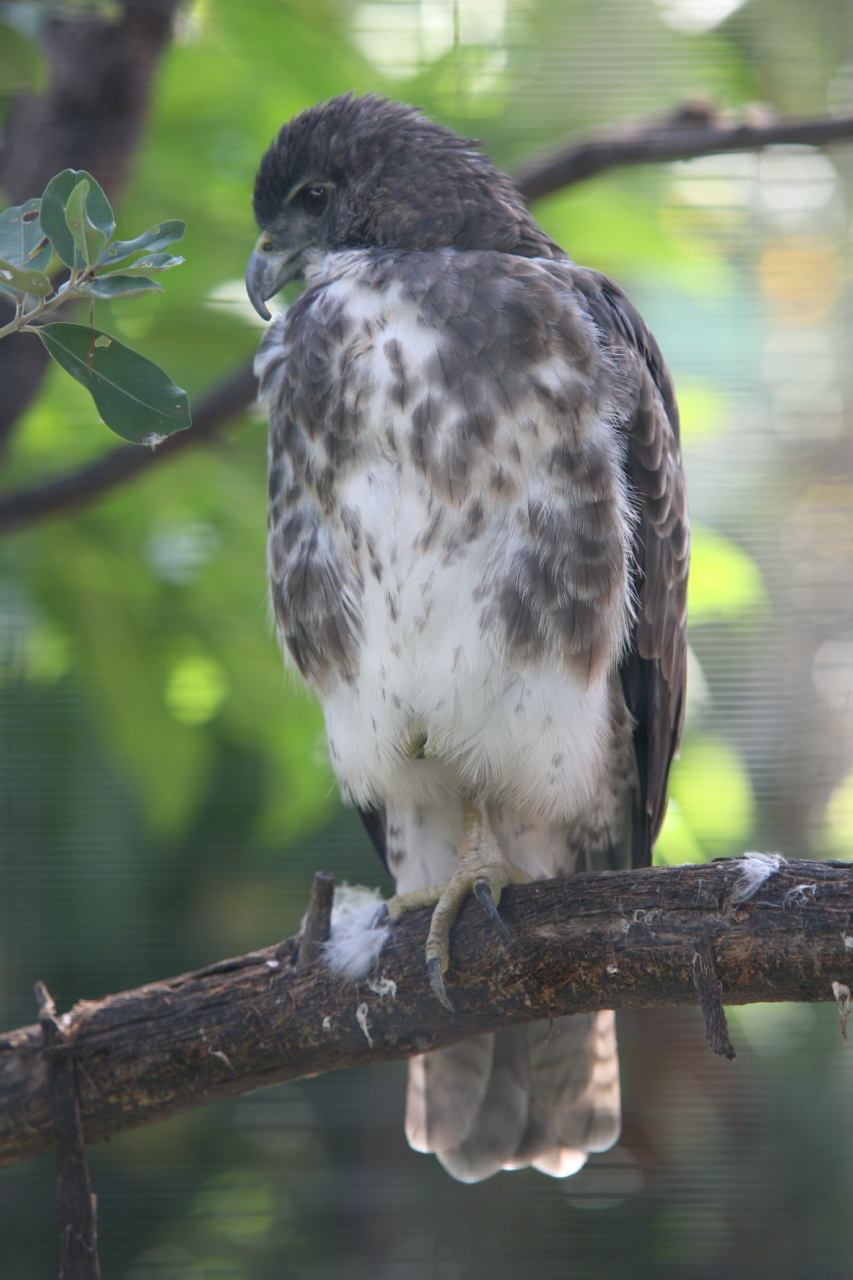
HAWAIIAN HAWK
Buteo solitarius
DESCRIPTION
Hawaiian Hawk (Buteo solitarius), also known as I'o, is a medium-sized raptor endemic to the Hawaiian Islands. It features a distinctive dark brown plumage with lighter streaks and a white belly, making it well-adapted to its forested habitat. This hawk is known for its keen eyesight and soaring flight, often seen gliding over the treetops in search of prey.
FUN FACTS
- Hawaiian Hawks are unique to the Hawaiian Islands and are an important part of the ecosystem, helping to control populations of small mammals and birds
- They are also culturally significant to Native Hawaiians, who regard them as a symbol of strength and endurance.|The I'o has a distinctive call that can be heard echoing through the forests of Hawaii, often described as a series of high-pitched whistles
- This vocalization plays a crucial role in communication between mates and in establishing territory
QUICK INFO
Lifespanup to 20 years in the wild
Average Weight600-800 g
Average Length45-60 cm
Diet TypeCarnivore
Social Structuresolitary, pairs during breeding season
Activity PatternDiurnal
Breeding SeasonSpring (March-May)
- Habitat
- Hawaiian Hawks inhabit a variety of forested areas, including native Hawaiian forests and shrublands. They prefer regions with ample trees for nesting and hunting.
- Biomes
- Tropical Rainforest, Temperate Forest
- Native Range
- The species is native to the Hawaiian Islands, particularly found on the islands of Hawaii and Maui.
- Continent
- Oceania
- Countries
- United States (Hawaii)
- Diet
- The Hawaiian Hawk primarily feeds on small mammals, birds, and insects. It uses its sharp talons to catch and kill its prey.
- Diet Type
- Carnivore
- Favorite Food
- small mammals, birds, insects
- Social Structure
- solitary, pairs during breeding season
- Activity Pattern
- Diurnal
- Group Size
- 1-2
- Territorial
- 1
 LC
LC
600-800 g
Weight
45-60 cm
Length
- Coloration
- dark brown with lighter streaks and a white belly
- Sexual Dimorphism
- females are generally larger than males
- Lifespan
- up to 20 years in the wild
- Offspring per Birth
- 1-3
- Sexual Maturity
- 2-3 years
- Breeding Season
- Spring (March-May)
VU
Vulnerable
IUCN Red List Status
- Population Status
- The population of Hawaiian Hawks is currently considered vulnerable due to habitat loss and other environmental pressures.
- Wild Population Estimate
- 1,500-2,500
- Population Trend
- Decreasing
- Endangered
- 1
- Threats
- Main threats include habitat destruction due to urban development and invasive species that compete for food and nesting sites. Additionally, they are vulnerable to diseases and predation by introduced mammals.
- Conservation Program
- Conservation efforts include habitat restoration and protection, as well as monitoring programs to track population health.
- Predators
- Hawaiian Hawks have few natural predators, but young hawks may be vulnerable to feral cats and rats.
- Defense Mechanisms
- They use their sharp talons and beaks to defend themselves against threats.
- Found in Zoos
- Uncommon