


HECK CATTLE
DESCRIPTION
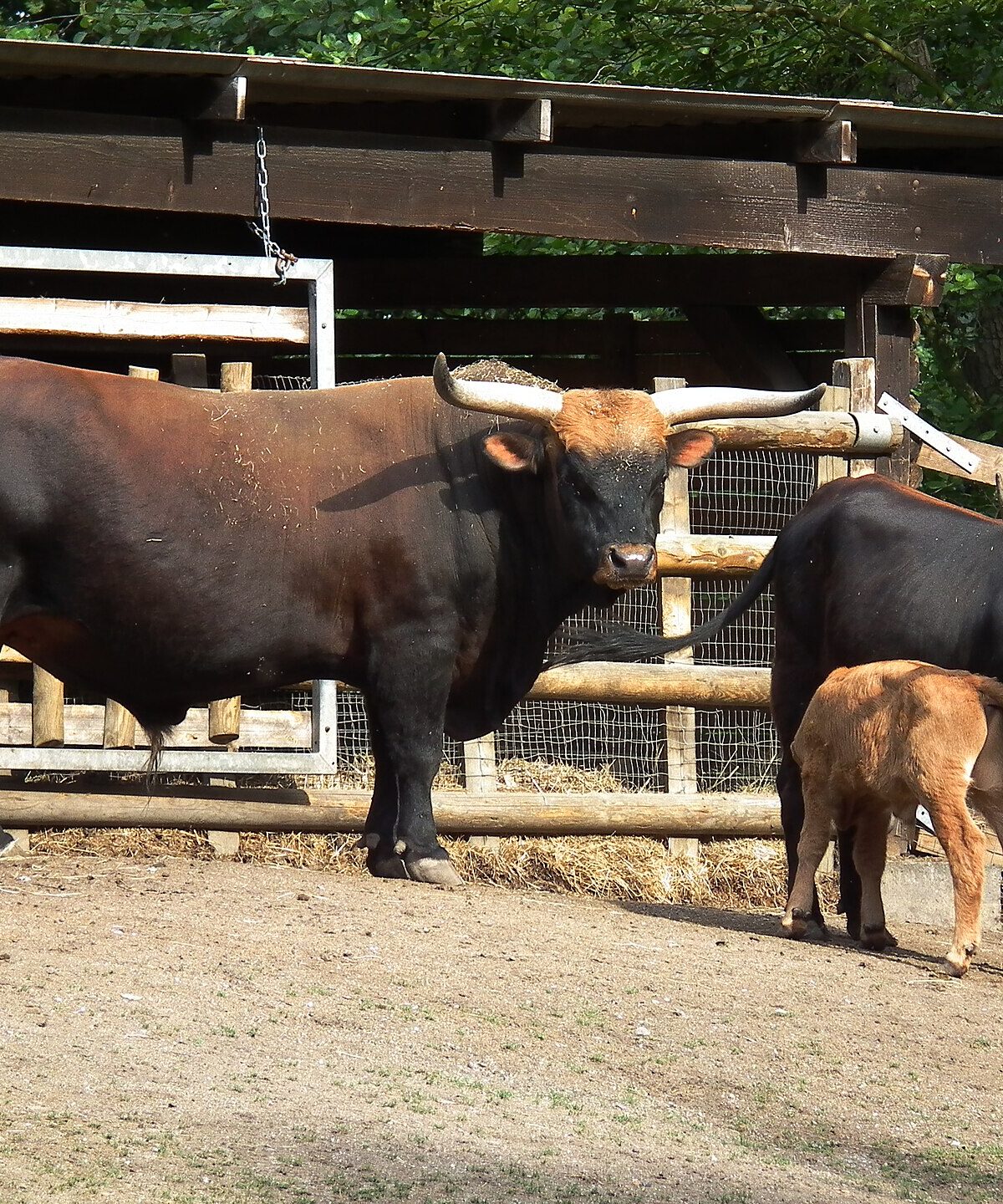
Heck Cattle is a breed of cattle that was developed in the early 20th century by breeding back to the extinct aurochs. They are large, robust animals with a muscular build, characterized by their long horns and a distinctive coat that can range from dark brown to black. These cattle are known for their wild appearance and are often used in conservation grazing to maintain grassland ecosystems.
FUN FACTS
- Heck Cattle were created in the 1920s by breeding domestic cattle with the aurochs, aiming to recreate the wild characteristics of this extinct species
- They are often used in conservation grazing projects to help maintain biodiversity in grassland ecosystems.|Heck Cattle are known for their impressive size and strength, making them capable of surviving in harsh environments
- Their unique appearance and historical significance make them a fascinating subject for both conservationists and cattle enthusiasts
QUICK INFO
Lifespan15-20 years in the wild, up to 25 in captivity
Average Weight600-800 kg
Average Length2.0-2.5 m
Diet TypeHerbivore
Social Structuregroup — they typically form herds that can vary in size.
Activity PatternDiurnal
Breeding SeasonYear-round
- Habitat
- Heck Cattle thrive in open grasslands and pastures, where they can roam freely and graze. They are often found in areas that are managed for conservation purposes.
- Biomes
- Grassland, Savanna
- Native Range
- Originally bred in Europe, particularly in Germany, but now found in various parts of the world due to conservation efforts.
- Continent
- Europe
- Countries
- Germany, Netherlands, United Kingdom
- Diet
- Heck Cattle are herbivores, primarily grazing on grasses and other vegetation. They play a significant role in their ecosystems by helping to manage plant growth.
- Diet Type
- Herbivore
- Favorite Food
- grasses, herbs
- Social Structure
- group — they typically form herds that can vary in size.
- Activity Pattern
- Diurnal
- Group Size
- 10-30
- Territorial
- 0
 LC
LC
600-800 kg
Weight
2.0-2.5 m
Length
1.4-1.6 m at shoulder
Height (Shoulder)
- Coloration
- dark brown to black with lighter markings
- Sexual Dimorphism
- males are generally larger and more muscular than females
- Lifespan
- 15-20 years in the wild, up to 25 in captivity
- Gestation Period
- 280 days
- Offspring per Birth
- 1
- Sexual Maturity
- 2-3 years
- Breeding Season
- Year-round
VU
Vulnerable
IUCN Red List Status
- Population Status
- The population of Heck Cattle is stable due to conservation efforts, but they remain a rare breed.
- Wild Population Estimate
- 1,000-2,000
- Population Trend
- Stable
- Endangered
- 1
- Threats
- Main threats include habitat loss and competition with domestic livestock. Conservation grazing practices are essential to maintain their populations.
- Conservation Program
- Various breeding programs and conservation initiatives are in place to preserve the breed.
- Predators
- Wolves, large cats, and humans can pose threats to Heck Cattle, particularly in areas where they are not managed.
- Defense Mechanisms
- Heck Cattle can defend themselves with their strong horns and by forming protective herds.
- Compatible Animals
- none
- Found in Zoos
- Uncommon