


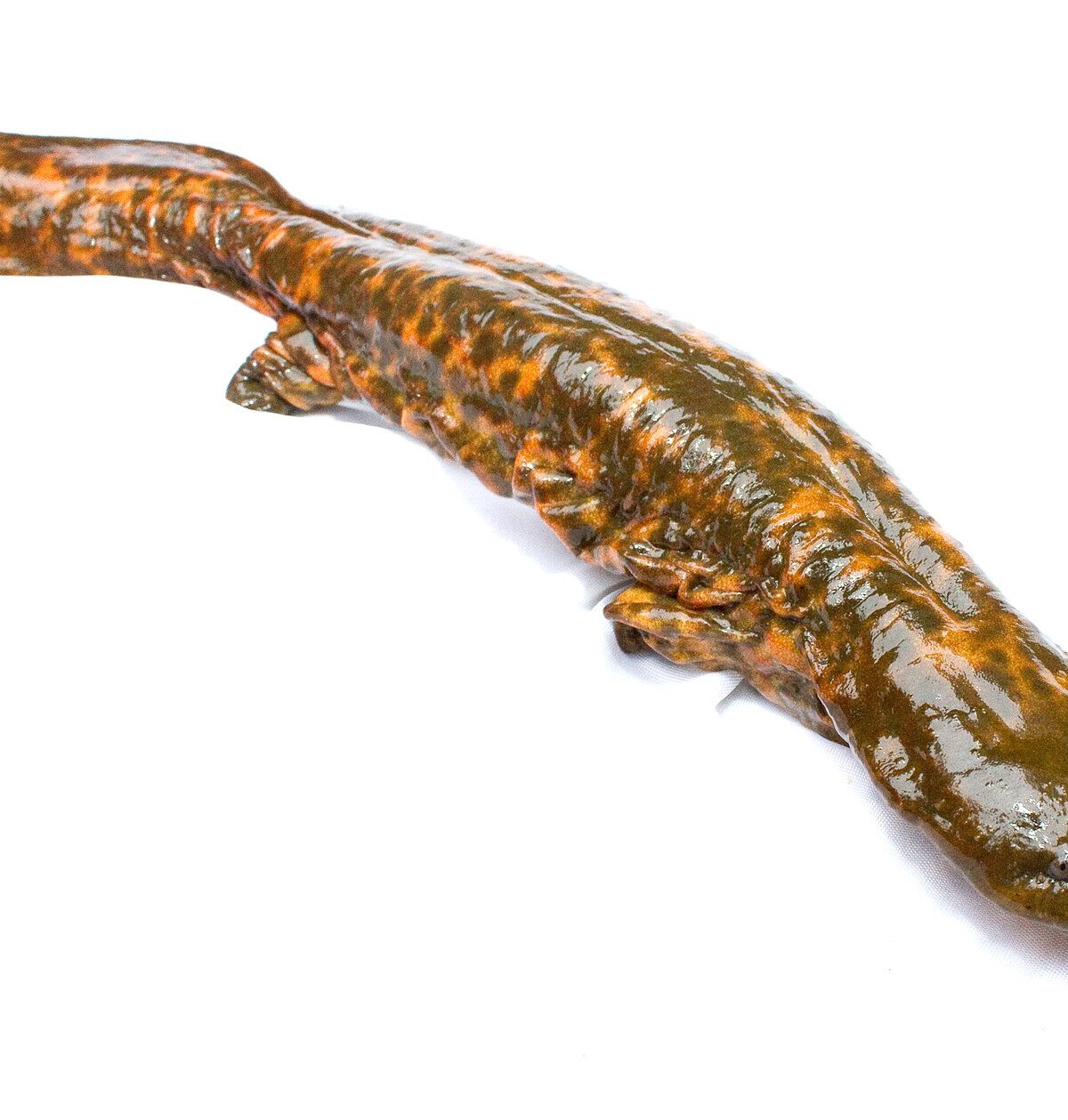
HELLBENDER
Cryptobranchus alleganiensis
DESCRIPTION
Hellbender (Cryptobranchus alleganiensis) is commonly known as the Eastern Hellbender and the Ozark Hellbender. This large aquatic salamander can reach lengths of up to 29 inches and has a distinctive, wrinkled appearance due to its loose skin, which aids in respiration. Hellbenders are primarily found in clean, fast-flowing streams and rivers, where they are well-adapted to a life spent mostly underwater, often hiding under rocks and boulders.
FUN FACTS
- Hellbenders are the largest salamanders in North America and can weigh over 2 kg
- They have a unique respiratory system that allows them to absorb oxygen through their skin, making them highly dependent on clean water for survival.|Hellbenders are often referred to as 'snot otters' due to the slimy mucus that covers their skin, which helps protect them from infections and parasites
QUICK INFO
Lifespanup to 30 years in captivity, 20 years in the wild
Average Weight1-2 kg
Average Length0.6-0.9 m
Diet TypeCarnivore
Social Structuresolitary, typically found alone or in pairs during breeding
Activity PatternNocturnal
Breeding SeasonSpring (April-June)
- Habitat
- Hellbenders inhabit clean, fast-flowing rivers and streams with rocky substrates. They prefer areas with ample cover, such as large boulders and submerged logs.
- Biomes
- Freshwater, Temperate Forest
- Native Range
- Hellbenders are native to the eastern United States, primarily found in the Appalachian region and parts of the Midwest.
- Continent
- North America
- Countries
- United States
- Diet
- Hellbenders primarily feed on aquatic invertebrates and small fish, using their keen sense of smell to locate prey. They are opportunistic feeders and can consume a variety of food items available in their habitat.
- Diet Type
- Carnivore
- Favorite Food
- aquatic invertebrates, small fish
- Social Structure
- solitary, typically found alone or in pairs during breeding
- Activity Pattern
- Nocturnal
- Group Size
- 1-2
- Territorial
- 0
 LC
LC

1-2 kg
Weight
0.6-0.9 m
Length
- Coloration
- dark brown to gray with a mottled pattern
- Sexual Dimorphism
- males are generally smaller and have more pronounced cloacal glands during breeding season
- Lifespan
- up to 30 years in captivity, 20 years in the wild
- Offspring per Birth
- 100-400 eggs
- Sexual Maturity
- 3-4 years
- Breeding Season
- Spring (April-June)
EN
Endangered
IUCN Red List Status
- Population Status
- The population of Hellbenders is declining due to habitat loss and pollution.
- Wild Population Estimate
- unknown, but declining
- Population Trend
- Decreasing
- Endangered
- 1
- Threats
- Main threats to Hellbenders include habitat degradation, pollution, and climate change. The loss of clean, fast-flowing water bodies is particularly detrimental to their survival.
- Conservation Program
- Various state and federal programs are in place to monitor and protect Hellbender populations.
- Predators
- Raccoons, otters, and large fish such as pike and bass are known predators of Hellbenders.
- Defense Mechanisms
- Hellbenders rely on their camouflage and ability to hide under rocks for protection from predators.
- Found in Zoos
- Uncommon