


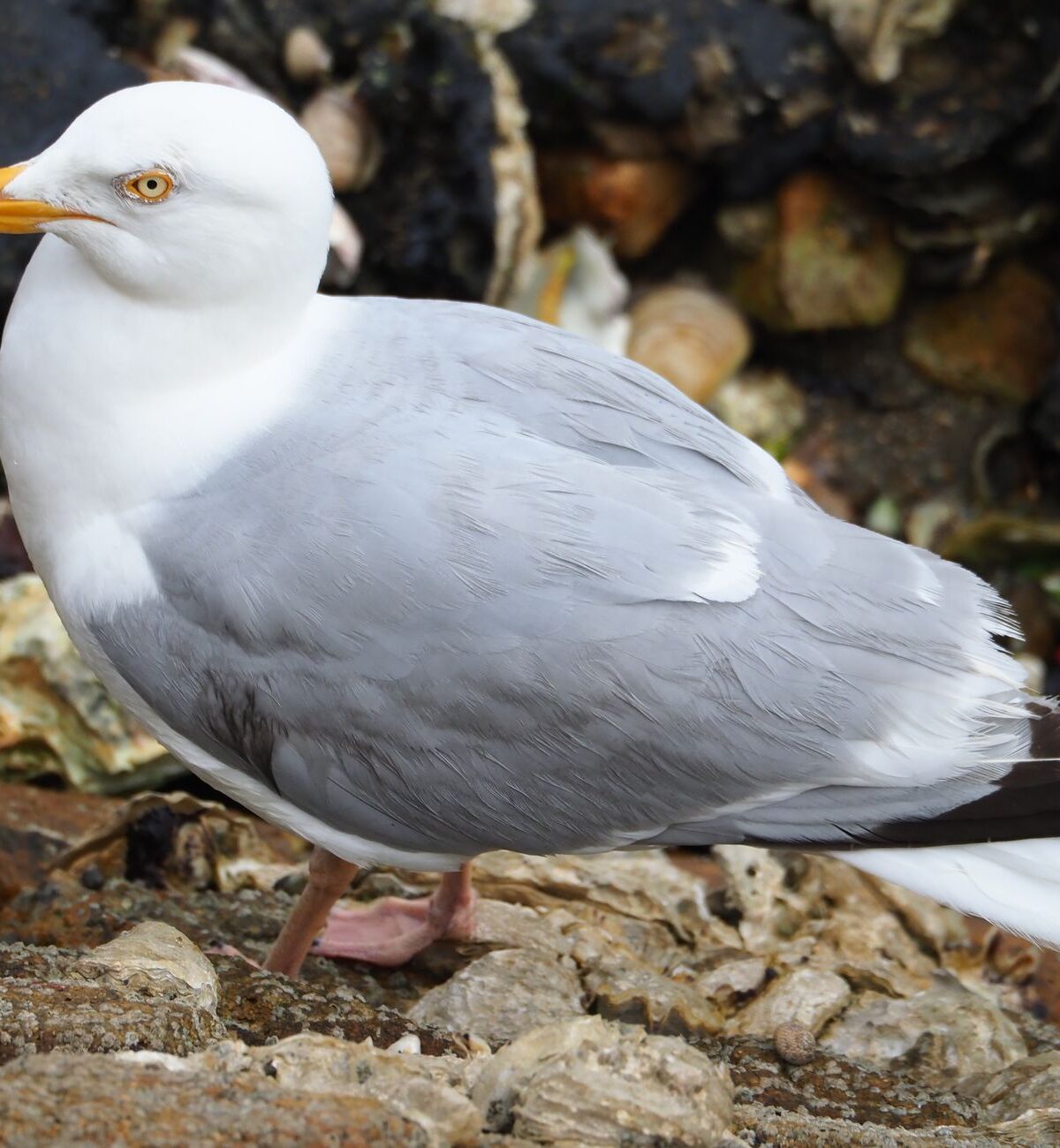
HERRING GULL
Larus argentatus
DESCRIPTION
Herring Gull (Larus argentatus) is a large gull species known for its striking appearance, featuring a gray mantle, white head, and yellow bill with a red spot. These birds are highly adaptable and can often be seen scavenging in urban areas, as well as foraging along coastlines and inland water bodies. Herring Gulls are social birds, often found in large groups, and they exhibit complex behaviors, including vocalizations and coordinated foraging strategies.
FUN FACTS
- Herring Gulls are known for their impressive vocalizations, which can include a variety of calls used for communication and signaling
- They are also capable of recognizing individual human faces, which helps them identify potential threats or food sources.| These gulls have a unique feeding behavior called 'kleptoparasitism,' where they steal food from other birds, showcasing their intelligence and adaptability in finding food
QUICK INFO
Lifespan10-20 years in the wild, up to 30 in captivity
Average Weight0.7-1.5 kg
Average Length50-66 cm
Diet TypeOmnivore
Social StructureThey are often found in groups, especially during feeding and nesting seasons, but can also be solitary.
Activity PatternDiurnal
Breeding SeasonSpring (April-June)
- Habitat
- Herring Gulls typically inhabit coastal regions, including beaches, cliffs, and estuaries, but they can also be found in urban areas. They prefer areas where they can easily access food sources and nesting sites.
- Biomes
- Coastal, Urban
- Native Range
- Herring Gulls are found across the northern hemisphere, primarily in coastal regions of Europe, North America, and parts of Asia.
- Continent
- Europe, North America, Asia
- Countries
- United Kingdom, United States, Canada, Norway, Germany
- Diet
- Herring Gulls are opportunistic feeders, consuming a wide variety of food items including fish, invertebrates, and human refuse. They are known to scavenge and steal food from other birds.
- Diet Type
- Omnivore
- Favorite Food
- fish, crustaceans, and human food scraps
- Social Structure
- They are often found in groups, especially during feeding and nesting seasons, but can also be solitary.
- Activity Pattern
- Diurnal
- Group Size
- 10-100
- Territorial
- 0
 LC
LC

0.7-1.5 kg
Weight
50-66 cm
Length
- Coloration
- Gray and white plumage with a yellow bill and red spot
- Sexual Dimorphism
- Males are generally larger than females.
- Lifespan
- 10-20 years in the wild, up to 30 in captivity
- Offspring per Birth
- 2-3
- Sexual Maturity
- 3-4 years
- Breeding Season
- Spring (April-June)
LC
Least Concern
IUCN Red List Status
- Population Status
- The population of Herring Gulls is currently stable, with large numbers in many areas.
- Wild Population Estimate
- 1,000,000-2,000,000
- Population Trend
- Stable
- Endangered
- 0
- Threats
- Main threats include habitat loss due to urban development and pollution. Additionally, they can be affected by changes in food availability due to overfishing.
- Predators
- Great Black-backed Gull, Bald Eagle, Foxes, and humans (in terms of habitat destruction).
- Defense Mechanisms
- Herring Gulls will often use aggressive vocalizations and physical displays to defend their nests and young.
- Compatible Animals
- Other gull species, ducks, and shorebirds
- Found in Zoos
- Uncommon