


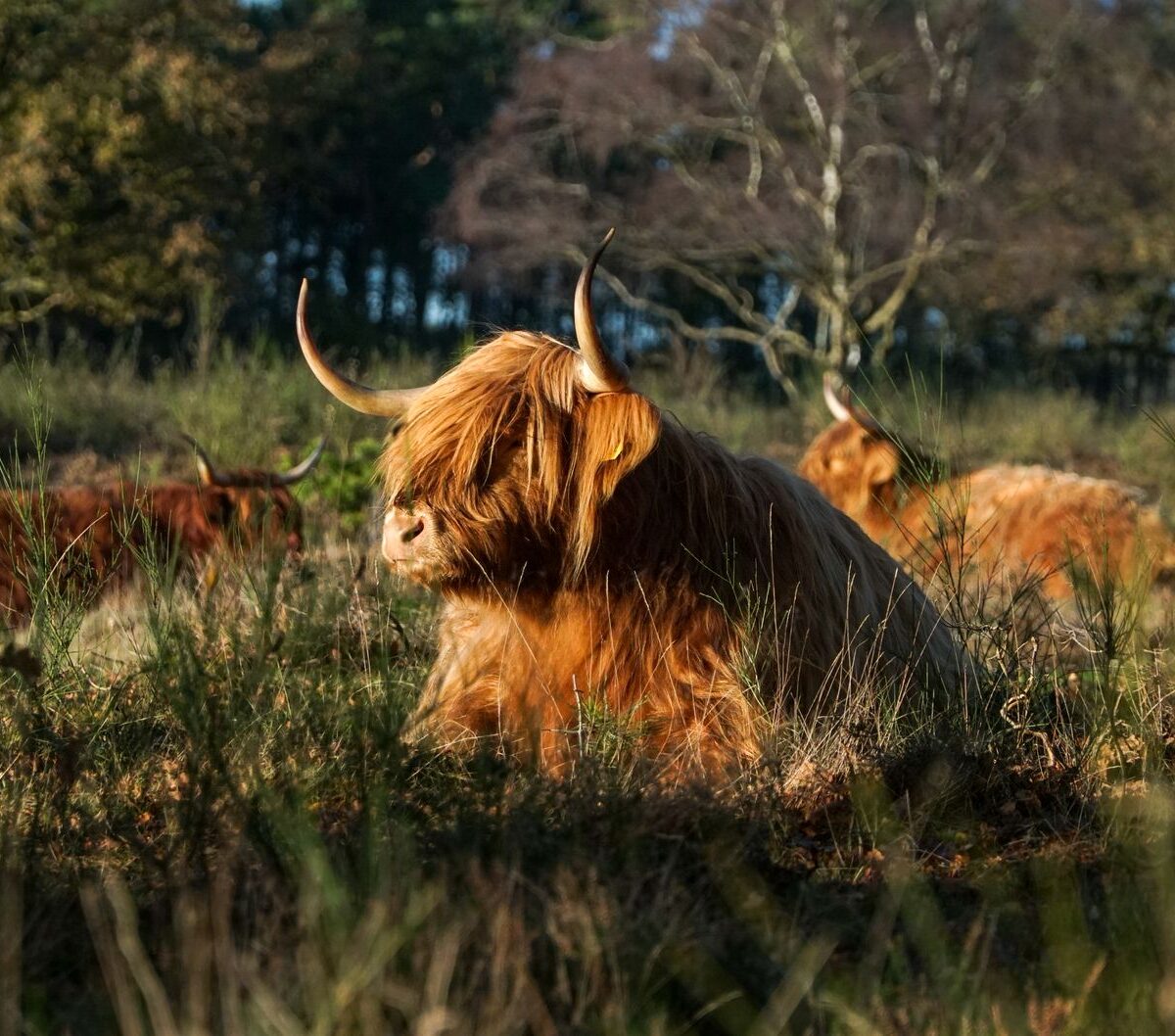
HIGHLAND CATTLE
Bos taurus
DESCRIPTION
Highland Cattle, also known as Highlander, is a distinctive breed of rustic beef cattle known for their long horns and long, wavy coats that can be red, black, or brindle. They are well adapted to harsh climates, with a thick double coat that provides insulation against cold weather. These cattle are known for their calm demeanor and social behavior, often seen grazing in groups in the rugged landscapes of their native Scotland.
FUN FACTS
- Highland Cattle are known for their impressive horns, which can span up to 1 meter in length
- These horns are not just for show; they help the cattle forage for food in dense vegetation and protect them from predators
- | The breed is also famous for its high-quality beef, which is leaner and has a unique flavor due to the cattle's natural grazing habits
- Highland beef is often sought after in gourmet markets and is considered a delicacy
QUICK INFO
Lifespan15-20 years in the wild, up to 25 in captivity
Average Weight500-800 kg
Average Length2.0-2.5 m
Diet TypeHerbivore
Social Structuregroup — they typically live in herds, which provide safety in numbers.
Activity PatternDiurnal
Breeding SeasonYear-round, with peak in spring
- Habitat
- Highland Cattle thrive in hilly and mountainous regions, often found in pastures and moorlands. They are well-suited to areas with harsh weather conditions.
- Biomes
- Temperate Grassland, Montane
- Native Range
- Originally from the Scottish Highlands, they are now found in various temperate regions around the world.
- Continent
- Europe, North America, Australia
- Countries
- Scotland, United Kingdom, United States, Canada, Australia
- Diet
- Highland Cattle are herbivores that primarily graze on grass and other vegetation. They are particularly adept at foraging in rough terrain.
- Diet Type
- Herbivore
- Favorite Food
- grass, hay, silage
- Social Structure
- group — they typically live in herds, which provide safety in numbers.
- Activity Pattern
- Diurnal
- Group Size
- 5-30
- Territorial
- 0
500-800 kg
Weight
2.0-2.5 m
Length
1.2 m at shoulder
Height (Shoulder)
- Coloration
- long, shaggy coats that can be red, black, or brindle
- Sexual Dimorphism
- males are generally larger and more muscular than females
- Lifespan
- 15-20 years in the wild, up to 25 in captivity
- Gestation Period
- 280 days
- Offspring per Birth
- 1
- Sexual Maturity
- 1-2 years
- Breeding Season
- Year-round, with peak in spring
LC
Least Concern
IUCN Red List Status
- Population Status
- The population of Highland Cattle is stable, with a dedicated breeding community.
- Wild Population Estimate
- not applicable, primarily domesticated
- Population Trend
- Stable
- Endangered
- 0
- Threats
- Main threats include habitat loss and competition with more commercially viable cattle breeds. However, Highland Cattle are generally well-managed and valued for their hardiness.
- Predators
- humans, large carnivores (in some regions)
- Defense Mechanisms
- They rely on their size and horns for defense against predators.
- Compatible Animals
- sheep, goats, other cattle
- Found in Zoos
- Uncommon